


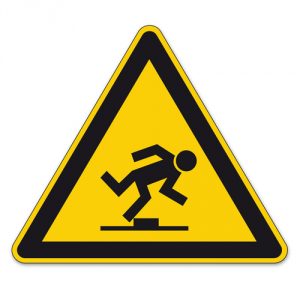
 A recent California case involving a woman who was injured when she tripped over an unattended ladder in Target demonstrates both the business’s knowledge requirement as well as its duty to remove hazards, keeping the premises reasonably safe. In the case, an 83-year-old woman tripped over the ladder, fracturing her hip.
Factual background
An 83-year-old woman was shopping at a Target in Escondido, California, on Dec. 8, 2014. As she was walking down one aisle, she tripped over a 23-inch-tall stepladder that had a 4-foot handle. A worker had left the stepladder unattended. The fall caused her hip to fracture. She filed a lawsuit against Target based on a theory of premises liability on Feb. 11, 2015.
 On September 19, news broke that Jim Carrey is being sued in California for wrongful death by his girlfriend’s estranged husband. Carrey’s girlfriend, Cathriona White, committed suicide in September 2015 by overdosing on several different types of prescription medications. She had married Mark Burton in Las Vegas in 2013 but had dated Carrey for a couple of years afterward without divorcing Burton. Burton is thus her next-of-kin and has made multiple salacious allegations against Carrey in his lawsuit. While a media storm may have ignited, there are multiple reasons why Burton’s case will be very difficult to prove.
 A recent construction site accident wrongful death Los Angeles County case and jury verdict illustrate several important topics, including cases in which several parties share liability in causing workplace accidents, workers’ compensation and the liability of third parties in workplace accidents. The case (Rosa Gonzalez, et.al. v. Atlas Construction Supply – L.A. Superior Court Case No. BC 507755) involved a man who was killed while working on a construction site in 2011.
 On June 19, 2016 actor Anton Yelchin was killed in a rollaway car accident in the driveway of his Studio City, California home. Mr. Yelchin, most famous for playing Chekov in the new Star Trek movies, had parked his Jeep Cherokee in his driveway, exited the vehicle and walked down the driveway to check for mail in his mailbox. At this same time, the Jeep came out of gear, rolled backwards, and pinned Mr. Yelchin between the Jeep and the large brick mailbox pillar, killing him instantly.
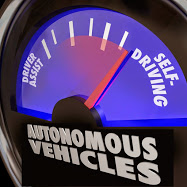 Is there a moral dilemma for self-driving cars? As the time nears when autonomous cars may make a full entry into the marketplace, ethical questions regarding their programming may impact both public safety and the actual adoption by the public of autonomous cars. In 2015, 4.5 million people were seriously injured and almost 40,000 people were killed in traffic accidents. A large number of the accidents that occur every year are due to human error. The thought about autonomous cars is that removing the potential for human error will drastically cut down the injury and fatality rates by preventing accidents. A recent study shows a moral dilemma that exists when autonomous cars would be forced to make decisions about protecting the safety of their occupants or instead those of pedestrians.
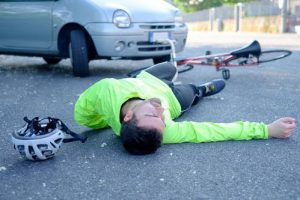 A recent jury verdict in Santa Cruz County shows how bicycle accidents may involve more than one vehicle, and if the second driver fails to take action to avoid hitting the cyclist, the second driver may be held to be civilly liable and ordered to pay damage for his or her percentage of fault.
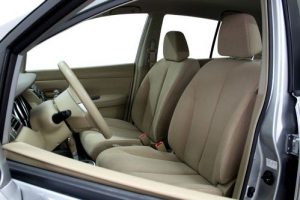 As a defective car seatback injury lawyer in California, I have seen, first-hand, how this serious
  A recent case in California demonstrates how the extent and cause of a plaintiff’s injuries may be disputed even when liability itself is not in dispute. In the case, Plent v. Anheuser-Busch, LLC, Los Angeles Superior Court /