 California Accident Attorneys Blog


Rollover accidents account for a small fraction of all crashes on California roads, but they are responsible for a disproportionate number of fatalities. According to NHTSA data, rollovers make up roughly 2% of all crashes yet account for nearly 30% of passenger vehicle occupant deaths. Understanding what causes rollover accidents is the first step toward avoiding one, and toward building a strong legal case if you or someone you love has already been hurt.
These crashes rarely happen for a single reason. They typically result from a combination of factors: the type of vehicle, the speed it was traveling, road conditions, tire failure, driver impairment, and more. Some causes are within a driver’s control, while others point directly to manufacturer defects or poorly maintained roadways, situations where another party bears responsibility for the harm caused. Identifying the right cause matters because it determines who can be held liable for your injuries and losses.
At Steven M. Sweat, Personal Injury Lawyers, APC, we’ve spent over 25 years representing rollover accident victims across Los Angeles and throughout California. Our attorneys have seen firsthand how devastating these crashes are, traumatic brain injuries, spinal cord damage, and wrongful death are common outcomes. This article breaks down 12 key factors that contribute to rollover accidents in California so you can recognize the dangers, protect yourself, and understand your legal options if the worst happens.
1. Talk to a California rollover accident lawyer early
Speaking with an attorney is not something you save for later. In rollover cases, evidence disappears quickly and insurance companies move fast to protect their own interests. The earlier you connect with a lawyer who handles these crashes, the better your chances of recovering full compensation.
What it is
Talking to a rollover accident lawyer early means scheduling a free consultation before you accept any offers from an insurance company, sign any documents, or make recorded statements to adjusters. An attorney reviews the full facts of your crash, identifies every potentially liable party, and advises you on what your case may realistically be worth under California law.
Why it affects rollover cases
Rollover crashes are among the most complex cases in personal injury law because multiple causes often overlap. Understanding what causes rollover accidents requires investigating the vehicle’s design, the road’s condition, the driver’s behavior, and maintenance records all at the same time. If you wait, critical physical evidence gets lost, witnesses become harder to reach, and the opposing party has more time to build a defense.
The sooner an attorney preserves evidence and sends spoliation notices to responsible parties, the stronger your case becomes.
Insurance adjusters are trained to minimize payouts. They may call you within days of the crash and offer a settlement that sounds reasonable but falls far short of covering long-term medical costs, lost wages, and pain and suffering. An attorney protects you from accepting that offer prematurely.
Common California examples
California roads produce rollover crashes in distinct settings. Highway 1 along the coast, with its sharp curves and elevation changes, is a frequent site where speed combined with vehicle instability leads to rollovers. On inland freeways like the I-5 through the Central Valley, truck rollovers caused by overloaded cargo are a recurring problem. Urban intersections in Los Angeles also see rollovers triggered by sudden swerves and curb contact.
Each of these scenarios may involve a different liable party, from a negligent driver to a government agency responsible for road design or a trucking company that violated loading regulations.
Key evidence to document
Your attorney will move quickly to gather the evidence that supports your claim. The most important items include:
- The vehicle’s Event Data Recorder (EDR), often called the black box, which captures speed, braking, and steering inputs before the crash
- Photos and video from the scene, nearby traffic cameras, and any available dashcams
- Maintenance and inspection records for the vehicle involved
- Witness statements collected while memories are still fresh
- Road condition reports and any prior complaints filed about the accident location
- Medical records documenting every injury sustained in the crash
Preserving this evidence early is often the difference between a strong claim and one that stalls because key proof no longer exists.
2. Top-heavy vehicles like SUVs and pickups
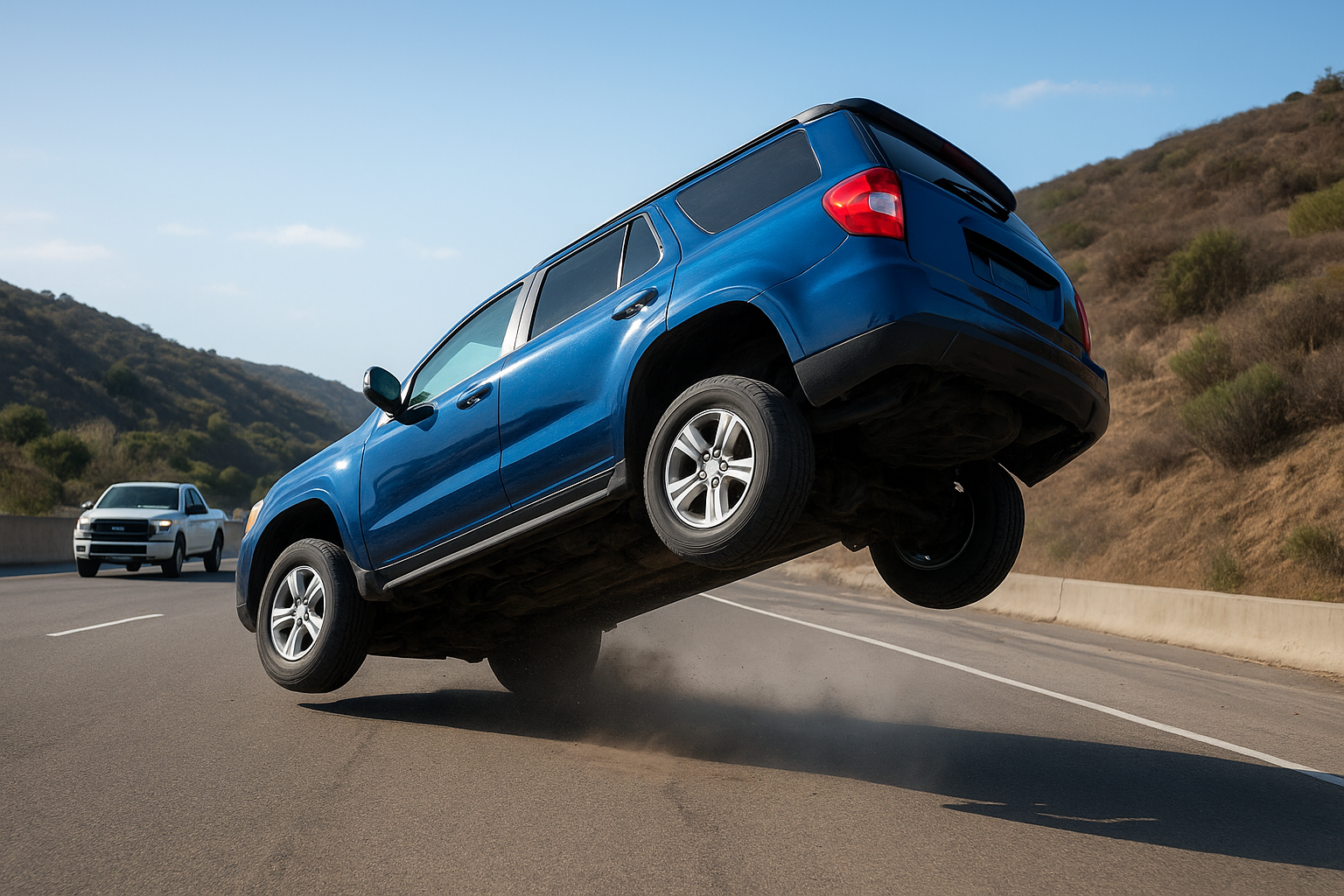
Vehicle design plays a major role in what causes rollover accidents, and not all vehicles carry the same risk. Sport utility vehicles, pickup trucks, and vans have a higher center of gravity than standard passenger cars, which makes them fundamentally less stable when forces push them sideways.
What it is
A vehicle’s center of gravity is the point at which its total weight is balanced. In SUVs and pickups, that point sits significantly higher off the ground than in sedans. When a driver takes a sharp turn, hits a curb, or encounters an unexpected obstacle, lateral forces act on that elevated center of gravity and can tip the vehicle past its tipping threshold, causing it to roll.
Why it leads to rollovers
Physics drives this problem. The higher the center of gravity relative to the vehicle’s track width (the distance between the left and right tires), the easier it is for the vehicle to roll. SUVs can have a static stability factor low enough that even moderate maneuvers at highway speeds create rollover conditions. Manufacturers have known about this risk for decades, and some vehicles with design defects have faced federal safety investigations.
If your vehicle had a known stability defect, the manufacturer may share liability for your injuries regardless of how the crash was triggered.
Common California examples
California roads put this risk on full display. Loaded pickup trucks on the Grapevine (I-5 through the Tejon Pass) frequently roll when drivers brake hard on steep grades. SUVs on elevated freeway on-ramps in Los Angeles, San Diego, and the Bay Area roll when drivers take tight curves at speed. These are not freak accidents; they follow a predictable pattern tied directly to vehicle design.
Key evidence to document
- The vehicle’s make, model, trim level, and year to identify any applicable safety recalls or NHTSA investigations
- Pre-crash speed and steering data from the Event Data Recorder
- Photographs showing final resting position and roof crush damage
- Any prior owner maintenance records that affected suspension or load rating
3. Speeding, especially into curves
Speed is one of the most straightforward answers to what causes rollover accidents, yet it remains a factor in crashes across California every day. When a vehicle moves too fast for the road conditions, the driver loses the reaction time and physical margin needed to stay in control, particularly on roads that curve or change elevation.
What it is
Speeding into curves means traveling at a velocity above what the road geometry safely allows. Every curve has a design speed, a rate at which a vehicle with normal handling can navigate it without losing traction. When you exceed that speed, lateral forces on your tires overwhelm their grip, and the vehicle can slide outward, trip on a road edge, or roll directly.
Why it leads to rollovers
As speed increases, centrifugal force grows at a squared rate, not a linear one. Doubling your speed quadruples the outward force pushing your vehicle toward the edge of a curve. For taller vehicles with a high center of gravity, like SUVs and pickups, that force does not just push the vehicle sideways; it tilts it. Once the tilt passes the vehicle’s stability threshold, a rollover follows.
Speed reduces your margin for error to near zero on any road that bends, dips, or narrows.
Common California examples
Mountain roads like Angeles Crest Highway in Los Angeles County and Highway 17 between San Jose and Santa Cruz see repeated rollover crashes tied directly to excessive speed on curves. Freeway on-ramps and cloverleaf interchanges throughout the Los Angeles basin are another common location where drivers fail to slow from freeway speed before entering the ramp.
Key evidence to document
Preserving speed-related evidence quickly protects your claim. Focus on:
- Event Data Recorder data showing your vehicle’s speed in the seconds before impact
- Skid marks or yaw marks at the scene captured in photographs
- Any available traffic camera or dashcam footage showing pre-crash vehicle behavior
- Posted speed limit signs near the crash location
4. Overcorrection and sudden steering inputs
Overcorrection is one of the most common yet least anticipated answers to what causes rollover accidents, and it happens in a fraction of a second. A driver swerves to avoid something, pulls the wheel too hard, and the vehicle’s momentum carries it in a direction the tires cannot manage, triggering a rollover before the driver can react again.
What it is
Overcorrection happens when a driver turns the steering wheel sharply and then counter-steers with equal or greater force in the opposite direction, usually within one to two seconds. This pattern often starts with a legitimate hazard, a pedestrian stepping out, a merging vehicle, or debris in the road. The first swerve moves the vehicle off its path; the secondary counter-steer sends it into an unstable oscillation that the driver can no longer control.
Why it leads to rollovers
Each sharp steering input transfers weight dramatically from one side of the vehicle to the other. When you counter-steer after a hard swerve, the suspension and tires have not recovered from the first load transfer, so the second input compounds the instability rather than correcting it. Tall vehicles with a high center of gravity reach their tipping point quickly under these conditions. The result is a rocking motion that can lift one set of tires entirely off the pavement, and once that happens, a rollover follows rapidly.
Overcorrection most often occurs when drivers feel panic, which means the instinct to fix the problem is exactly what makes it worse.
Common California examples
California’s high-speed interchange systems in Los Angeles and rural two-lane roads on Highway 138 near the Antelope Valley see this pattern repeatedly. Drivers reacting to sudden lane changes from other vehicles or unexpected animals crossing rural roads make sharp corrective inputs at 65 mph or higher, conditions where overcorrection turns a near-miss into a fatal crash.
Key evidence to document
- Steering angle data and speed readings from the Event Data Recorder in the seconds before impact
- Skid or yaw marks showing directional changes at the scene
- Witness accounts describing vehicle movement before the rollover
- Any available dashcam or surveillance footage capturing the sequence of steering inputs
5. Tripping on curbs, medians, and guardrails
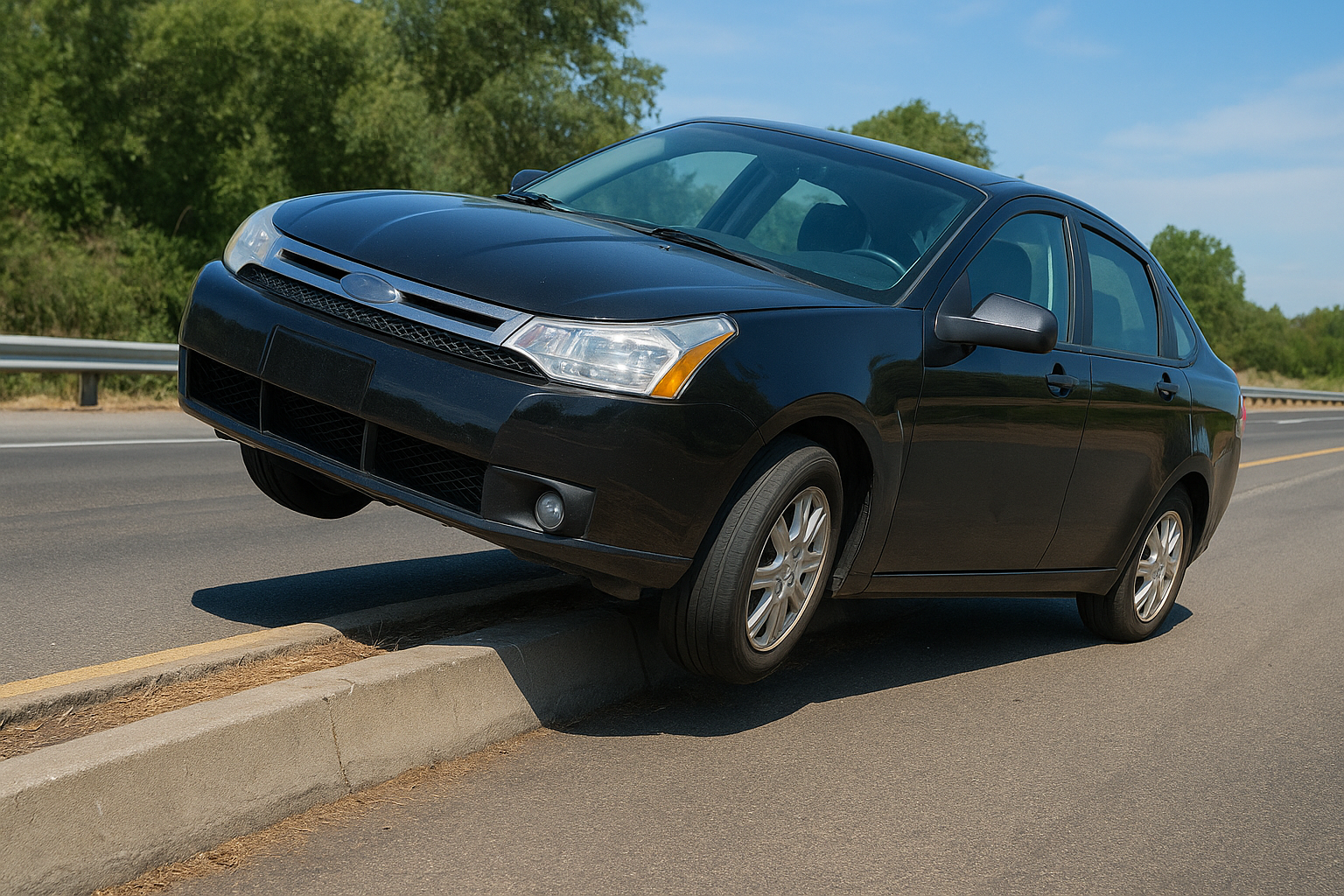
Tripping is one of the most well-documented answers to what causes rollover accidents, and it is exactly what the name suggests. When a vehicle’s tires strike a fixed object, the lower portion of the vehicle stops abruptly while momentum carries the upper portion forward and over, flipping the vehicle.
What it is
A trip occurs when your tire contacts a rigid obstacle at or below the road surface level, such as a raised curb, a concrete median barrier, or a guardrail. That contact acts like a fulcrum. Your vehicle’s forward energy has nowhere to go horizontally, so it rotates vertically instead, and the rollover begins instantly.
Why it leads to rollovers
Your tires generate enormous friction the moment they strike a hard barrier at speed. That friction stops the bottom of the vehicle faster than physics allows the top to follow, creating a rotational force. Studies by NHTSA estimate that tripping causes roughly 95% of all single-vehicle rollovers, which makes it far more common than steering-induced rollovers or aerodynamic causes.
Understanding this mechanism matters because it shifts liability away from driver error alone and toward road design, barrier placement, or vehicle defects in many cases.
Common California examples
California highways create tripping hazards in predictable locations. Concrete jersey barriers on I-405 and I-10 in Los Angeles sit close to travel lanes, and a drifting vehicle can clip one at freeway speed. Rural roads throughout Riverside and San Bernardino Counties have raised asphalt edges from uneven repaving that act as trip points when a driver drifts slightly off the travel lane.
Key evidence to document
Gathering physical evidence at the scene is critical after a tripping rollover. Key items include:
- Gouge marks, scrape lines, and paint transfers on the curb or barrier that confirm contact
- Photographs of tire damage and the vehicle’s undercarriage
- Road maintenance records showing the height and condition of the barrier or curb at the time of the crash
6. Soft shoulders and road edge drop-offs
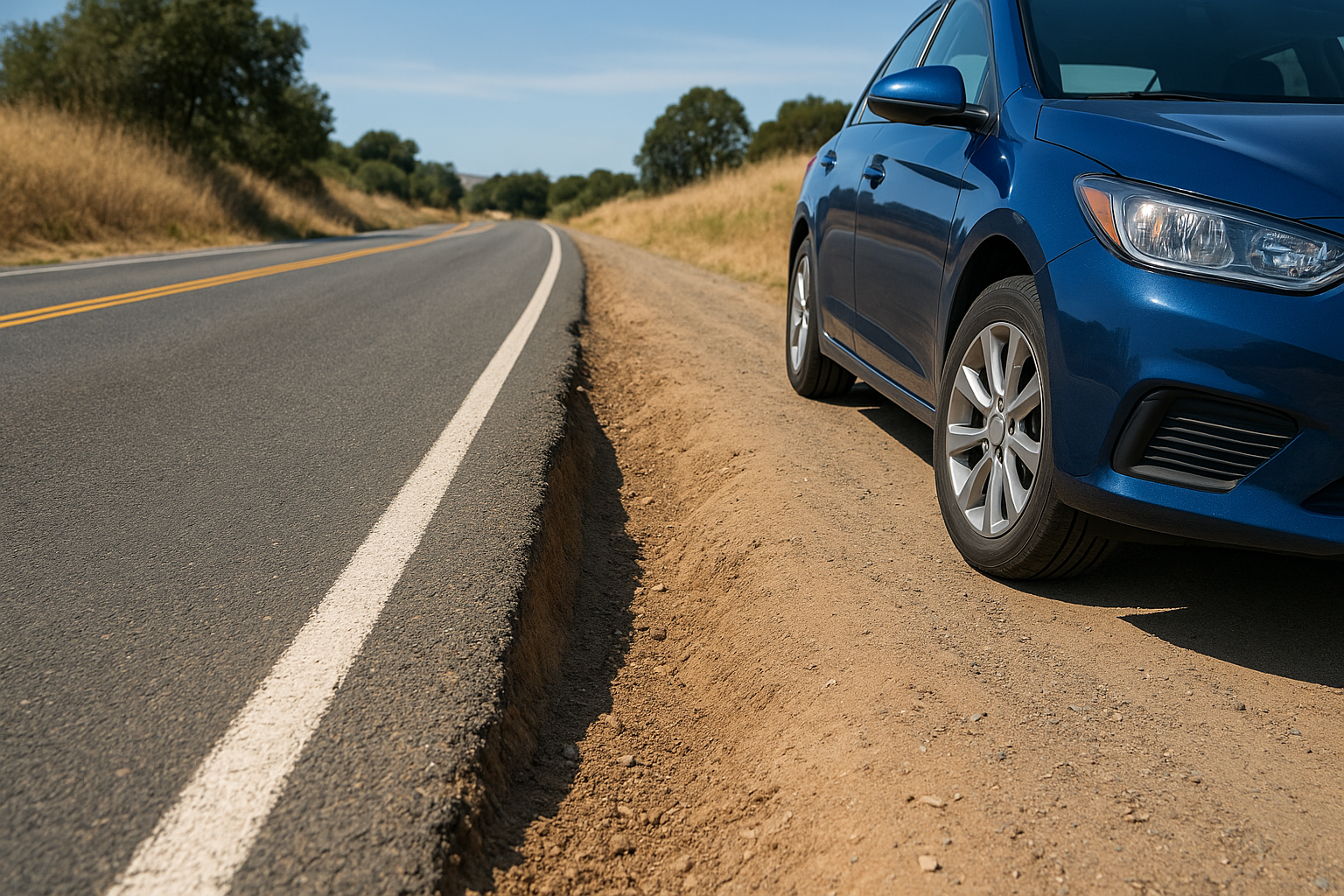
Soft shoulders and road edge drop-offs are a significant but often overlooked factor in what causes rollover accidents, particularly on rural California roads. When your tires leave the paved surface and sink into an unstable shoulder, recovering without triggering a rollover becomes extremely difficult.
What it is
A soft shoulder drop-off occurs when the paved road surface sits several inches higher than the unpaved dirt or gravel edge running alongside it. That height difference creates a ledge. When your tire drops off the pavement onto that lower surface, the uneven support forces your vehicle to lean toward the drop side, and pulling back onto the road at speed makes the situation worse, not better.
Why it leads to rollovers
When you try to steer back onto the paved road after dropping onto a soft shoulder, your tire hits the pavement edge like a ramp, vaulting the vehicle upward and sideways. The combination of soft ground reducing traction on one side and the hard edge catching your tire on the other creates a tripping effect nearly identical to hitting a curb. Government transportation studies have consistently linked unimproved shoulder conditions to single-vehicle rollover fatalities on rural roads.
Road agencies have a legal duty to maintain shoulders at a safe height differential, and failure to do so can make them liable for crashes that result.
Common California examples
Highway 46 in San Luis Obispo County and State Route 33 through Ventura County both have stretches where pavement edges have deteriorated well beyond safe limits. Drivers on these roads who drift slightly while fatigued or distracted drop onto shoulders that provide no stable recovery path, turning a minor drift into a fatal rollover.
Key evidence to document
- Photographs measuring the height differential between the pavement edge and the shoulder surface
- Road maintenance records and any prior complaints about the specific location
- Tire track impressions in the soft shoulder showing where your vehicle left the road
7. Tire blowouts and rapid air loss
Tire blowouts rank among the most sudden and unforgiving factors in what causes rollover accidents. When a tire fails at highway speed, you have almost no time to react, and the forces acting on your vehicle shift violently before your hands can respond.
What it is
A blowout occurs when a tire loses air pressure in a fraction of a second, usually due to a structural failure in the sidewall, a puncture from road debris, or heat buildup from sustained high-speed driving. Rapid air loss is a slower version of the same problem where pressure drops quickly enough to destabilize the vehicle before a warning light or physical sensation alerts the driver.
Why it leads to rollovers
When one tire suddenly deflates, that corner of your vehicle drops and drags against the road surface, creating an immediate and severe imbalance. The vehicle pulls sharply toward the failed tire, and most drivers respond by steering hard in the opposite direction, which compounds the instability. For taller vehicles like SUVs and pickups, this combination of drag on one side and counter-steering on the other can push the vehicle past its tipping threshold within seconds.
The steering correction instinct is natural, but on a tall vehicle with a blown tire, it can be the final factor that sends the vehicle into a full rollover.
Common California examples
Hot pavement on Interstate 15 through the Mojave Desert accelerates tire degradation, and blowouts on this corridor are a documented pattern. Trucks and SUVs traveling through the Central Valley on I-5 in summer heat face the same risk, particularly with tires that are already worn or underinflated before the trip begins.
Key evidence to document
- Physical condition of the failed tire, including the location and nature of the rupture
- Photographs showing debris at the scene that may have caused the puncture
- Maintenance records confirming tire age, mileage, and last inspection date
8. Underinflated, worn, or mismatched tires
Tire condition is one of the most preventable factors in what causes rollover accidents, yet it remains a consistent contributor to serious crashes throughout California. Unlike a sudden blowout, degraded tire performance builds gradually, giving drivers a false sense that everything is fine right up until the vehicle stops responding the way they expect.
What it is
Underinflated tires flex excessively as they roll, generating heat that breaks down the internal structure of the rubber and belting over time. Worn tires have reduced tread depth, which cuts into their ability to grip wet or uneven pavement. Mismatched tires occur when different tire sizes, brands, or wear levels are installed on the same axle or across the vehicle, creating uneven traction that the driver cannot easily feel or predict.
Why it leads to rollovers
Any combination of these conditions reduces your vehicle’s ability to respond predictably during steering, braking, or evasive maneuvers. When your tires cannot grip evenly, one corner of your vehicle loses traction before the others, which creates the same kind of imbalance that drives a tripping or overcorrection rollover. For SUVs and pickups with an already elevated center of gravity, that uneven grip can tip the vehicle before the driver has any chance to compensate.
A tire that looks intact can still be dangerously degraded if its tread depth is below 2/32 of an inch or if it has been driven significantly underinflated for extended periods.
Common California examples
Long commutes on Los Angeles freeways in summer heat accelerate wear and pressure loss faster than many drivers realize. Drivers traveling between the Inland Empire and the coast on the 10 or 60 freeway frequently push tires well past their safe service life.
Key evidence to document
- Tread depth measurements and tire pressure readings recorded at the scene or shortly after the crash
- Photographs showing sidewall cracking, uneven wear patterns, or mismatched tire brands
- Vehicle maintenance records showing the last tire inspection and replacement date
9. Alcohol or drug impairment
Impaired driving consistently ranks among the leading factors in what causes rollover accidents, and the data backs that up. A driver whose judgment, reaction time, and muscle coordination are compromised by alcohol or drugs is far less likely to manage the split-second corrections that prevent a minor road departure from turning into a fatal crash.
What it is
Alcohol or drug impairment affects your ability to drive long before you feel incapacitated. Even at a blood alcohol concentration (BAC) of 0.05%, below the legal limit of 0.08% in California, your reaction time slows, your depth perception narrows, and your ability to track and respond to fast-moving hazards deteriorates significantly. Cannabis, prescription medications, and illicit drugs create similar or compounding effects depending on dosage and the substance involved.
Why it leads to rollovers
Impaired drivers consistently exceed safe speeds, drift out of their lanes, and overcorrect when startled by sudden obstacles. Each of those behaviors independently raises rollover risk. Combined with impairment, they become nearly impossible to recover from. Your body does not execute the fine steering and braking adjustments that keeping a tall vehicle upright requires when your central nervous system is operating below its normal capacity.
A toxicology report from the crash scene is one of the most powerful pieces of evidence you can use to establish fault in a rollover claim against an impaired driver.
Common California examples
State Route 138 through the high desert and Pacific Coast Highway in Los Angeles and Ventura Counties see repeated impairment-related rollovers, particularly late at night and on weekends. Single-vehicle rollovers in rural Kern and Fresno Counties also follow this pattern, where impaired drivers leave straight roads at high speed before any obstacle triggers the crash.
Key evidence to document
- Blood alcohol and toxicology results from law enforcement testing at the scene
- Police reports documenting field sobriety test results and observed behavior
- Witness statements describing the driver’s condition before or after the crash
10. Distracted or drowsy driving
Distracted and drowsy driving contribute to what causes rollover accidents more often than most drivers recognize. Both conditions reduce your ability to detect hazards early and respond with the precise, controlled inputs that keep a vehicle stable, particularly at highway speeds.
What it is
Distraction occurs when your attention shifts away from the driving task, whether to a phone, a navigation screen, a passenger, or food. Drowsiness is a separate but equally dangerous condition where your brain cycles into microsleep, brief unconscious lapses lasting one to several seconds, without any warning you can reliably detect.
Why it leads to rollovers
Both distraction and drowsiness cause the same core failure: lane drift without correction. A driver who does not notice they have drifted onto a soft shoulder or toward a guardrail misses the small steering adjustments that would have kept them safe. By the time awareness returns, the vehicle is already in a tripping or overcorrection scenario that frequently ends in a rollover, particularly for tall SUVs and pickups.
Fatigue impairs driving ability at levels comparable to a blood alcohol concentration of 0.08%, according to research published by the National Highway Traffic Safety Administration.
Common California examples
Long straight stretches of Interstate 5 through the Central Valley are a well-documented setting for drowsy driving crashes, where monotonous conditions accelerate fatigue faster than drivers expect. Distraction-related rollovers also occur frequently in Los Angeles freeway traffic, where drivers accustomed to slow conditions suddenly accelerate to highway speeds while still looking at their phones.
Key evidence to document
- Cell phone records showing active use in the minutes before the crash
- Forward-facing dashcam footage capturing driver behavior and lane position
- Event Data Recorder data showing no braking inputs before the vehicle left the roadway
- Witness statements describing the vehicle drifting before any impact occurred
11. Rain, standing water, and loss of traction
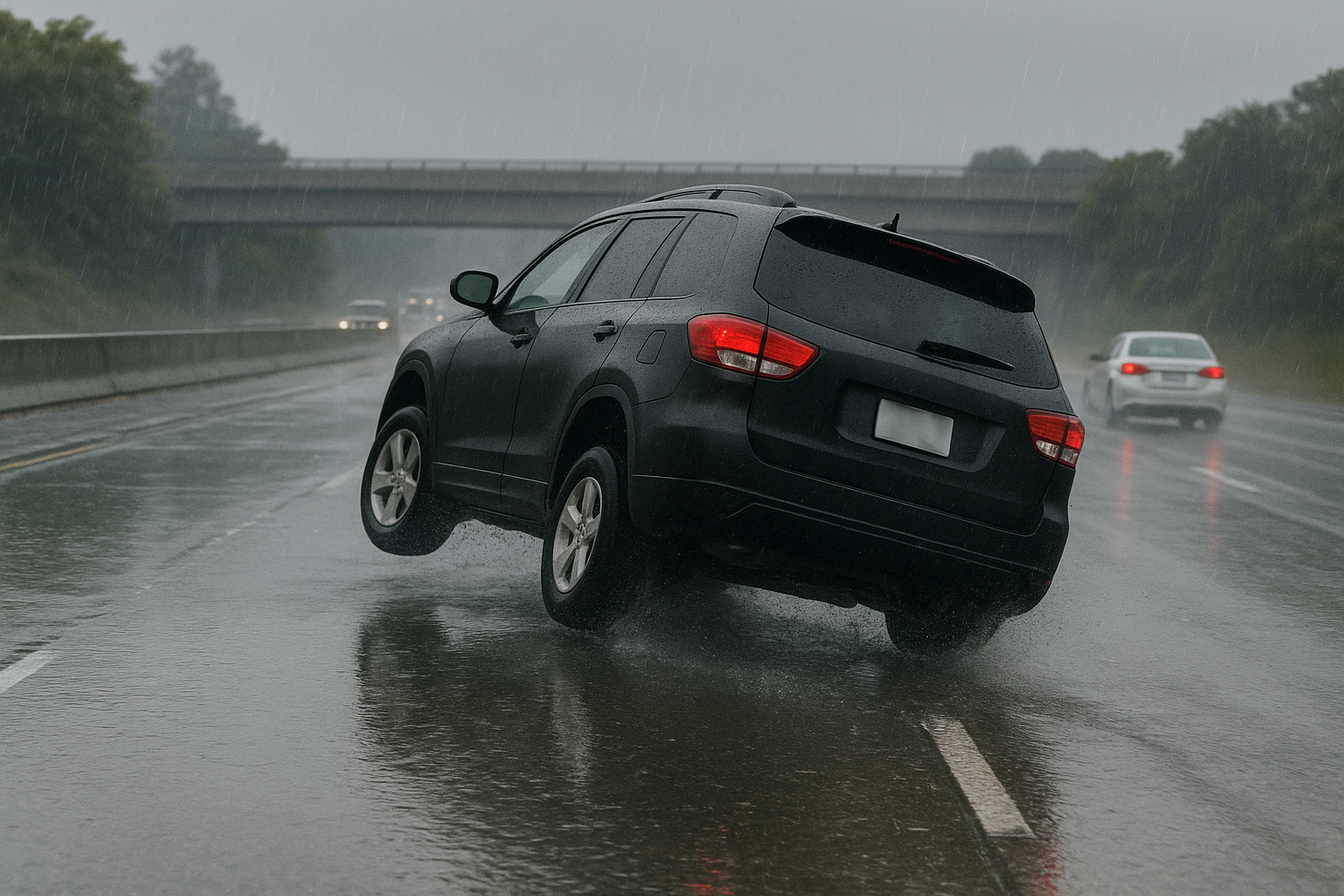
Rain and wet road conditions are a frequently underestimated factor in what causes rollover accidents in California. Drivers accustomed to dry pavement often do not adjust their speed or following distance when conditions change, and the result can be a loss of control that escalates into a full rollover.
What it is
Wet pavement reduces your tires’ ability to grip the road by creating a thin film of water between rubber and asphalt. Standing water creates an even more dangerous condition called hydroplaning, where your tires lose contact with the pavement entirely and ride on top of the water layer instead. At that point, steering and braking inputs have little to no effect on where the vehicle actually goes.
Why it leads to rollovers
When you lose traction on one side of the vehicle, or hydroplane and then suddenly regain grip, the uneven force distribution causes an abrupt directional change. For taller vehicles like SUVs and pickups, that sudden shift transfers weight sharply to one side and can tip the vehicle past its rollover threshold. The correction instinct compounds the problem, because steering into a skid on wet pavement often triggers the same overcorrection cycle that causes rollovers on dry roads.
California’s first significant rain after a dry season produces the most dangerous road surfaces, because accumulated oil and debris mix with water before washing away.
Common California examples
The Los Angeles basin typically receives its first significant rains in October or November, and crash rates spike immediately. Freeways like the 101 and 405 through the San Fernando Valley see standing water collect in low-lying sections during heavy rainfall, creating hydroplaning conditions for vehicles traveling at normal freeway speeds.
Key evidence to document
- Weather service records and rainfall data for the crash date and location
- Photographs showing standing water, road surface conditions, and tire tracks at the scene
- Any available traffic camera footage capturing conditions before impact
12. Overloading and unsafe cargo or roof loads
Overloading is one of the most controllable factors in what causes rollover accidents, yet drivers regularly exceed safe weight limits for their vehicles without realizing how severely it changes the way their vehicle handles. Adding weight above the roofline or packing a truck bed beyond its rated capacity can push a vehicle past its stability limits before you ever reach the highway.
What it is
Overloading means carrying more weight than your vehicle’s Gross Vehicle Weight Rating (GVWR) allows, whether that weight sits in the cargo area, on a roof rack, or in a trailer. Roof loads are especially dangerous because they place mass as far above the center of gravity as possible, making the vehicle top-heavy in a way no amount of careful driving fully compensates for.
Why it leads to rollovers
Every pound you add above the vehicle’s designed weight limit raises its effective center of gravity and reduces the lateral force required to tip it. When you carry an overloaded roof rack into a sharp curve or brake suddenly on a downgrade, the excess weight shifts forward and outward faster than your suspension can absorb, pushing the vehicle toward its tipping threshold. Trucks with unsecured or improperly balanced cargo face an additional risk: shifting loads during a lane change can transfer enough weight to one side to roll the vehicle without any external trigger.
Cargo that shifts mid-trip can function as a moving force that destabilizes the vehicle from inside the cab outward.
Common California examples
Commercial trucks overloaded with agricultural produce on Highway 99 through the Central Valley roll with regularity during peak harvest seasons. Recreational vehicles heading to trailheads in the Sierra Nevada with roof-mounted gear, kayaks, or bike racks frequently exceed safe roof load ratings on mountain roads.
Key evidence to document
- Weigh station records or post-crash weigh measurements confirming total vehicle weight at the time of the crash
- Photographs showing cargo position, tie-down condition, and roof rack loading
- Shipping manifests or loading records for commercial vehicles involved
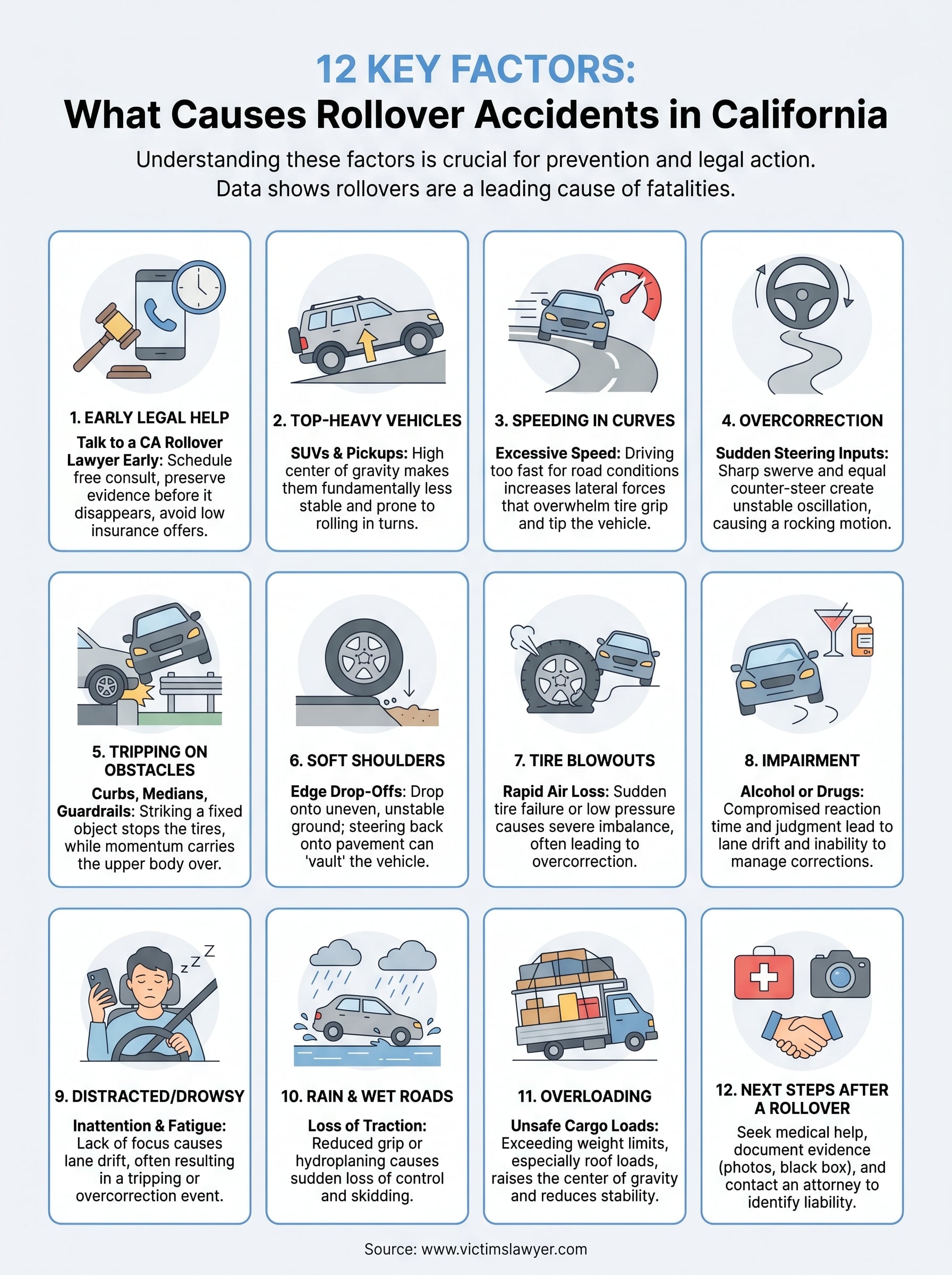
Next steps after a rollover
Now you know what causes rollover accidents in California and which factors most commonly combine to produce serious injuries. That knowledge gives you a foundation, but it does not replace action. If you or someone close to you was hurt in a rollover crash, the steps you take in the days immediately after the crash shape how much compensation you can ultimately recover.
Seek medical attention first, even if you feel fine. Document the scene with photographs, preserve any physical evidence, and avoid speaking to insurance adjusters before you have legal counsel. Rollover cases involve complex liability questions that span vehicle design, road maintenance, driver conduct, and cargo safety. An experienced attorney can identify every liable party and build the evidence record you need before it disappears.
Steven M. Sweat, Personal Injury Lawyers, APC offers free consultations available 24 hours a day. Contact our California rollover accident lawyers today to discuss your case.