 California Accident Attorneys Blog


Article Summary: Rear-end collisions represent the most frequent car accidents in the United States, often resulting from preventable driver behaviors that lead to serious injuries. In California, five primary factors contribute to these incidents: distracted driving, following too closely, speeding, poor road conditions, and mechanical failures. Distractions like smartphone use significantly impair reaction times, while tailgating removes the necessary buffer for safe stopping. Speeding further exacerbates these risks by extending braking distances, especially on congested freeways. Additionally, poor vehicle maintenance and hazardous weather conditions create traction issues that frequently result in collisions. Under California’s pure comparative fault system, liability is often shared, making the preservation of evidence—such as dashcam footage, medical records, and black box data—vital for any claim. Victims are encouraged to seek immediate medical attention and legal counsel to protect their rights against insurance companies. Taking swift action is essential, as evidence can disappear quickly, and professional legal representation helps ensure that injured parties recover fair compensation for their losses. Understanding these causes and legal dynamics allows drivers to better navigate the complexities of road safety and post-accident recovery.
Rear-end collisions are the most frequently reported type of car accident in the United States, and Los Angeles sees more than its share. If you’ve ever wondered what causes rear-end collisions, the answer usually comes down to a handful of preventable driver behaviors, yet these crashes continue to cause serious neck, back, and spinal injuries every single day across California.
At Steven M. Sweat, Personal Injury Lawyers, APC, we’ve spent over 25 years representing rear-end collision victims throughout Los Angeles and have recovered hundreds of millions of dollars in settlements and verdicts for people dealing with the aftermath. That experience gives us a clear picture of what goes wrong on the road, and who’s responsible when it does.
Below, we break down the five most common factors behind rear-end collisions, explain how fault is typically determined, and outline what you can do to protect yourself if you’ve already been hit. Whether you’re trying to understand your legal options or simply want to know why these crashes keep happening, this guide was written with you in mind.
1. Get legal help fast after a rear-end crash
Understanding what causes rear-end collisions is important, but knowing what to do after one is equally critical. The steps you take in the hours following a crash directly shape your ability to recover fair compensation.
What it looks like in real life
A rear-end crash can leave you shaken and unsure of your next move. You might feel fine at the scene but develop neck pain or whiplash symptoms within 24 to 48 hours.
That delay in symptoms is exactly why contacting a personal injury attorney early is so important. Insurance companies count on you to act before you fully understand the extent of your injuries.
Why it affects rear-end crash claims
Evidence disappears fast. Traffic camera footage gets overwritten, witnesses forget details, and insurance adjusters move quickly to close claims for less than they are worth.
The sooner you have legal representation, the better your chances of preserving critical evidence before it is gone.
Waiting too long to contact an attorney is one of the most common mistakes rear-end collision victims make in California.
Who may share fault in California
California follows a pure comparative fault rule, meaning more than one party can share responsibility. Even if you braked suddenly, the rear driver may still bear most of the fault for following too closely or driving distracted.
What evidence supports your claim
Strong claims are built on solid documentation. Key evidence includes:
- Police reports and crash scene photos
- Medical records documenting your injuries
- Dashcam or traffic camera footage
- Witness contact information and statements
How to protect yourself right away
Call 911, seek immediate medical evaluation, and avoid giving recorded statements to the other driver’s insurer. Then contact Steven M. Sweat, Personal Injury Lawyers, APC for a free consultation before you sign anything.
2. Distracted driving
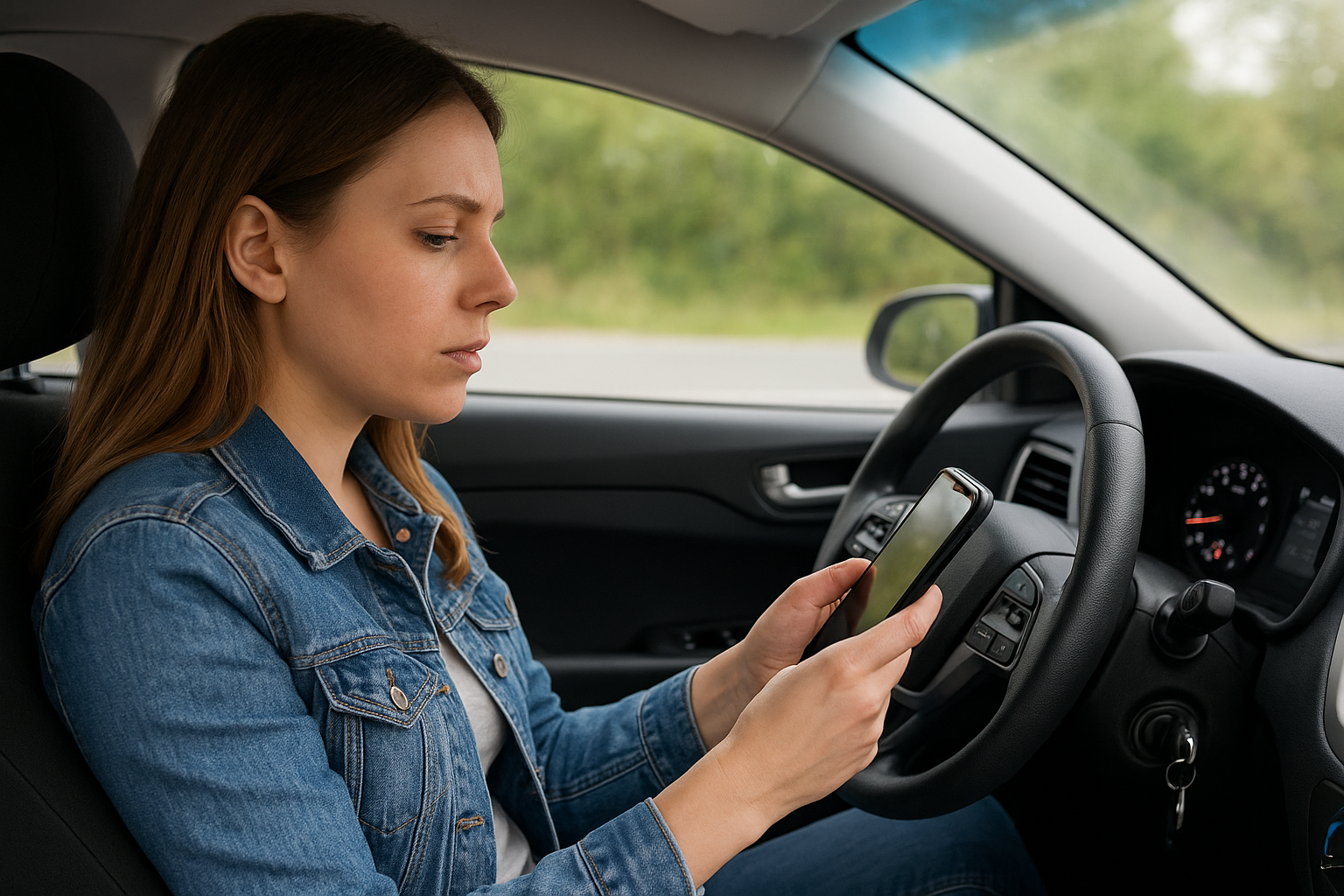
Distracted driving is one of the top answers to what causes rear-end collisions in California. When a driver shifts attention away from the road for even two seconds, a rear-end crash becomes nearly unavoidable.
What it looks like in real life
The most common form is texting or scrolling on a smartphone while driving. Other distractions include eating, adjusting the radio, and talking to passengers without monitoring traffic ahead.
Why it causes rear-end crashes
A distracted driver cannot react in time to slowing or stopped traffic ahead. At highway speeds, even a brief glance away means covering hundreds of feet with zero awareness of changing road conditions.
A two-second phone glance at 60 mph equals driving the full length of a football field without looking up.
Who may share fault in California
If a distracted driver rear-ends you, California’s comparative fault system generally assigns most liability to that driver. Your own fault could increase if you made a sudden or unlawful stop, but the rear driver almost always holds primary responsibility.
What evidence supports your claim
Phone records and cell tower data can prove the driver was actively using a device. Dashcam footage and witness statements further strengthen your case.
How to prevent it
Set your phone to Do Not Disturb mode before driving. If you’re a passenger, speak up the moment a driver loses focus on the road ahead.
3. Following too closely
Following too closely, or tailgating, is a leading answer to what causes rear-end collisions on California roads. When a driver leaves insufficient space ahead, they remove any margin for safe stopping.
What it looks like in real life
You’ve seen it on the freeway: a driver sits inches from your bumper at 70 mph, or rides so tight in stop-and-go traffic that any light braking causes a crash.
Why it causes rear-end crashes
Stopping distance grows sharply with speed. At 60 mph, a car needs roughly 300 feet to stop. A tailgating driver cuts that buffer to zero, making a rear-end collision nearly inevitable the moment traffic slows.
California Vehicle Code Section 21703 requires every driver to maintain a safe following distance at all times.
Who may share fault in California
The rear driver holds primary responsibility for maintaining adequate space. However, if you cut into a lane without leaving a safe gap, comparative fault may apply and reduce your recovery.
What evidence supports your claim
Dashcam footage showing vehicle spacing before impact is strong evidence. Skid mark analysis and crash reconstruction reports can further confirm the following distance was unsafe.
How to prevent it
Use the three-second rule: pick a fixed roadside point and confirm three full seconds pass before your vehicle reaches it. Add more time in rain or low-visibility conditions.
4. Speeding and aggressive driving
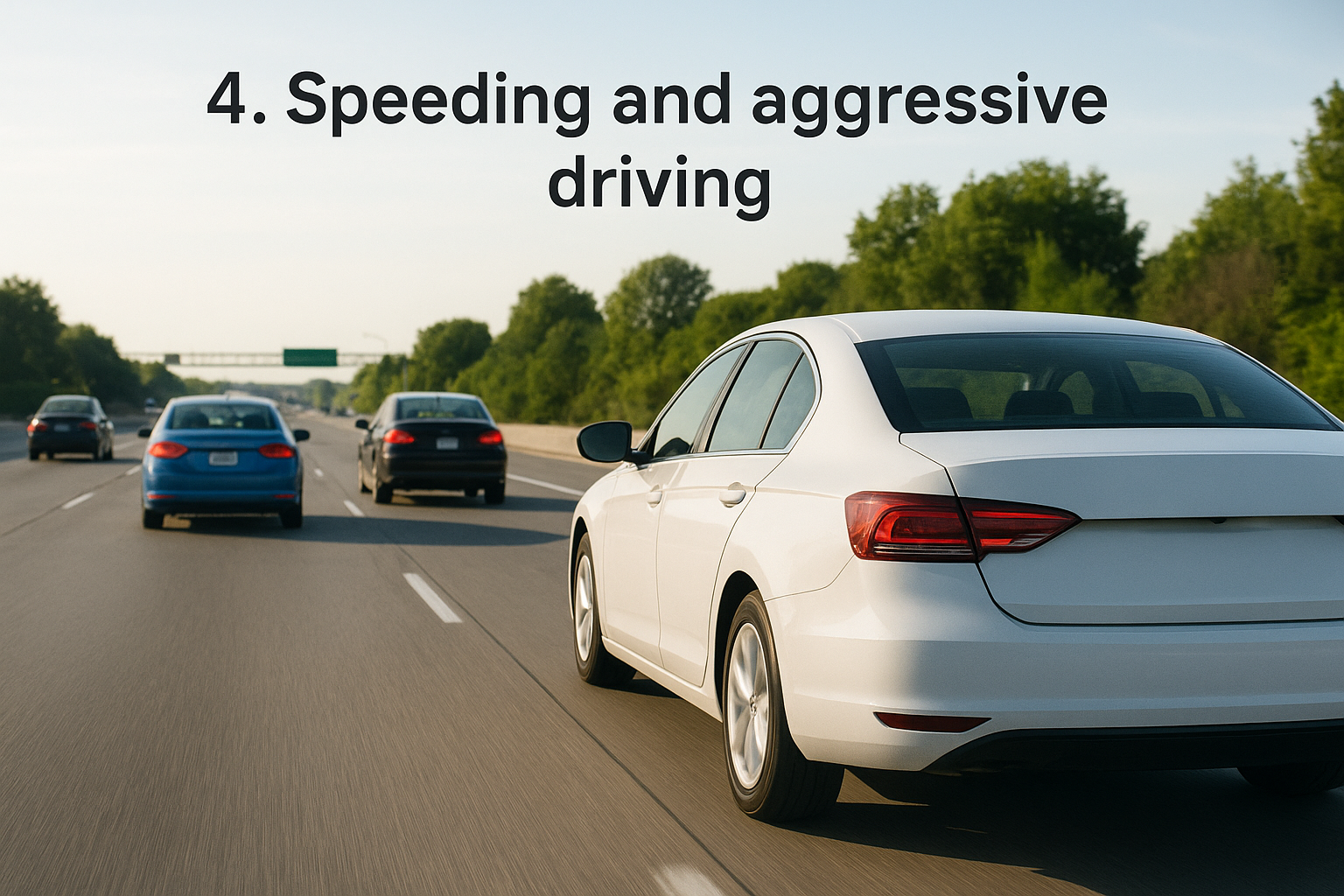
Speeding and aggressive driving rank among the clearest answers to what causes rear-end collisions on California roads. When a driver pushes beyond safe speeds, reaction time shrinks and the margin for a safe stop disappears entirely.
What it looks like in real life
Aggressive drivers often weave through traffic, accelerate sharply, and close gaps at high speed. You’ll see this regularly on freeways like the 405, where sudden speed changes between lanes create constant collision risk.
Why it causes rear-end crashes
Higher speeds extend stopping distances significantly. At 80 mph, a car needs nearly twice the distance to stop compared to 55 mph, making a crash almost certain when traffic slows without warning.
The faster a driver travels, the less time they have to react to brake lights ahead.
Who may share fault in California
California’s comparative fault rules still apply in speeding crashes. If you stopped abruptly without cause, your recovery may decrease, but the speeding driver typically carries the greatest share of liability.
What evidence supports your claim
Event data recorders (EDRs), sometimes called black boxes, capture pre-crash speed data. Traffic camera footage and accident reconstruction reports can confirm exactly how fast the at-fault driver was traveling.
How to prevent it
Maintain a consistent speed with traffic flow and increase your following distance when the car behind you is pushing aggressively. Move to a different lane when possible to reduce your exposure to a potential crash.
5. Poor conditions and vehicle issues
Road conditions and mechanical failures round out the key answers to what causes rear end collisions. These factors are often overlooked, but they play a real role in crashes across California.
What it looks like in real life
Rain-slicked freeways, sudden fog, and worn brake pads create situations where stopping in time becomes nearly impossible. A driver with bald tires or failed brake lights gives the vehicle behind no warning and no traction to react.
Why it causes rear-end crashes
Wet roads can triple stopping distances, and a vehicle with degraded brakes or tires cannot compensate. These conditions shrink the already thin margin between a close following distance and a direct collision.
Poor maintenance is a choice, and California courts treat it that way when assigning fault.
Who may share fault in California
If a defective vehicle component contributed to the crash, the vehicle owner or manufacturer may share liability alongside the driver. Your recovery depends on identifying every responsible party.
What evidence supports your claim
Maintenance records, brake inspection reports, and photographs of tire tread document mechanical failures clearly. A crash reconstruction expert can link specific vehicle defects to the collision.
How to prevent it
Check your tire tread and brake function regularly, and increase your following distance whenever rain or low visibility reduces road traction.
What to do next
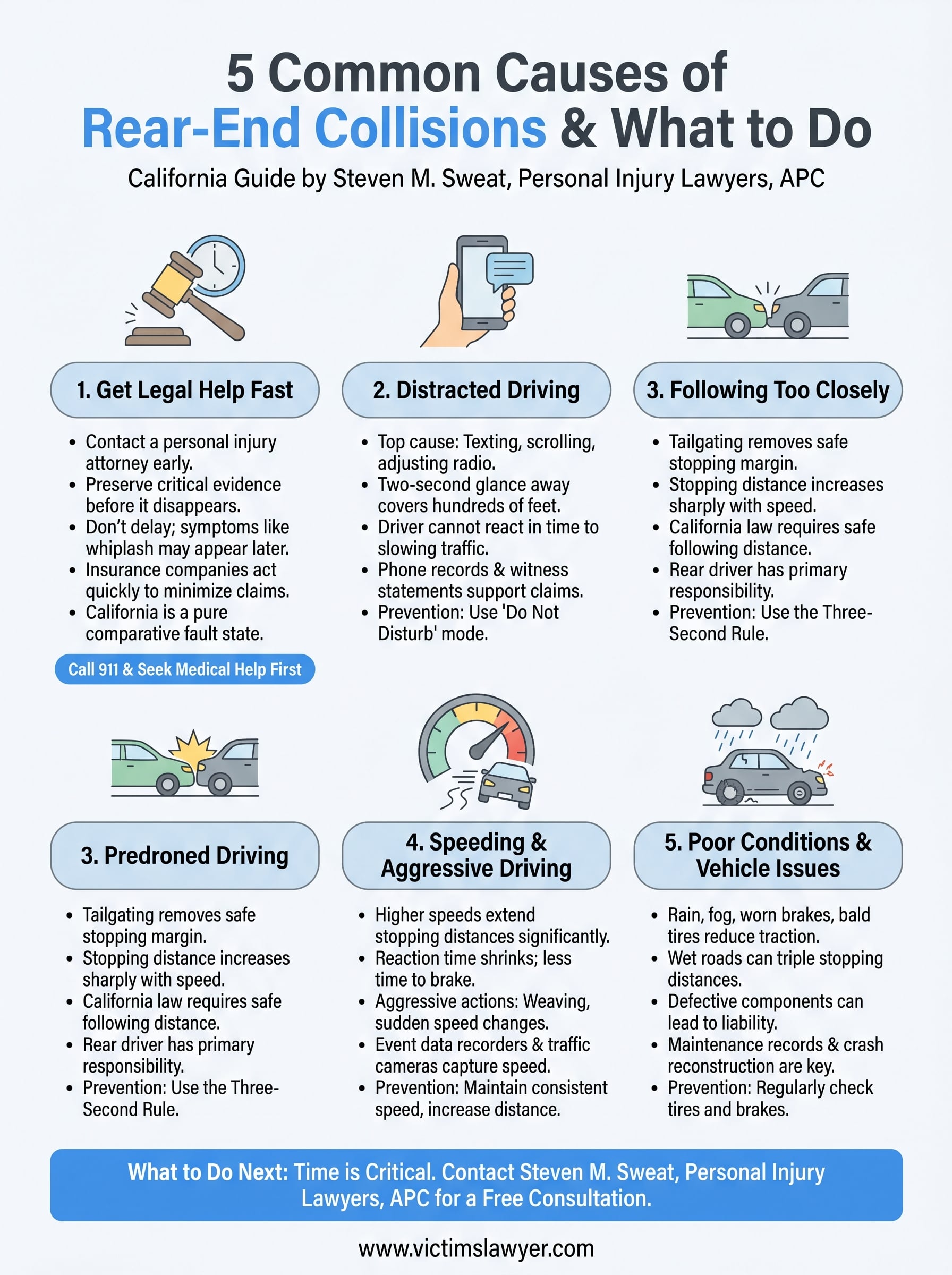
Now you know what causes rear-end collisions and which behaviors create the most risk on California roads. Distracted driving, tailgating, speeding, poor vehicle maintenance, and delayed legal action after a crash all contribute to serious injuries that can change your life permanently.
If another driver rear-ended you, time is your most limited resource. Evidence fades, witnesses move on, and insurance adjusters work against your interests from the moment the crash happens. Acting quickly gives you the best chance of building a strong claim and recovering the full compensation you deserve.
Steven M. Sweat, Personal Injury Lawyers, APC has represented rear-end collision victims throughout Los Angeles for over 25 years. No fees are charged unless we recover money for you, so there is zero financial risk in getting started. Contact us today for a free consultation and let us fight for what you are owed.