 California Accident Attorneys Blog


A single unaddressed recall can turn a routine drive into a catastrophic accident. At Steven M. Sweat, Personal Injury Lawyers, APC, we’ve represented clients across Los Angeles who were injured because of known vehicle defects, defects that a simple BMW recall lookup could have flagged before anyone got hurt.
BMW issues recalls when a component poses a safety or emissions risk, and the National Highway Traffic Safety Administration (NHTSA) tracks every one of them. Checking whether your vehicle is affected takes less than a minute using your Vehicle Identification Number (VIN), and it costs nothing. Yet many owners never bother, or don’t know the option exists. That gap between available information and actual awareness is where serious injuries happen.
This guide walks you through exactly how to check your BMW for open recalls, which tools to use, and what steps to take if your vehicle is on the list. Staying informed protects you, your passengers, and everyone else on the road, and it strengthens your legal position if a defective vehicle part ever causes you harm.
What you need before you start
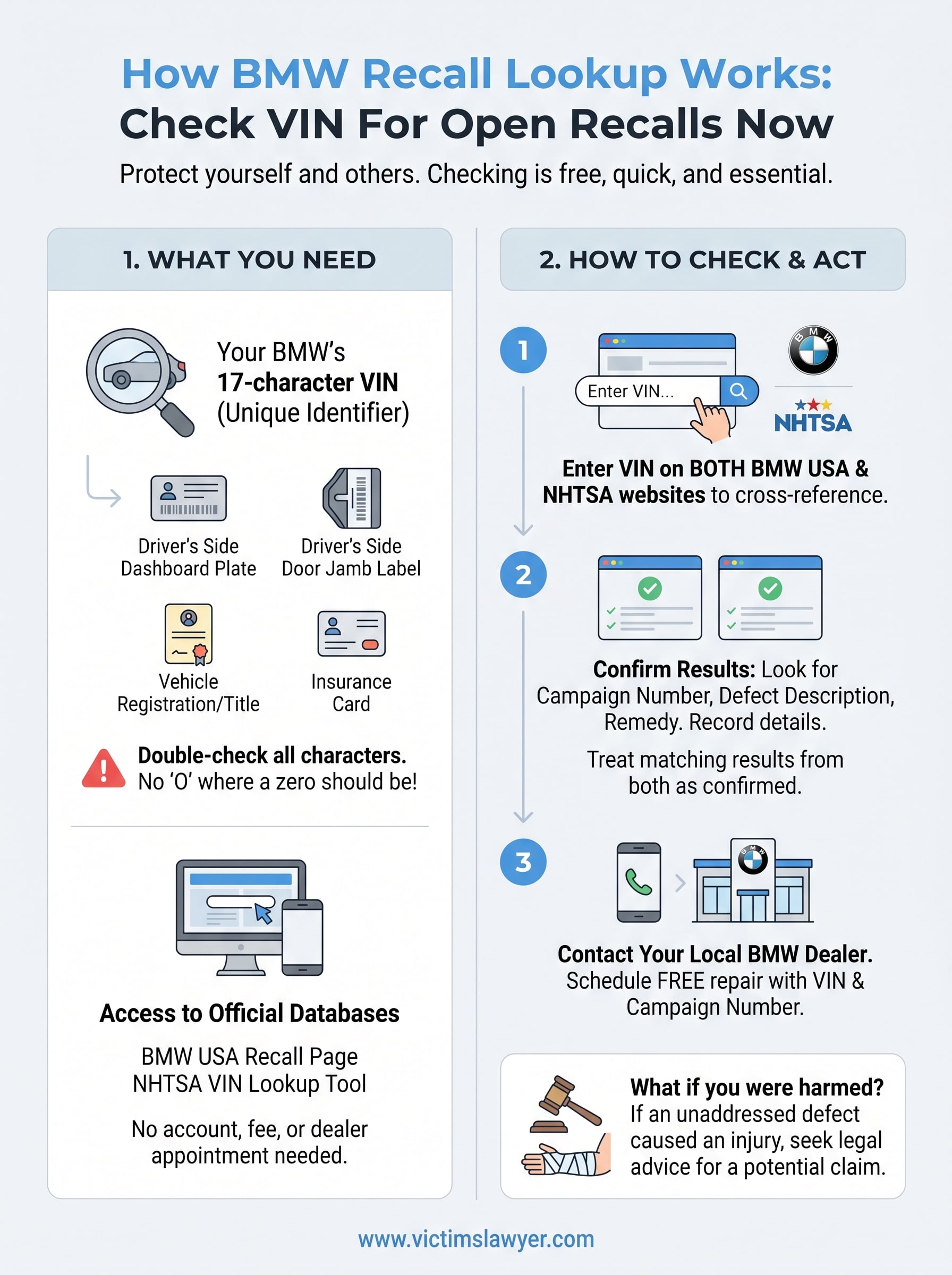
Before you run a BMW recall lookup, gather two things: your vehicle’s 17-character VIN and access to one of two official databases. That’s it. No account, no fee, and no dealer appointment needed. Having these items ready before you begin means the entire process takes less than two minutes rather than stalling mid-search because you can’t locate a critical number. Both databases work on any smartphone, tablet, or desktop browser.
Your vehicle’s VIN
Your VIN is a unique 17-character alphanumeric code that pinpoints your specific BMW among millions of registered vehicles. No two vehicles share the same VIN, which is exactly why recall databases rely on it as the primary lookup key rather than asking for your model name or trim level. You can find your VIN in several locations:
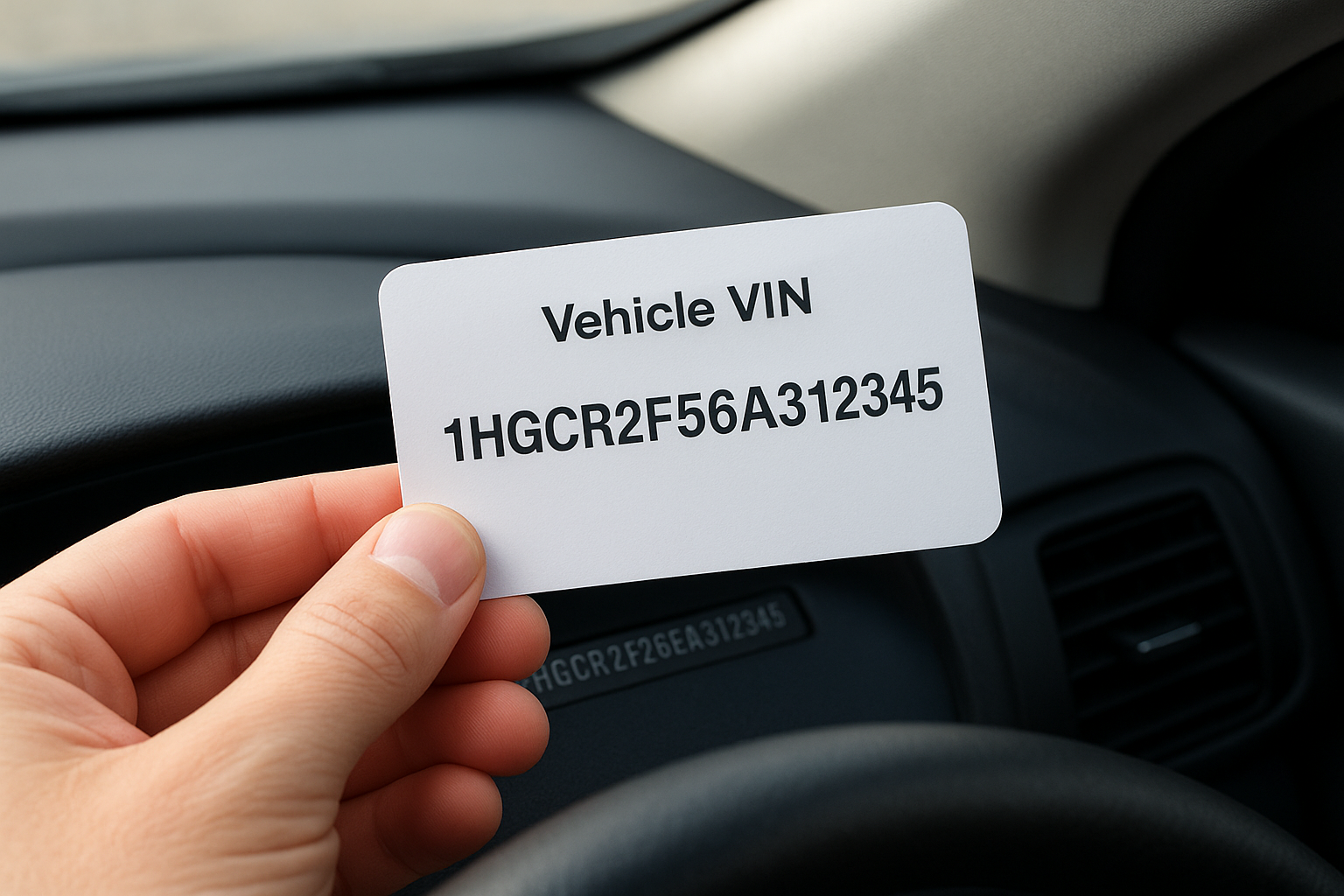
- Driver’s side dashboard: Look through the windshield at the lower-left corner of the dashboard. The VIN appears on a small metal plate.
- Driver’s side door jamb: Open the door and check the label affixed to the door frame.
- Vehicle registration and title: Your state-issued registration and title both display the full VIN.
- Insurance card: Most insurers print the VIN directly on your proof-of-insurance documents.
Double-check every character before you submit, since a single digit error will return no results or pull data for a completely different vehicle.
The official databases you’ll use
Two sources give you the most reliable recall information: BMW USA’s official recall and VIN check page and the NHTSA VIN lookup tool run by the U.S. Department of Transportation. Using both is smart practice. NHTSA captures all federally mandated recalls across every automaker, while BMW’s own portal can surface brand-specific service campaigns or regional actions that federal records may not yet reflect.
Neither tool requires a BMW account, dealer login, or personal information beyond the VIN itself. Both are publicly accessible, free, and available around the clock. Open both tools in separate browser tabs so you can cross-reference your results and confirm whether your vehicle has any open recall that qualifies for a free dealer repair. Dealers are legally required to complete recall repairs at no charge to you.
Step 1. Find your BMW VIN
Your 17-character VIN is the starting point for any bmw recall lookup, and locating it correctly before you visit any database prevents a “no results” response that could hide a real safety problem. BMW places the VIN in multiple spots on every vehicle, so you have several options depending on whether you’re at the car or working from home documents.
Locate the VIN on your vehicle or paperwork
The fastest physical spot is the driver’s side dashboard plate, visible through the windshield from outside the car without opening a door. You can also open the driver’s door and read the door jamb sticker, which shows the VIN alongside tire pressure data. Away from the vehicle? Pull out your vehicle registration card, your proof-of-insurance document, or the title, all of which display the full code.
Verify the VIN format before you search
A valid BMW VIN always opens with a World Manufacturer Identifier such as WBA, WBS, or 5UX, depending on the production plant and model line. Before you submit, count all 17 characters and confirm no letter O appears where a zero should be, since databases treat them as separate values and will return incorrect results.
One wrong character pulls data for a completely different vehicle, so read each position twice before you run the search.
Use this table to understand what each VIN section represents:
| VIN positions | Example characters | What it identifies |
|---|---|---|
| 1 to 3 | WBA | World Manufacturer Identifier |
| 4 to 8 | Various | Model line, body style, restraints |
| 9 | 0 to 9 or X | Check digit for validation |
| 10 | Letter or number | Model year code |
| 11 | Letter | Assembly plant |
| 12 to 17 | Numeric | Unique production sequence |
Step 2. Check open recalls on BMW USA
With your VIN in hand, navigate to bmwusa.com and find the recall lookup section under the Owner menu. Enter your 17-character VIN in the search field and click submit. BMW’s system returns results within seconds, showing any open recalls tied to your specific vehicle.
Use BMW USA’s VIN lookup tool
BMW’s portal displays each open recall with a campaign number, a short defect description, and the planned remedy. If no records appear, the page confirms your vehicle has no open campaigns at that time. Write down or screenshot any campaign number listed before you move on.
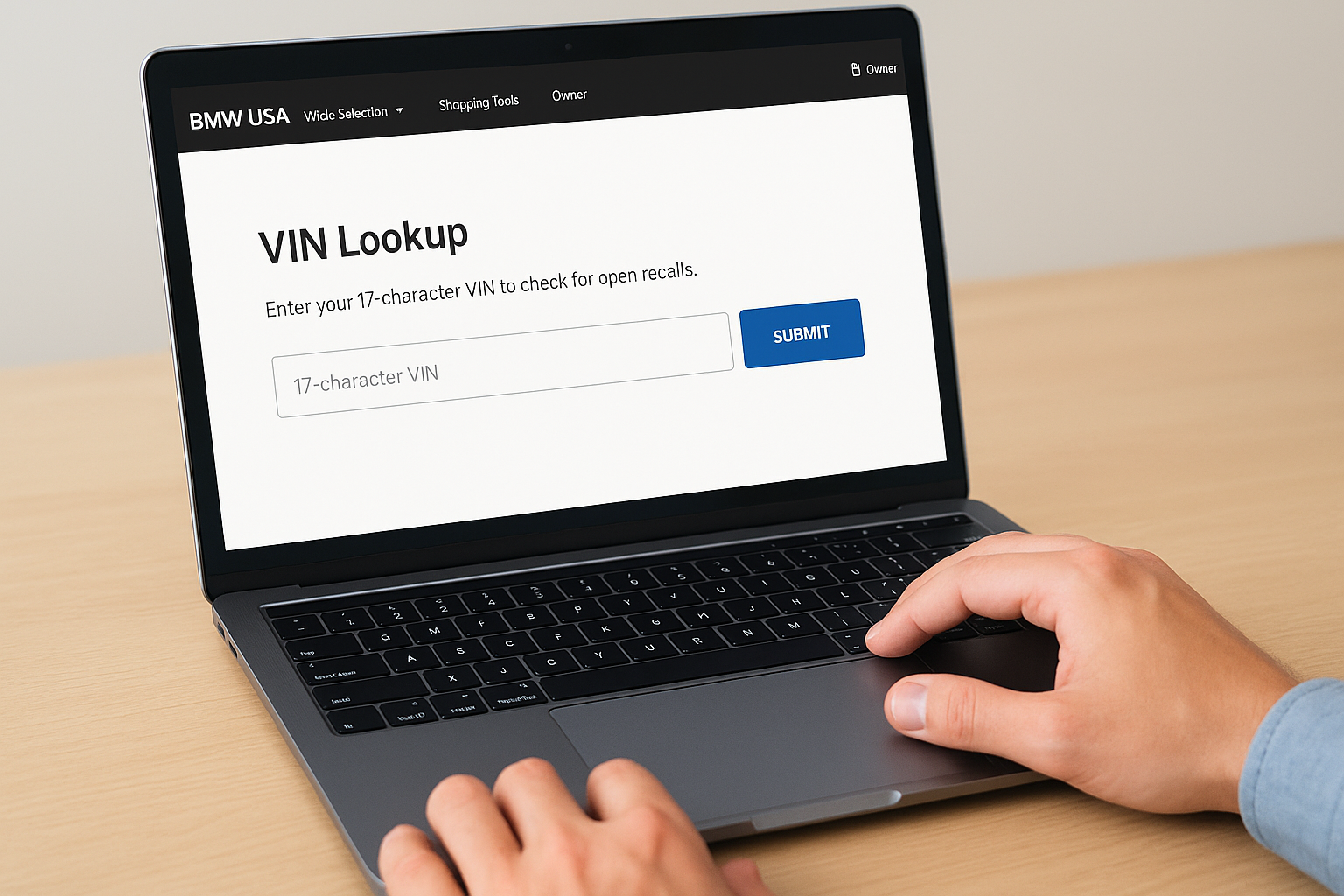
After checking BMW’s site, run the same bmw recall lookup using the NHTSA VIN lookup tool at nhtsa.gov. NHTSA tracks every federally mandated recall across all automakers, so cross-checking catches any safety notice that BMW’s portal may not yet reflect.
Running both searches takes under two minutes and gives you the most complete picture of any open safety actions on your vehicle.
Record your results
Save the key details from each open recall you find before closing either browser tab:
- Campaign number: Your dealer needs this to pull up the correct repair procedure
- Defect description: Identifies which component on your vehicle is affected
- Remedy: Describes what the dealer will do to resolve the issue
- Parts availability: Indicates whether the fix is ready or parts are still pending
Bring this information when you call or visit your local BMW dealer to schedule the required free repair.
Step 3. Confirm results and take the next step
Once both databases return your results, compare what each one shows before you act. If BMW USA and NHTSA both list the same open recall, treat that as a confirmed safety action requiring immediate attention. If only one source flags an issue, note the campaign number and defect description and ask your dealer to verify it directly.
Contact your BMW dealer to schedule the repair
Call your nearest authorized BMW dealership and give the service advisor your VIN and campaign number. Dealers are legally required to complete all open recall repairs at no cost to you, so do not let any staff imply otherwise. Ask two specific questions during that call: whether the replacement parts are currently in stock and how long the repair will take. Use this quick script to keep the call focused:
- “I’m calling to schedule a recall repair for VIN [your VIN].”
- “The campaign number is [number from your bmw recall lookup results].”
- “Can you confirm parts are available and give me an estimated repair time?”
If parts are on backorder, ask the dealer to contact you the moment inventory arrives rather than waiting for you to call again.
Document everything after the repair
Get written confirmation from the dealer once the work is done. Your service record should show the campaign number, the parts replaced, and the technician’s sign-off. Keep that document with your title and registration because it creates a clear timeline if the same defect ever contributes to an accident.
Wrap up and get help if you were harmed
Running a bmw recall lookup takes less than two minutes and can prevent a life-changing injury. You now know where to find your 17-character VIN, which two official databases to check, how to confirm open recalls, and what to say when you call your dealer to schedule a free repair. Make this check a habit every time you buy a used BMW or hear about a new safety campaign.
If a recalled defect already hurt you or someone you love before the repair happened, you may have a legal claim against the manufacturer or another responsible party. Unaddressed safety defects and negligent vehicle maintenance create real liability under California law, and injured victims have the right to pursue compensation for medical bills, lost wages, and long-term pain. Talk to a California personal injury lawyer at Steven M. Sweat, Personal Injury Lawyers, APC for a free consultation today.