 California Accident Attorneys Blog


Every year, millions of vehicles on U.S. roads have unresolved safety recalls, and many drivers have no idea their car is one of them. A CARFAX recall check lets you search for open recalls using your vehicle’s VIN or license plate number, giving you a fast, free way to find out if your car has a known safety defect that hasn’t been fixed yet.
At Steven M. Sweat, Personal Injury Lawyers, APC, we’ve spent over 25 years representing people across California who were seriously hurt in preventable car accidents. Some of those crashes involved defective vehicle components that were subject to open recalls. Checking your recall status isn’t just good maintenance, it’s a critical safety step that can protect you and everyone else on the road.
This guide walks you through how to run a CARFAX recall check, what the results mean, and what to do if a recall applies to your vehicle. We’ll also cover your legal options if a recalled auto part contributed to an accident that caused you or a loved one harm.
What a CARFAX recall check tells you
A CARFAX recall check pulls data directly from the National Highway Traffic Safety Administration (NHTSA) and cross-references it with your vehicle’s identification number. When you run the check, you get a clear picture of any open safety recalls that apply to your specific car, truck, or SUV, including recalls you may have never received a written notice for. That gap is common: NHTSA estimates that tens of millions of recalled vehicles sit unfixed on U.S. roads at any given time.
The core data in a recall report
Each recall entry includes specific details about the defect so you can understand the problem and act on it quickly. Here’s what a typical entry shows:
| Field | What it means |
|---|---|
| Recall date | When the manufacturer or NHTSA issued the recall |
| Recall description | The specific defect or safety risk identified |
| Affected components | Which part is involved, such as airbags, brakes, or the fuel system |
| Remedy status | Whether a fix is available and whether it has been completed on your vehicle |
| Responsible party | Who must make the repair, typically the manufacturer at no charge to you |
If your result shows “remedy not yet available,” the manufacturer has confirmed the defect but hasn’t released an approved fix. Check back regularly until a repair becomes available.
What a recall report does not cover
A recall check shows you open, government-mandated safety recalls, but it does not flag every potential problem with your vehicle. It will not surface technical service bulletins (TSBs), which are manufacturer repair recommendations that don’t reach the legal threshold of a formal recall and don’t obligate dealers to fix them at no cost to you.
For a more complete picture of your vehicle’s condition, pair a recall check with a professional inspection from a licensed mechanic. You can also search for TSBs and additional federal safety data directly through the NHTSA website at nhtsa.gov, where all government recall records are publicly available at no charge.
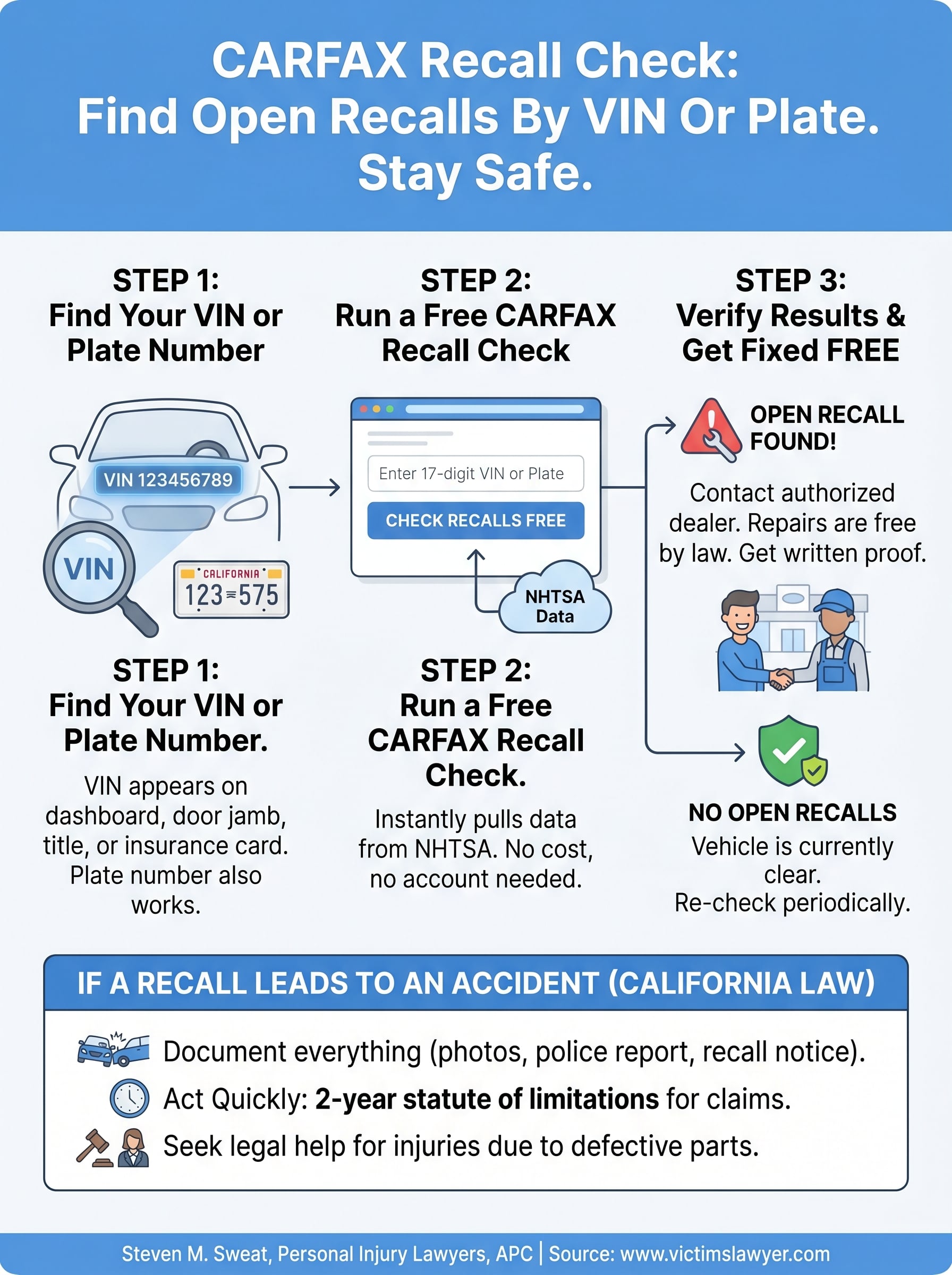
Step 1. Find your VIN or license plate number
Before you run a carfax recall check, you need either your 17-digit Vehicle Identification Number (VIN) or your license plate number. The VIN gives you the most accurate results since it’s tied directly to your specific vehicle, but both options work for the lookup.
Where to find your VIN
Your VIN appears in several locations on your vehicle and its paperwork. Check any of these:
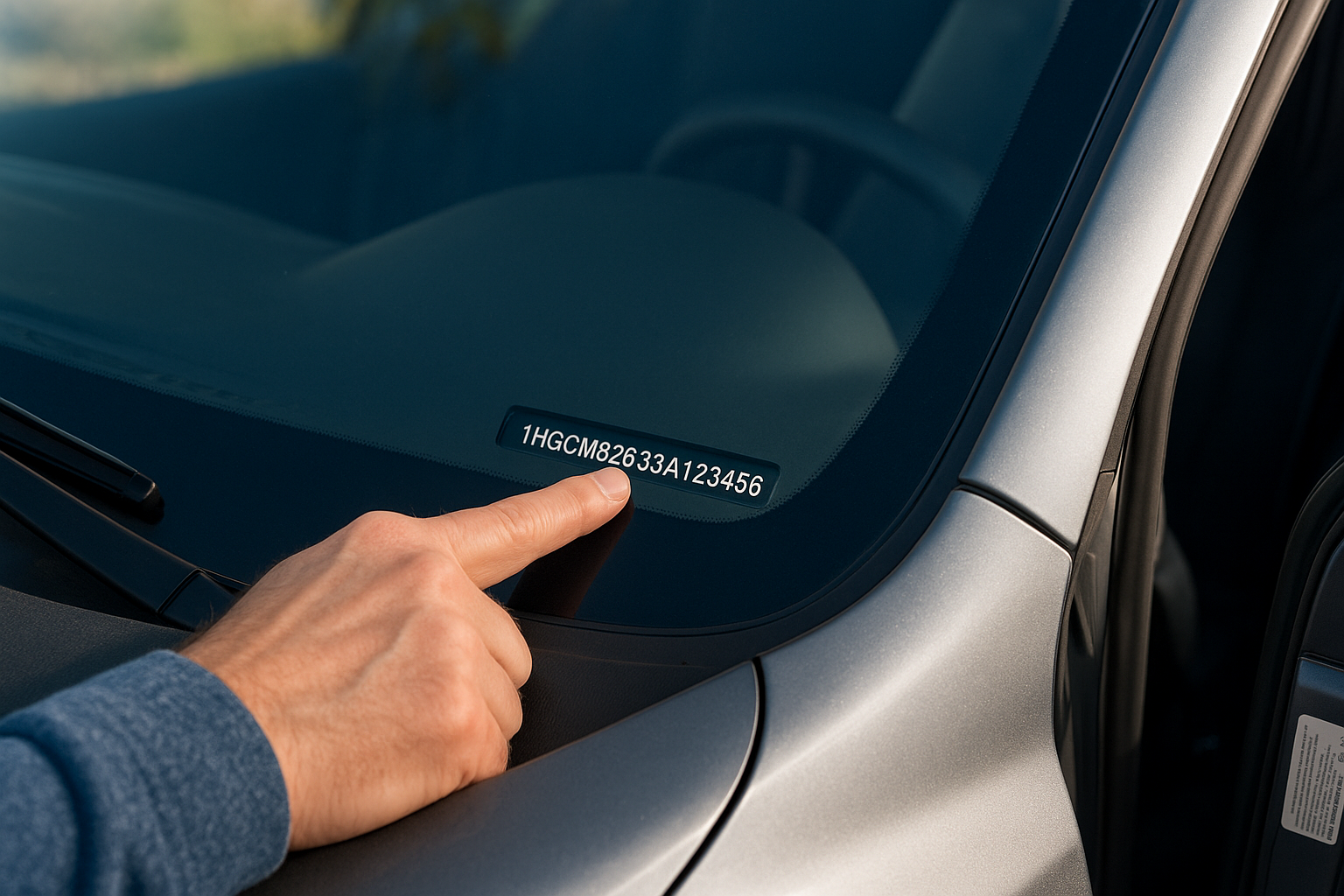
- Driver’s side dashboard: Visible through the windshield at the lower corner near the A-pillar
- Driver’s door jamb: Look for a sticker on the door frame when you open the door
- Vehicle title or registration: The VIN is printed on both documents
- Insurance card: Most insurers list the VIN on your proof of insurance
- Engine block: Look for a stamped number on the front of the engine
Using your license plate instead
If you don’t have your VIN handy, your license plate number works as a fallback. Enter your state and plate number into the CARFAX recall tool, and it matches your plate to the correct VIN automatically. This option is especially useful when you’re checking a vehicle you’re considering buying and haven’t yet received the title.
Always confirm the VIN on the report matches the VIN stamped on your dashboard before acting on any recall results.
Step 2. Run a free CARFAX recall check
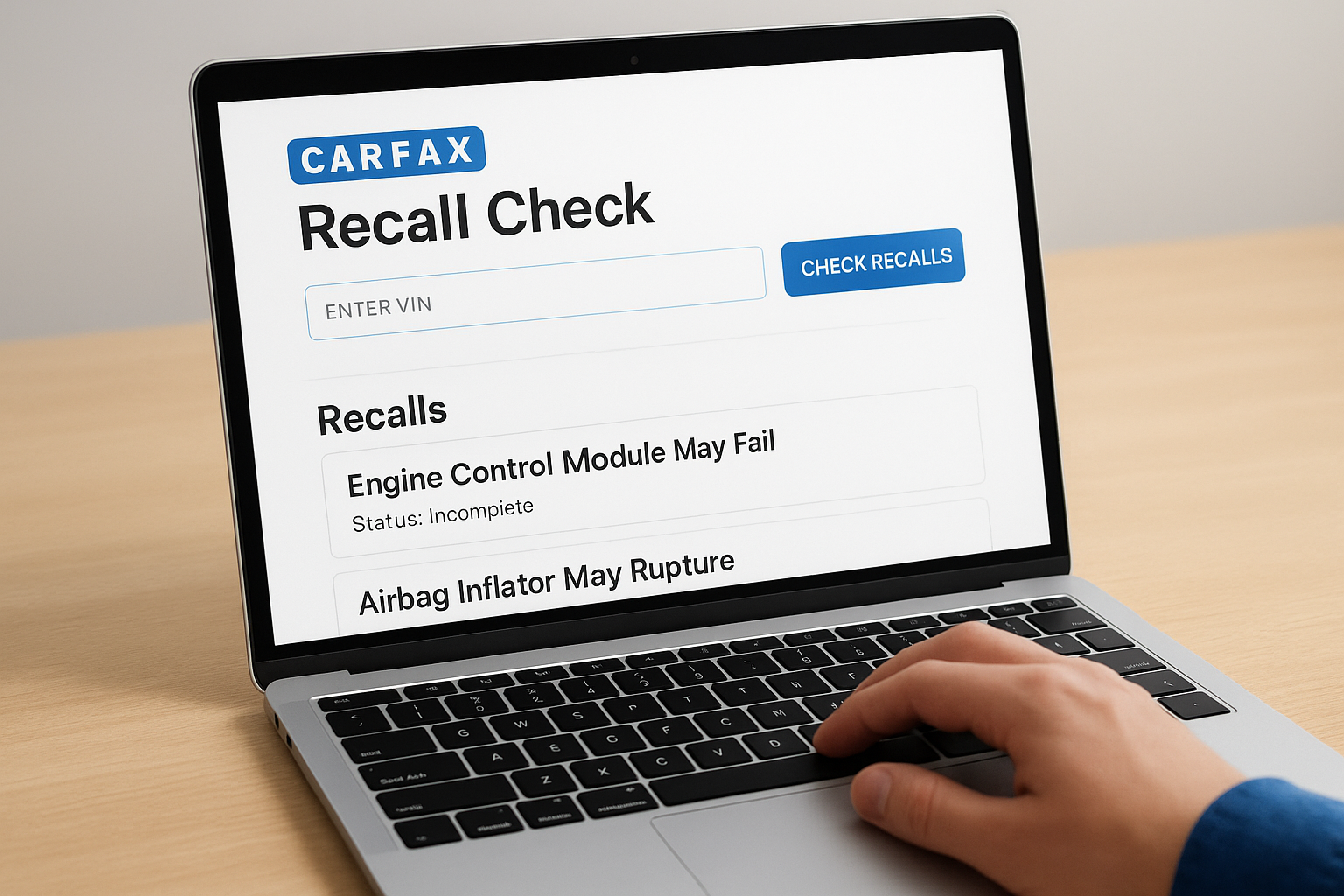
Once you have your VIN or plate number ready, running the carfax recall check takes less than a minute. Navigate to the CARFAX recall page and enter your information into the search field. The tool is completely free and requires no account or login to access.
What to enter and what to expect
Type your 17-digit VIN into the search bar and click the recall check button. If you’re using your license plate instead, select your state from the dropdown menu first, then enter your plate number. CARFAX pulls results in seconds using data from NHTSA’s national recall database to show any open recalls tied to that specific vehicle.
If your VIN returns no results, double-check that you entered all 17 characters correctly, since a single digit error will produce inaccurate output.
Reading your results page
Your results display each open recall as a separate entry. Review the recall description carefully so you understand which component is affected and whether a remedy is already available at your dealership. If the status shows “incomplete,” that repair has not been performed on your vehicle yet.
Step 3. Verify results and get the recall fixed
Once your carfax recall check returns results, verify the data before visiting a dealership. Cross-reference the recall campaign number in your results against the NHTSA database at nhtsa.gov to confirm the recall is still open and no repair has already been logged for your vehicle.
Confirm the recall applies to your vehicle
Manufacturers often limit recalls to specific production dates or build configurations, not every vehicle in a model line. Before you drive to the dealership, gather these key details from your results:
- The NHTSA campaign number
- Your 17-digit VIN
- The affected component description
Call your dealership’s service department, provide this information, and they’ll confirm your coverage in minutes.
Schedule your free dealer repair
Federal law requires manufacturers to fix open safety recalls at no cost to you. Contact your nearest authorized dealership, reference the campaign number, and book a service appointment.
Ask the service advisor to give you written documentation that the repair was completed and store a copy with your title and registration.
If a remedy is not yet available, register your contact information with the dealership so they notify you the moment the fix is released.
What to do if a recall leads to an accident in California
If you ran a carfax recall check, found an open recall, and were later hurt in an accident caused by that defect, California law gives you the right to pursue compensation from the manufacturer, dealer, or both. A documented open recall is strong evidence that a known defect existed and that a responsible party failed to act.
Saving your recall report, repair records, and any accident documentation from the start protects your legal claim significantly.
Steps to take after a recall-related crash
Your immediate actions after a crash directly shape your legal options later. Follow these steps to protect yourself:
- Call 911 and get a police report
- Photograph the vehicle damage and the crash scene
- Seek immediate medical attention, even if injuries feel minor
- Preserve any recall notices or CARFAX results you already pulled
- Avoid authorizing repairs until an attorney reviews the vehicle
When to contact a personal injury attorney
California has a two-year statute of limitations on most personal injury claims, so timing matters. If a defective recalled component contributed to your accident, an attorney can identify liable parties and document your financial and physical losses before critical evidence disappears.
Next steps
Running a carfax recall check takes less than five minutes and gives you a direct answer about whether your vehicle has an unresolved safety defect. If your results show an open recall, contact your authorized dealership immediately, book the free repair, and request written confirmation that the work was completed.
Store your recall report, your repair documentation, and your vehicle registration together in one place. That paper trail matters if a defect ever contributes to an accident and you need to prove what was known and when.
If you were already hurt in a crash involving a recalled vehicle component, acting quickly protects your legal rights under California law. The attorneys at Steven M. Sweat, Personal Injury Lawyers, APC have helped hundreds of accident victims recover compensation for injuries tied to defective vehicles. Schedule a free consultation with our team today to review your case at no cost and with no obligation.