 California Accident Attorneys Blog


Article Summary: The NHTSA recall lookup is a vital, free tool for vehicle owners to identify unresolved safety defects that could lead to life-altering accidents. By entering a unique 17-character Vehicle Identification Number into the federal database at NHTSA.gov, users can search for open recalls affecting cars, trucks, motorcycles, tires, and child safety seats. Manufacturers are legally mandated to report these defects, which remain classified as open until an authorized dealer performs the necessary repair at no cost to the owner. It is essential to locate the VIN on the dashboard, door jamb, or insurance documents before searching to ensure accurate results. If a recall is identified, owners should promptly schedule a fix using the specific campaign number and maintain detailed documentation of the completed service for future reference. Beyond personal safety, staying informed is critical because unresolved defects can lead to complex personal injury claims involving manufacturer negligence. While a result showing no recalls indicates no current issues, regular checks are recommended as new investigations conclude. For those already harmed by defective components, legal avenues exist to seek compensation for damages caused by safety standard violations.
Every year, millions of vehicles on U.S. roads have unresolved safety defects, faulty airbags, brake failures, steering problems, that their owners know nothing about. A free NHTSA recall lookup takes less than a minute and could be the difference between a routine drive and a life-altering accident. The National Highway Traffic Safety Administration maintains a searchable database where you can check your vehicle, car seat, or tires for open recalls using your VIN.
At Steven M. Sweat, Personal Injury Lawyers, APC, we’ve spent over 25 years representing people across California who were seriously hurt in crashes, including collisions caused by defective vehicle components. We’ve seen firsthand what happens when a known safety defect goes unrepaired. Checking for recalls is one of the simplest steps you can take to protect yourself and your family.
This guide walks you through exactly how to use the NHTSA recall lookup tool, what your results mean, and what to do if a recall affects your vehicle. We’ll also cover what options you have if a recalled part contributed to an injury you or a loved one suffered.
What NHTSA recall lookup is and what it covers
The NHTSA recall lookup is a free, publicly accessible database managed by the National Highway Traffic Safety Administration, a federal agency within the U.S. Department of Transportation. It lets you search for open safety recalls tied to specific vehicles, child safety seats, tires, and other motor vehicle equipment. When a manufacturer or NHTSA identifies a safety defect or a violation of federal motor vehicle safety standards, that recall gets logged in the system and made available to the public. You can access the tool directly at NHTSA.gov/recalls without creating an account or paying a fee.
A recall stays classified as “open” until the specific defect has been repaired at no cost to you by an authorized dealer or repair facility.
What types of products the database covers
The database covers far more than just cars and trucks. Motorcycles, buses, trailers, and RVs are all included, as are child safety seats, booster seats, tires, and motor vehicle equipment such as helmets. Each record lists the recall campaign number, a plain-language description of the safety risk, and the corrective action required.
Here is a breakdown of the main product categories you can search:
| Category | Examples |
|---|---|
| Vehicles | Cars, trucks, SUVs, vans, motorcycles, buses |
| Child restraints | Car seats, booster seats, travel systems |
| Tires | Passenger, light truck, and motorcycle tires |
| Equipment | Helmets, child safety seats, fire extinguishers |
How recall data gets into the system
Manufacturers are legally required to notify NHTSA and affected owners when they identify a safety defect or noncompliance issue. NHTSA can also initiate a recall independently through consumer complaints, crash investigations, and agency-led defect investigations. Once a recall is officially filed, it typically appears in the database within days. Searching the database regularly gives you one of the fastest ways to confirm whether your vehicle carries an unresolved safety risk before it causes a problem on the road.
Step 1. Find your VIN or other identifiers
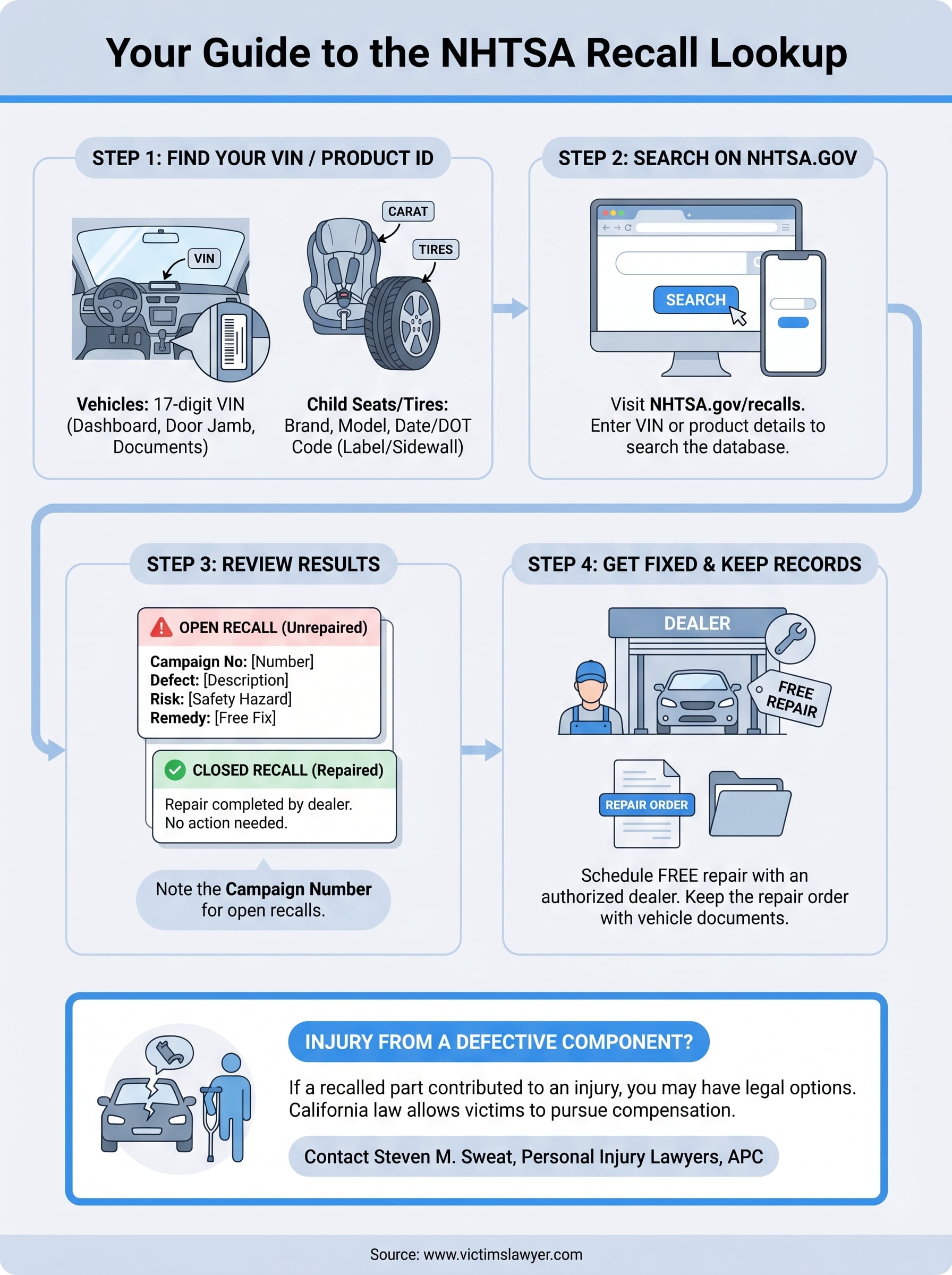
Before you run a nhtsa recall lookup, you need the right identifier. For vehicles, that identifier is your 17-character Vehicle Identification Number (VIN), which is unique to your specific car, truck, or motorcycle. Without it, your search results may be too broad to be useful.
Where to find your VIN on a vehicle
Your VIN appears in several locations on your vehicle. The most reliable spot is the driver’s side dashboard, visible through the windshield at the base of the glass. You can also find it on the driver’s side door jamb sticker, your vehicle registration card, insurance documents, and the title.
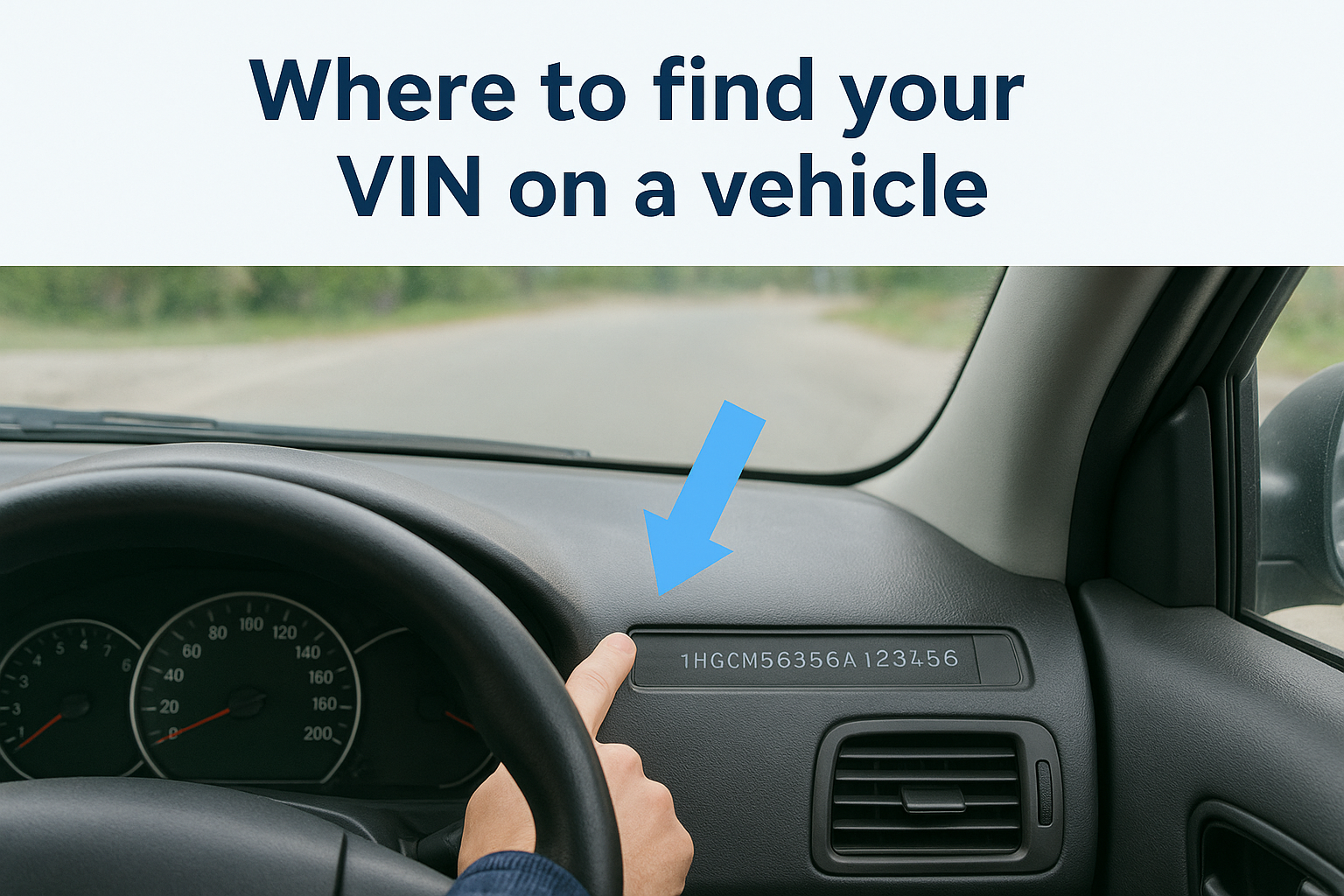
Always cross-check the VIN from a physical spot on the vehicle against your paperwork to confirm both numbers match exactly.
Common VIN locations:
- Driver’s side dashboard (windshield base)
- Driver’s side door jamb sticker
- Vehicle registration or insurance card
For child seats, tires, or equipment
If you’re checking a child safety seat or tire, you’ll use the brand name, model name, and manufacture date rather than a VIN. Find these details on the product’s label or the tire sidewall before you begin your search.
Common identifiers for non-vehicle products:
- Child seat: brand, model name, manufacture date (on sewn-in label)
- Tire: brand, model name, DOT code (on sidewall)
Step 2. Run a recall search on NHTSA.gov
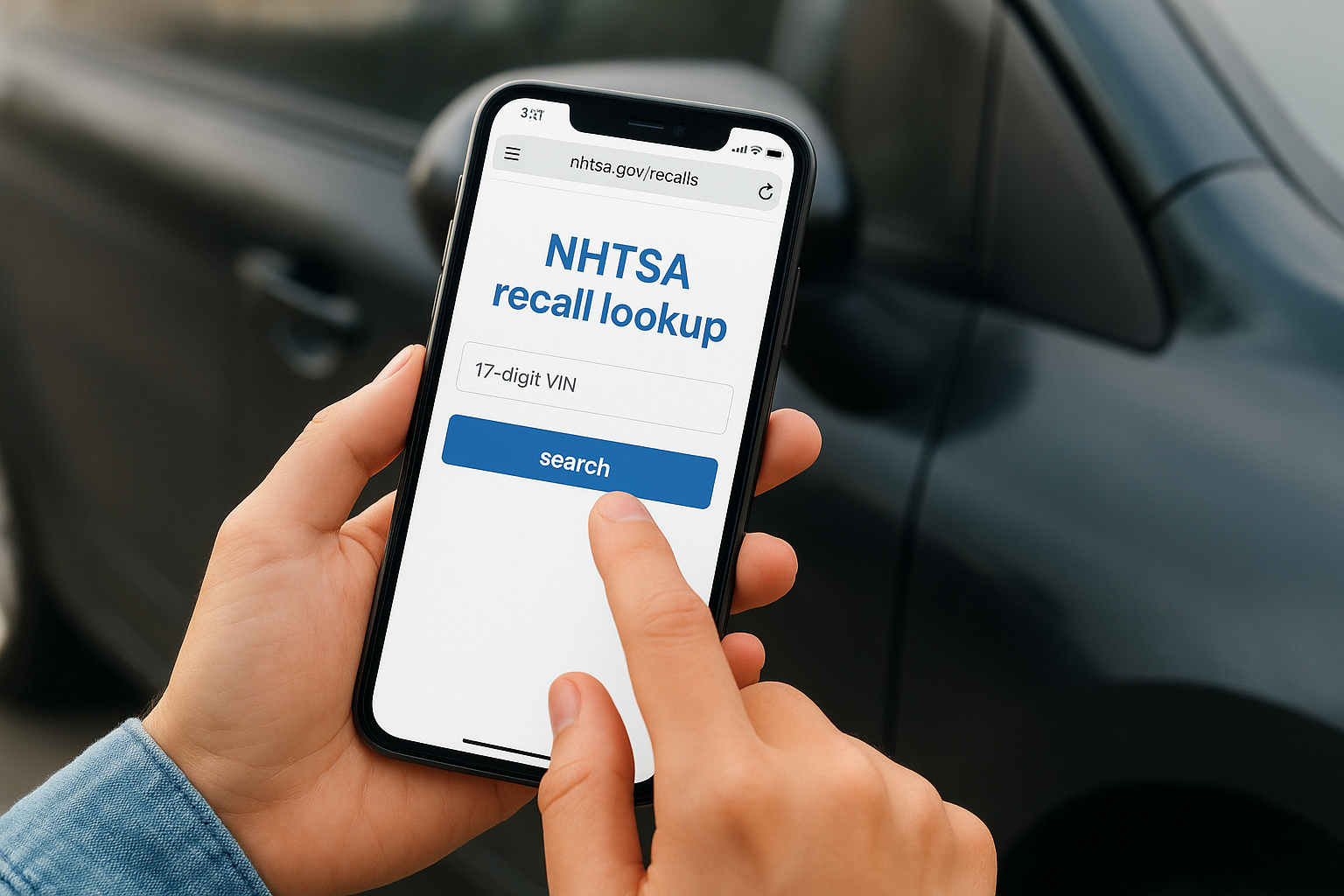
With your VIN or product identifier in hand, open a browser and go to NHTSA.gov/recalls. The nhtsa recall lookup tool loads directly on the page without requiring any login or registration. You’ll see a search bar prominently displayed at the top where you enter your 17-character VIN for vehicle searches. The site is mobile-friendly, so you can run this search from your phone while standing next to the vehicle.
How to enter your search
Type or paste your complete VIN into the search field and click “Search.” The system matches results to your exact vehicle configuration, not just the make and model, which means you won’t miss a recall that applies only to your specific production run. For child seats or tires, select the correct product tab first, then enter the brand name and model details.
Double-check all 17 characters before you submit, since a single digit error will return inaccurate or missing results.
Follow this sequence to complete your search:
- Navigate to NHTSA.gov/recalls
- Enter your 17-character VIN in the vehicle search field
- Click the “Search” button
- Review the list of open recalls on the results page
- Record the recall campaign number for each open item listed
Step 3. Read results and confirm next actions
Once your search completes, the nhtsa recall lookup results page lists every open recall tied to your VIN. Each entry includes a campaign number, defect description, safety risk, and the required remedy. Read each entry in full, because the description tells you whether the defect applies to your specific production date and vehicle configuration.
Understanding what the results show
Each result flags recall status as open or closed. Open means the repair has not been done on your vehicle; closed means a dealer already performed the fix. If you see an open recall, copy the campaign number right away, since you’ll need it when you schedule a dealer appointment.
Contact the manufacturer’s customer service line directly if you want specifics on parts availability or repair timelines for an open recall.
Here is what each result field tells you:
| Field | What it means |
|---|---|
| Campaign number | Unique ID to reference when booking a repair |
| Defect description | What component is failing and why |
| Safety risk | The hazard if the defect goes unrepaired |
| Remedy | The free fix the dealer will perform |
What to do if no recalls appear
A result showing no open recalls does not mean your vehicle is risk-free. It simply means no active manufacturer recall currently applies to your VIN. Check back every few months, since new recalls enter the database as NHTSA investigations close.
Step 4. Get the recall fixed and keep records
Once you confirm an open recall through the nhtsa recall lookup, contact an authorized dealer for your vehicle’s make and schedule the repair using the campaign number from your results. Call ahead to confirm that the required parts are in stock before you make the trip, since some high-demand recalls have backlogged part supplies. Recall repairs are always free of charge regardless of whether you purchased or leased the vehicle.
Keep all dealer documentation from the repair visit, including the written repair order and any parts paperwork, since this proof can matter significantly if a defect-related injury claim arises later.
How to document the completed repair
After the dealer finishes the fix, ask for a written repair order that lists the campaign number, the work performed, and the date of service. Store this record alongside your vehicle title and insurance documents so you can locate it quickly if you ever need it.
Use this simple record-keeping template:
| Field | What to record |
|---|---|
| Recall campaign number | From the NHTSA results page |
| Dealer name and address | Where the repair was performed |
| Date of repair | Day the fix was completed |
| Parts replaced | As listed on the repair order |
| Service advisor name | Your point of contact |
Next Steps
Running a nhtsa recall lookup takes less than two minutes and gives you specific, actionable information about whether your vehicle carries an unresolved safety defect. Start today by locating your 17-character VIN, visiting NHTSA.gov/recalls, and logging any open campaign numbers you find. Schedule the free dealer repair as soon as parts are available, and store your completed repair order with your other vehicle records.
Checking recalls protects you going forward, but it does not undo harm that has already happened. If a defective vehicle component contributed to a crash that injured you or someone in your family, you may have legal options beyond the recall repair. California law allows victims to pursue compensation from manufacturers and other responsible parties when a known defect causes serious harm. Our attorneys have handled these cases for over 25 years across California. Contact our team today for a free consultation to discuss what happened and what your options are.