 California Accident Attorneys Blog


Article Summary: Keeping your vehicle safe requires proactive steps, starting with a comprehensive Hyundai recall lookup to identify potential safety hazards like engine fires or faulty brakes. Owners should first locate their unique 17-character Vehicle Identification Number (VIN), typically found on the driver’s side dashboard, door jamb, or vehicle registration documents. Using this code, drivers can search the National Highway Traffic Safety Administration (NHTSA) database for official federal recall information, which includes detailed defect descriptions and repair instructions. For total accuracy, it is essential to cross-reference these findings with the official Hyundai owner portal, as manufacturer updates may vary. If an open recall is detected, owners must contact a certified dealership immediately to schedule a free repair. While these repairs are provided at no cost, unresolved defects can lead to devastating accidents. In cases where a known vehicle defect has already caused an injury or crash, seeking legal counsel is vital. Expert personal injury lawyers, such as those at Steven M. Sweat, APC, assist victims in navigating product liability claims against manufacturers to ensure they receive proper compensation for preventable harm caused by these dangerous mechanical failures.
Every year, millions of vehicles are recalled for defects that range from minor software glitches to serious safety hazards like faulty brakes, airbag malfunctions, and engine fires. If you drive a Hyundai, running a Hyundai recall lookup on your vehicle could be one of the most important things you do this week.
At Steven M. Sweat, Personal Injury Lawyers, APC, we’ve spent over 25 years representing people in Los Angeles and throughout California who were hurt in crashes, and in too many of those cases, a known vehicle defect played a role. When a manufacturer issues a recall and a driver never finds out, the consequences can be devastating. That’s a situation we see firsthand, and it’s entirely preventable.
This guide walks you through exactly how to check your Hyundai for open recalls using your VIN, what to do if your vehicle is affected, and how to protect yourself and your passengers on the road.
What a Hyundai recall lookup tells you
Running a Hyundai recall lookup gives you more than just a yes or no answer. The official databases return structured information tied directly to your Vehicle Identification Number, so you see exactly which component is defective, why it poses a risk, and what the repair involves.
A recall check through the National Highway Traffic Safety Administration (NHTSA) database covers every recall reported to the federal government, making it the most complete source available to you.
The specific data a recall report includes
Each recall entry in the federal database contains several critical data points that tell you the full story of the defect. You are not just learning that something is wrong; you are learning what can happen if you keep driving the vehicle without the fix. A typical recall report shows you:
- Recall campaign number: the unique ID your dealer uses to pull up and process the repair
- Component affected: the specific part or system, such as the fuel pump, airbag inflator, or brake booster
- Description of the defect: what is failing and under what conditions it becomes dangerous
- Potential safety consequences: the risk to you, your passengers, or other people on the road
- Remedy: what the manufacturer will do to correct the problem, usually at no cost to you
- Remedy availability date: when parts or software updates will be ready at dealerships
What the results mean for your next step
Once you see an open recall listed, scheduling the repair becomes your immediate priority. A result that shows a remedy as “not yet available” means the fix is still in development, so you should contact your local Hyundai dealer right away to get on a waiting list and ask about any interim safety guidance for driving the vehicle in the meantime.
Step 1. Find your VIN and basic vehicle info
Your VIN (Vehicle Identification Number) is the starting point for any Hyundai recall lookup. Every recall database uses this 17-character code to match your specific vehicle to any open campaigns, so having it ready before you start saves time.
Your VIN is unique to your vehicle and carries encoded details like the manufacturer, model year, plant of assembly, and production sequence number.
Where to find your VIN
Three reliable locations hold your VIN, and at least one is always accessible without opening the hood:
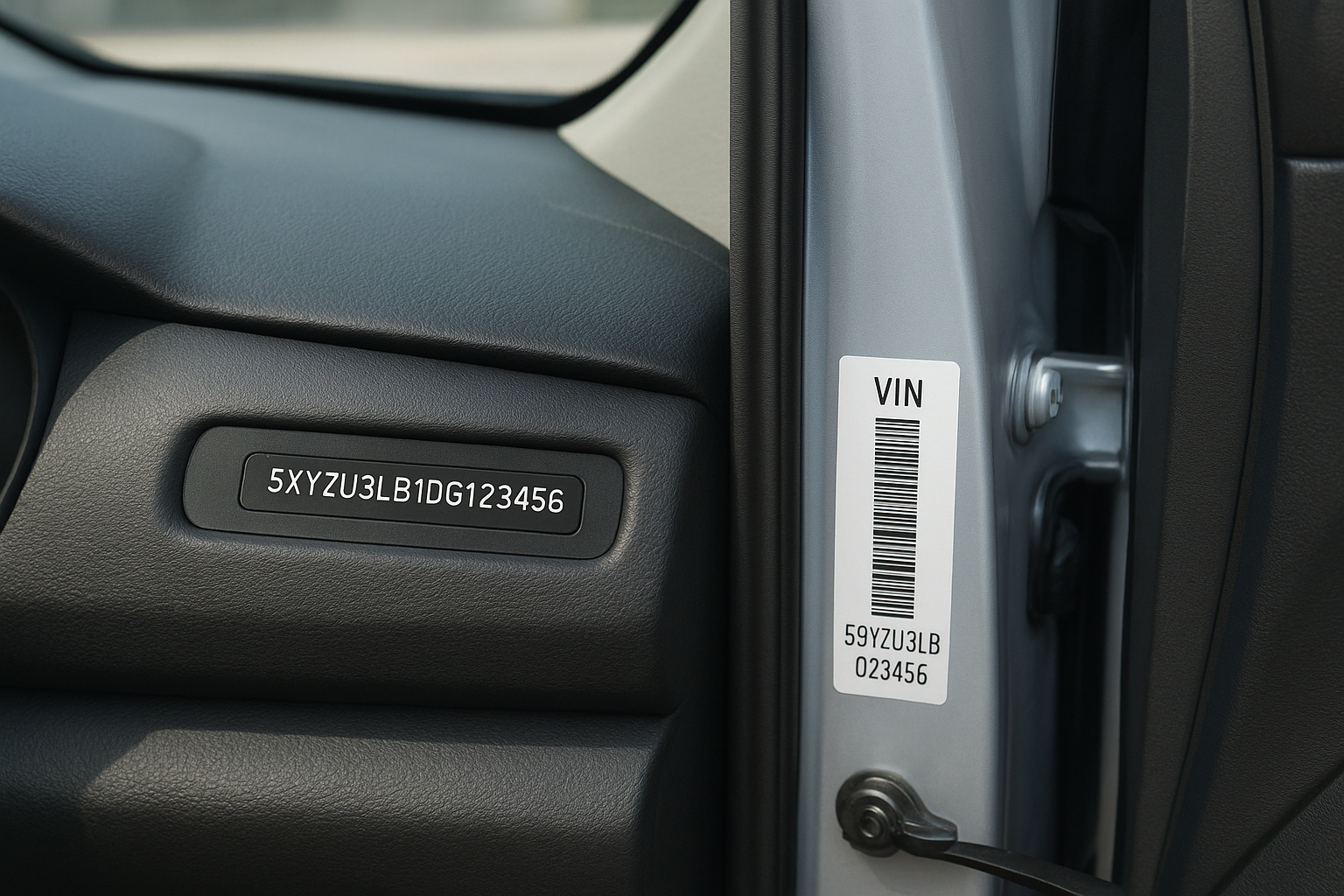
- Driver’s side dashboard: Look through the windshield at the lower-left corner of the dashboard, where a small metal plate or sticker displays the number.
- Driver’s door jamb: Open the driver’s door and check the sticker on the door frame or B-pillar.
- Vehicle title and registration: Your official paperwork lists the VIN at the top of most documents.
Once you have the number, write it down or photograph it so you can copy it accurately into the recall databases in the next steps.
Step 2. Run a recall check on NHTSA
With your VIN in hand, navigate to the NHTSA website and use their free recall search tool. The National Highway Traffic Safety Administration runs the most comprehensive federal recall database available, and it covers every Hyundai recall the manufacturer has reported to the federal government.
NHTSA’s recall database is updated regularly, so the results you see reflect the current recall status for your specific vehicle.
How to use the NHTSA recall search tool
Enter your 17-character VIN into the search field on the NHTSA lookup page and click the search button. The system matches your number against the federal database and returns a clear list of any open or completed recalls tied to that exact vehicle.
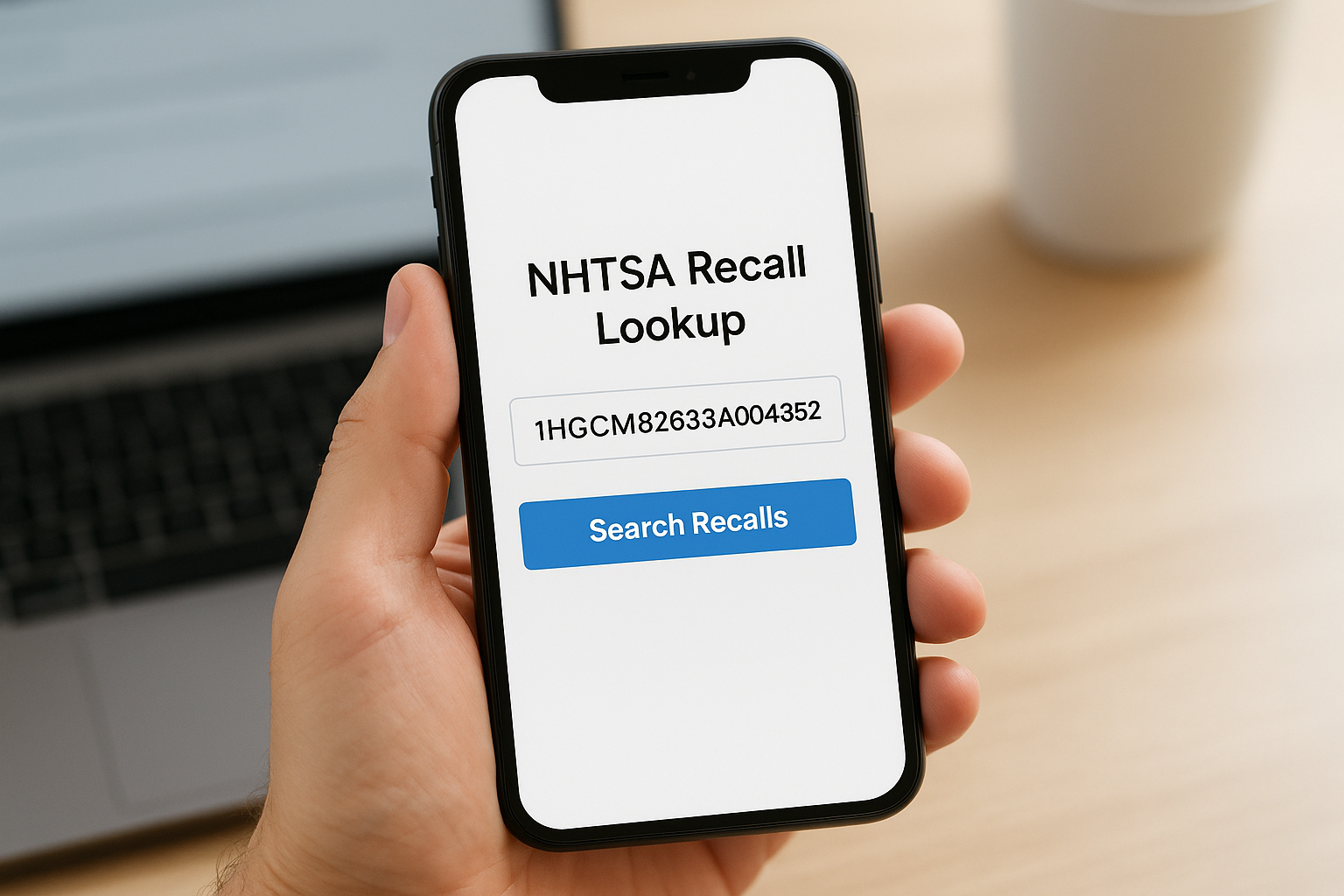
Follow these steps to complete your Hyundai recall lookup on NHTSA:
- Go to nhtsa.gov and select “Check for Recalls”
- Type or paste your VIN into the search field
- Click “Search Recalls”
- Review each result, noting the recall status, affected component, and remedy availability date
If your results show no open recalls, save a screenshot as a personal record. The tool may also list completed recalls, which indicates a prior owner already had the repair done on that vehicle.
Step 3. Confirm on Hyundai and schedule service
After you complete your Hyundai recall lookup on NHTSA, confirm the results directly through Hyundai’s official owner portal. The manufacturer’s database updates on a separate schedule from NHTSA, so cross-referencing both sources gives you the most accurate picture of your vehicle’s recall status before you contact a dealer.
How to use Hyundai’s owner portal
Visit owners.hyundaiusa.com and enter your 17-character VIN into the recall search field on the homepage. The portal returns a list of open service campaigns linked to your specific vehicle and lets you request dealer contact from the same page.
Checking both the federal NHTSA database and the Hyundai owner portal together ensures you do not miss any open recall before scheduling a repair.
Scheduling the repair at a dealership
Call a certified Hyundai dealership near you and provide both your VIN and the recall campaign number you recorded from your search results. Ask the service advisor to confirm that parts are in stock before you commit to an appointment date. Recall repairs are free of charge to you under federal law, so you should not pay anything out of pocket for the fix.
Step 4. What to do after you get results
Your recall search results fall into two categories, and each one requires a different response. Knowing what action to take immediately after your Hyundai recall lookup saves you from unnecessary delays or continued exposure to a known safety risk.
Whether your results show an open recall or a clean record, document the date and results so you have a timestamped personal record.
If your vehicle shows no open recalls
A clean result means no federal or manufacturer recall is currently tied to your VIN. Save a screenshot of both the NHTSA and Hyundai portal results with the date visible. Take these simple steps to stay protected going forward:
- Set a reminder to re-run the lookup every six months, since new recalls get issued on a rolling basis
- Register your vehicle on owners.hyundaiusa.com to receive automatic recall notifications by email
If your vehicle has an open recall
Contact your nearest certified Hyundai dealership the same day and provide your VIN and the recall campaign number. Confirm that parts are in stock before booking your appointment. Then take these immediate steps:
- Stop driving the vehicle if the recall involves a critical safety system like brakes or steering
- Request a loaner vehicle from the dealership while your car is being repaired
- Keep all repair documentation for your personal records
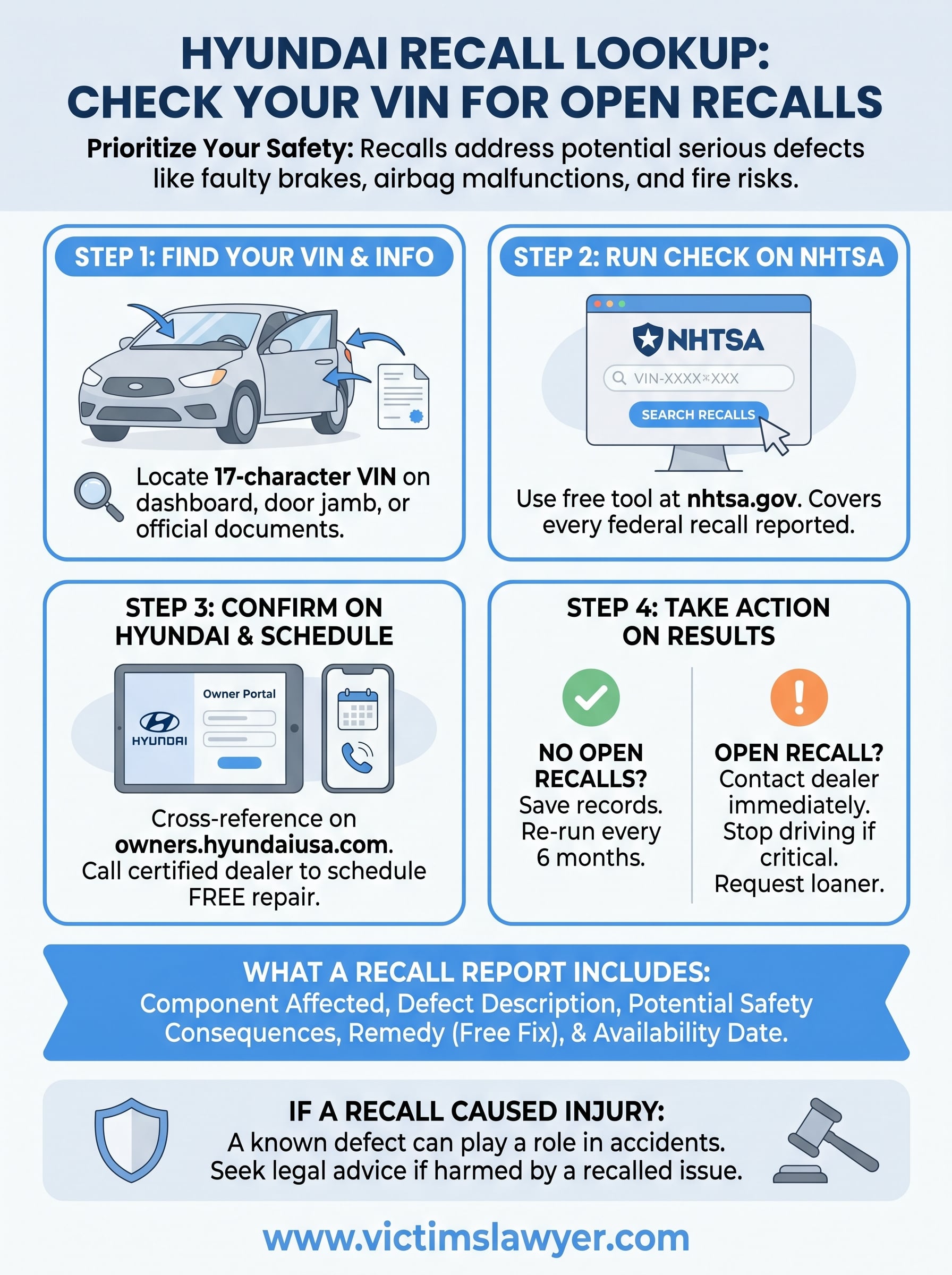
If a recall caused a safety issue
Running a Hyundai recall lookup protects you going forward, but it cannot undo harm that already happened. If your Hyundai was involved in a crash, fire, or mechanical failure and you later discovered an open recall existed at the time, you may have a legal claim against the manufacturer.
Recall-related injury cases involve specific legal deadlines and require evidence that the defect directly caused the harm you suffered. Gathering your repair records, crash reports, and medical documentation immediately after the incident strengthens any future claim. Every day you wait, evidence becomes harder to recover and legal options narrow.
At Steven M. Sweat, Personal Injury Lawyers, APC, we have represented California accident victims for over 25 years, including cases where a known vehicle defect contributed to a serious injury. If a recall-related failure hurt you or a family member, contact our legal team today for a free consultation.