 California Accident Attorneys Blog


The moments after a car crash are chaotic, and what happens next can make or break your ability to recover compensation. Knowing how to investigate a car accident isn’t just something police and insurance adjusters do, it’s something every driver should understand. The evidence collected in the first hours and days after a collision often determines who’s held responsible and how much money ends up on the table.
At Steven M. Sweat, Personal Injury Lawyers, APC, we’ve spent over 25 years representing accident victims across Los Angeles and throughout California. We’ve seen firsthand how a thorough investigation separates strong claims from weak ones, and how critical mistakes in the early stages can cost injured people the compensation they deserve. Our attorneys have recovered hundreds of millions of dollars by building cases on solid evidence, and we know exactly what it takes to prove fault.
This guide walks you through the full investigation process, from securing the scene and photographing damage to obtaining police reports and witness statements. Whether you’re handling things on your own or working with a lawyer, you’ll learn the specific steps that police, insurers, and legal teams use to piece together what really happened and establish liability.
What a good crash investigation includes
A proper investigation does more than confirm that two cars collided. It documents the full picture: road conditions, vehicle positions, driver behavior, witness accounts, and physical damage. Understanding what goes into this process helps you see why certain evidence matters and why losing it early can permanently damage your case. When you know how to investigate a car accident properly, you give yourself the best possible foundation for a successful claim.
The quality of an investigation often determines how much compensation an injured person recovers, not the severity of the injuries alone.
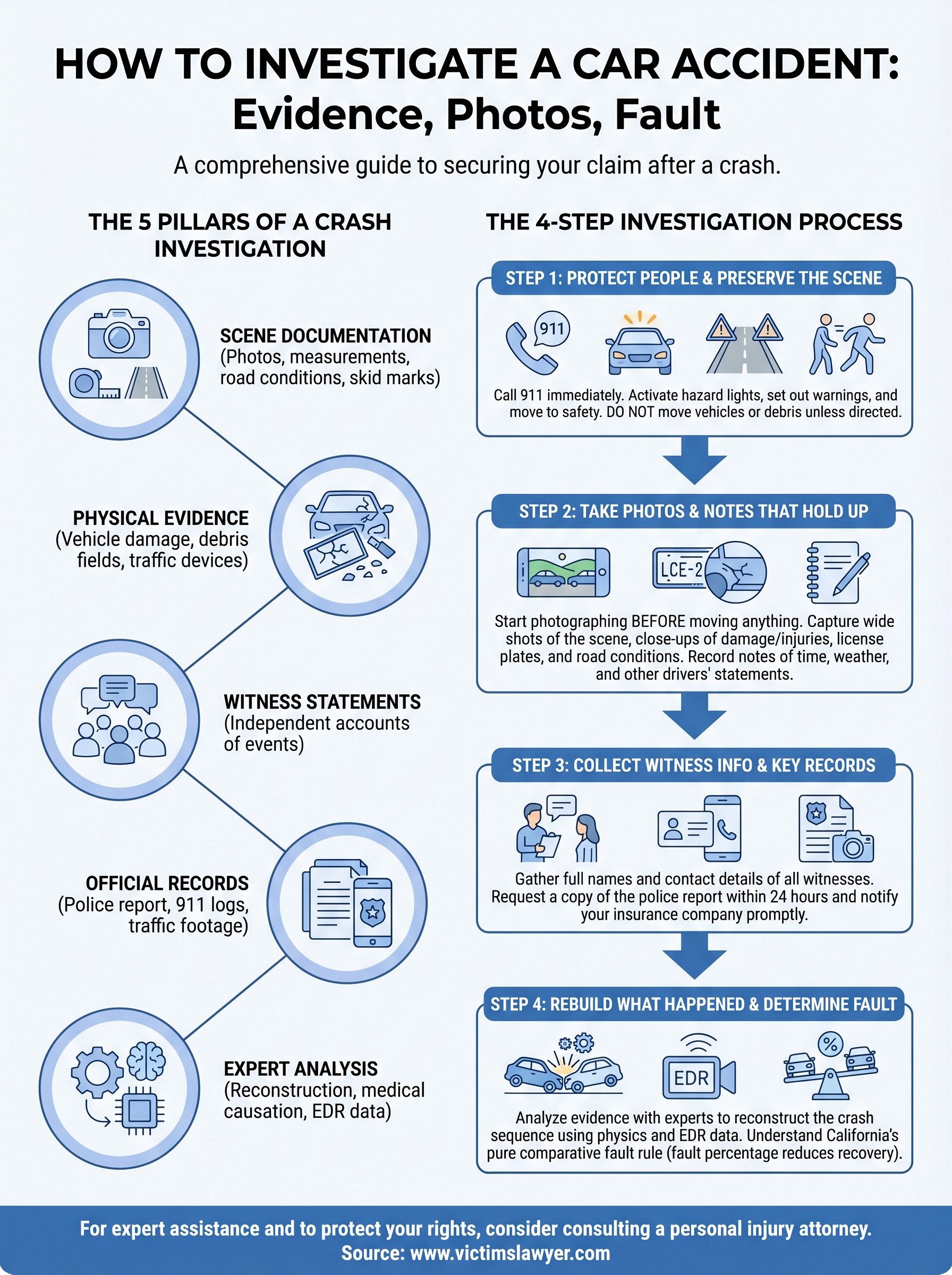
The five pillars of any solid crash investigation
Every thorough crash investigation rests on five core elements. These components work together to reconstruct the sequence of events and assign fault accurately.
| Component | What it captures |
|---|---|
| Scene documentation | Photos, measurements, road conditions, skid marks |
| Physical evidence | Vehicle damage, debris fields, traffic control devices |
| Witness statements | Independent accounts of what happened before impact |
| Official records | Police report, 911 call logs, traffic camera footage |
| Expert analysis | Accident reconstruction, medical causation, data from the vehicle’s event data recorder |
Each of these pillars supports the others. Witness statements, for example, only gain full power when they align with photos from the scene. Physical evidence like skid marks means more when an accident reconstructionist ties those marks to a specific speed calculation.
Who conducts the investigation and when
Multiple parties investigate the same crash, and they each have different goals. Police officers arrive first and document the scene in an official report that becomes a key piece of evidence in any claim. Insurance adjusters follow up within days, often working to limit their company’s exposure rather than uncover the full truth about what happened.
Physical evidence disappears fast: skid marks fade, debris gets cleared, and surveillance footage gets overwritten within 24 to 72 hours. Witnesses’ memories also degrade within days, which is why starting your own documentation at the scene and contacting a personal injury attorney early puts you in a far stronger position than waiting to see how things develop.
Step 1. Protect people and preserve the scene
Before you can apply any knowledge of how to investigate a car accident, you need to secure the environment so that critical evidence stays intact and no one suffers additional harm. Your first action is to call 911 immediately, even if injuries seem minor, because a responding officer’s report becomes an official document that carries enormous weight in any future insurance claim or lawsuit.
Make the scene safe first
Turn on your hazard lights and, if your vehicle is drivable and it’s safe to do so, move it out of active traffic lanes. Place road flares or warning triangles behind the scene if you carry them. Do not move injured people unless they face an immediate danger like fire, since moving a trauma victim incorrectly can worsen spinal or head injuries. Stay on the line with the 911 dispatcher until help arrives.
Follow these immediate safety actions in order:
- Turn on hazard lights and keep them on
- Call 911 and report exact location, number of vehicles, and any visible injuries
- Set out warning triangles or flares at least 100 feet behind the scene
- Stay off the road and move bystanders to a safe distance
Lock down physical evidence before it disappears
Once everyone is safe, your focus shifts to preserving what’s on the ground. Skid marks, fluid spills, broken glass, and debris patterns all tell a story that accident reconstructionists rely on later. Do not allow anyone to move vehicles, sweep debris, or alter the scene before officers have documented it fully.
The police report generated at this stage is one of the most powerful documents in your entire claim, so make sure officers record original vehicle positions before anything moves.
If the other driver or a bystander attempts to clear the road prematurely, flag the responding officer and request they note original positions in their official report.
Step 2. Take photos and notes that hold up later
Your smartphone is one of your most powerful tools for understanding how to investigate a car accident properly. Start shooting before anything moves, because a single well-framed photo can contradict an adjuster’s version of events and confirm your account with precision. Shoot in landscape mode, keep your flash on in low light, and take multiple angles of each subject so you have options later.
What to photograph at the scene
Capture everything in a logical sequence moving from wide shots to close-ups. Wide-angle shots show the overall scene, including road layout, lane markings, and where each vehicle came to rest. Close-up shots document specific damage, license plates, tire marks, broken glass, deployed airbags, and any visible injuries on your body.
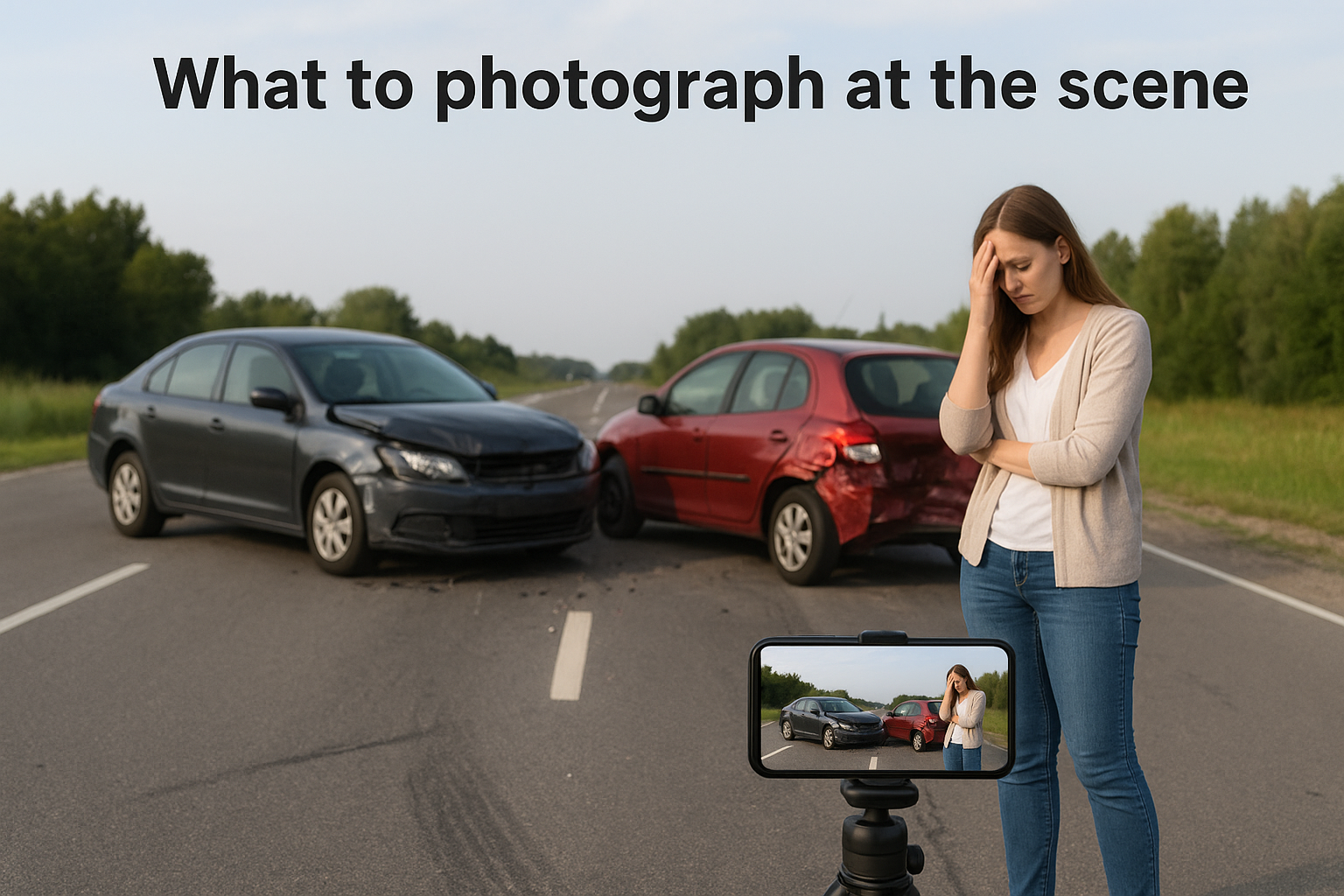
Courts and insurance companies treat photographic evidence as the most objective record available, so volume and variety both matter here.
Cover these specific subjects in your photo set:
- All four sides of every vehicle involved, including the roof if elevated damage exists
- License plates and VIN numbers visible through the windshield
- Skid marks with a reference object like a shoe or coin for scale
- Traffic signs, signals, and road conditions within 200 feet of the point of impact
- Your own visible injuries, photographed immediately and again 24 hours later when bruising fully develops
Write down notes while memory is fresh
Open your phone’s notes app and record a spoken or typed account of the crash within 15 minutes of the collision. Include the time, weather, road surface condition, what you were doing immediately before impact, and the exact words any other driver said to you at the scene. These raw notes carry real weight if your case goes to litigation months later.
Step 3. Collect witness info and key records
Witnesses and official records give your case independent verification that no insurance company can easily dismiss. This step is central to understanding how to investigate a car accident the way a trained legal team would, because third-party accounts and documented records create a factual framework that stands on its own.
Independent witnesses who have no financial stake in the outcome carry more credibility with adjusters and juries than either driver involved.
How to approach witnesses
Walk toward bystanders calmly and ask if they saw what happened. Collect full names, phone numbers, and email addresses for every person willing to speak with you. Ask each witness to describe what they saw in a few sentences, and record their account on your phone’s voice memo app immediately. Do not coach their answers or suggest details, because an unprompted account holds far more legal weight than one that appears influenced.
Use this quick template to capture witness contact details at the scene:
| Field | Example |
|---|---|
| Full name | Maria Gonzalez |
| Phone number | (213) 555-0198 |
| Email address | m.gonzalez@email.com |
| Brief description | Saw red truck run red light heading north |
Records to request right away
Beyond witnesses, certain documents define the official record of the crash. Request a copy of the police report from the responding agency within 24 hours of the collision. Your insurance company also needs notification quickly, as most policies require prompt reporting after any accident. Additional records to gather include any available traffic camera footage, dashcam video from your own vehicle or nearby commercial properties, and emergency dispatch logs from the 911 call.
Step 4. Rebuild what happened and determine fault
Reconstruction is the analytical phase of how to investigate a car accident, where raw evidence gets transformed into a clear account of the crash sequence. Investigators use measurements, photographs, vehicle damage patterns, and witness statements to build a timeline that shows exactly what each driver did in the seconds before impact.
Physical evidence from the scene, combined with data pulled from a vehicle’s event data recorder, often tells a more accurate story than either driver’s account.
How reconstruction experts piece together the sequence
Accident reconstructionists are engineers who apply physics and mathematics to crash data. They calculate pre-impact speed using skid mark length and road friction coefficients, and they use damage crush depth to estimate the force of the collision. Your attorney can hire one of these experts early in your case to produce a formal report that carries significant weight with insurance companies and juries alike.
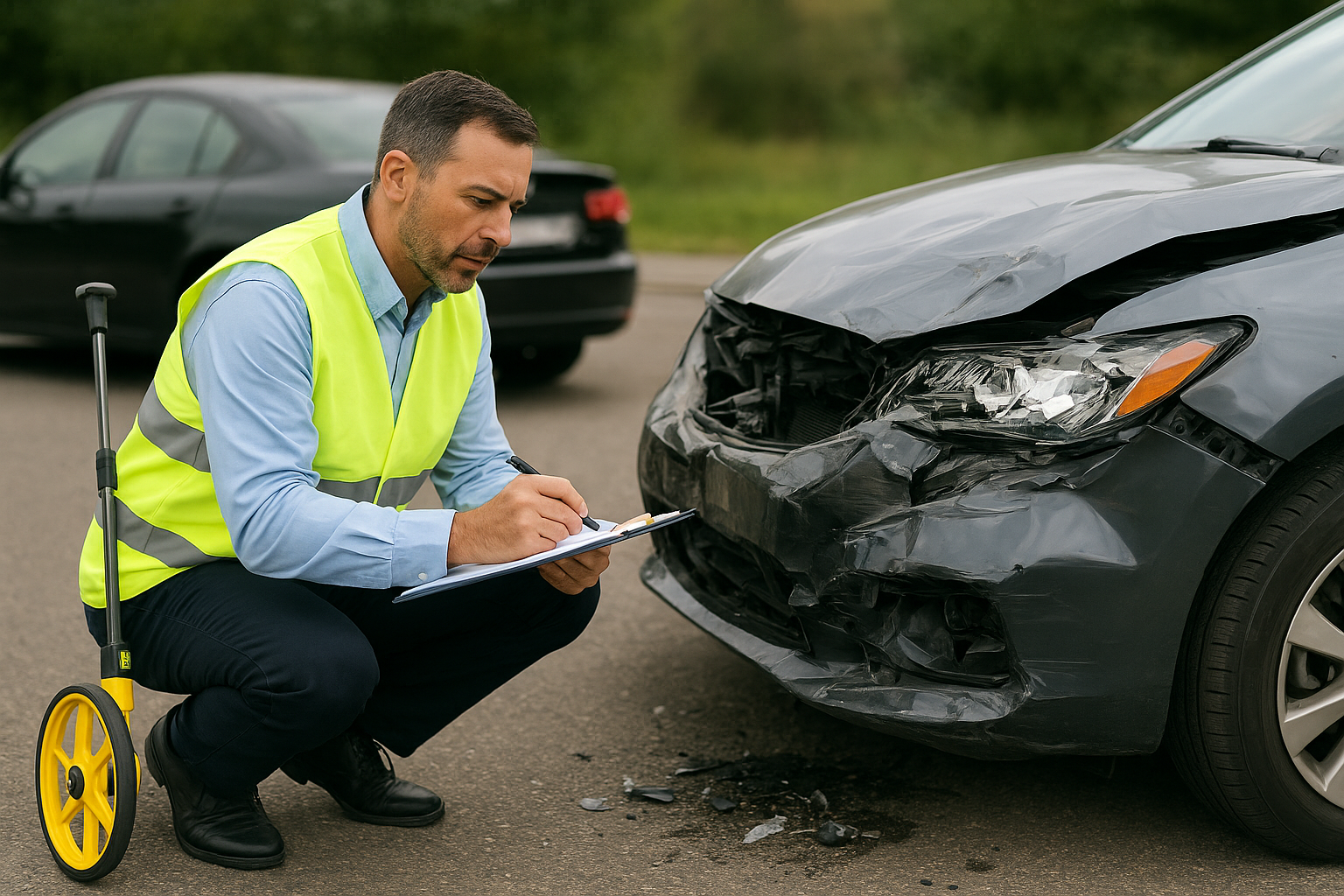
Many modern vehicles store data in an event data recorder (EDR), similar to an aircraft’s black box. Key data points typically captured in the final five seconds before impact include:
- Vehicle speed
- Throttle and brake inputs
- Seatbelt status
- Steering angle
Your attorney can subpoena this EDR data before the vehicle is repaired or resold, so acting quickly matters.
How fault gets assigned under California law
California follows a pure comparative fault rule, meaning each driver can be assigned a percentage of responsibility for the crash. If you are found 20 percent at fault, your total recovery is reduced by that same percentage. Every piece of evidence that shifts fault toward the other driver directly increases the dollar amount you recover. Use this framework to map your evidence to fault factors:
| Fault factor | Evidence that supports your position |
|---|---|
| Speeding | EDR data, skid mark calculations |
| Red light violation | Traffic camera footage, witness statements |
| Distracted driving | Phone records, dashcam video |
| Failure to yield | Road geometry photos, officer’s report |
What to do next
Now you have a clear picture of how to investigate a car accident, from securing the scene through fault determination under California law. Evidence quality and speed are the two variables that separate winning claims from ones that fail. Following these steps puts you well ahead of most accident victims.
That said, even a solid personal investigation has real limits. Insurance adjusters work full-time to minimize what their companies pay out, and they use tactics most injured people don’t recognize until it’s too late. An experienced attorney can preserve critical evidence like EDR data, hire reconstruction experts, and handle adjuster negotiations so you can focus entirely on your recovery.
If you were injured in a crash anywhere in California, our team at Steven M. Sweat, Personal Injury Lawyers, APC offers free consultations available 24 hours a day. Talk to a car accident lawyer today and get clear answers with no upfront cost and no obligation.