 California Accident Attorneys Blog


A truck accident injury can transform your life in an instant. Commercial trucks weighing up to 80,000 pounds share California’s highways with passenger vehicles that typically weigh around 4,000 pounds. This massive size difference means that when collisions occur, occupants of smaller vehicles face devastating consequences. Understanding your legal rights, the types of injuries commonly sustained, and the path to recovery becomes essential for anyone affected by these traumatic events.
Understanding the Severity of Truck Accident Injuries
Commercial truck accidents differ fundamentally from standard vehicle collisions. The physics involved create catastrophic outcomes for passenger vehicle occupants. When a fully loaded semi-truck collides with a sedan or SUV, the force generated often results in life-altering injuries.
The Statistical Reality of Truck Crashes
According to comprehensive truck accident statistics, approximately 74% of fatalities in truck-related crashes involve occupants of other vehicles. This sobering statistic underscores the vulnerability of everyday drivers sharing the road with commercial trucks. In California alone, thousands of individuals sustain serious injuries annually from these preventable incidents.
The data reveals several concerning trends:
- Peak accident times occur during weekday rush hours
- Interstate highways account for the majority of fatal crashes
- Driver fatigue contributes to approximately 30% of truck accidents
- Equipment failure plays a role in roughly 10% of incidents
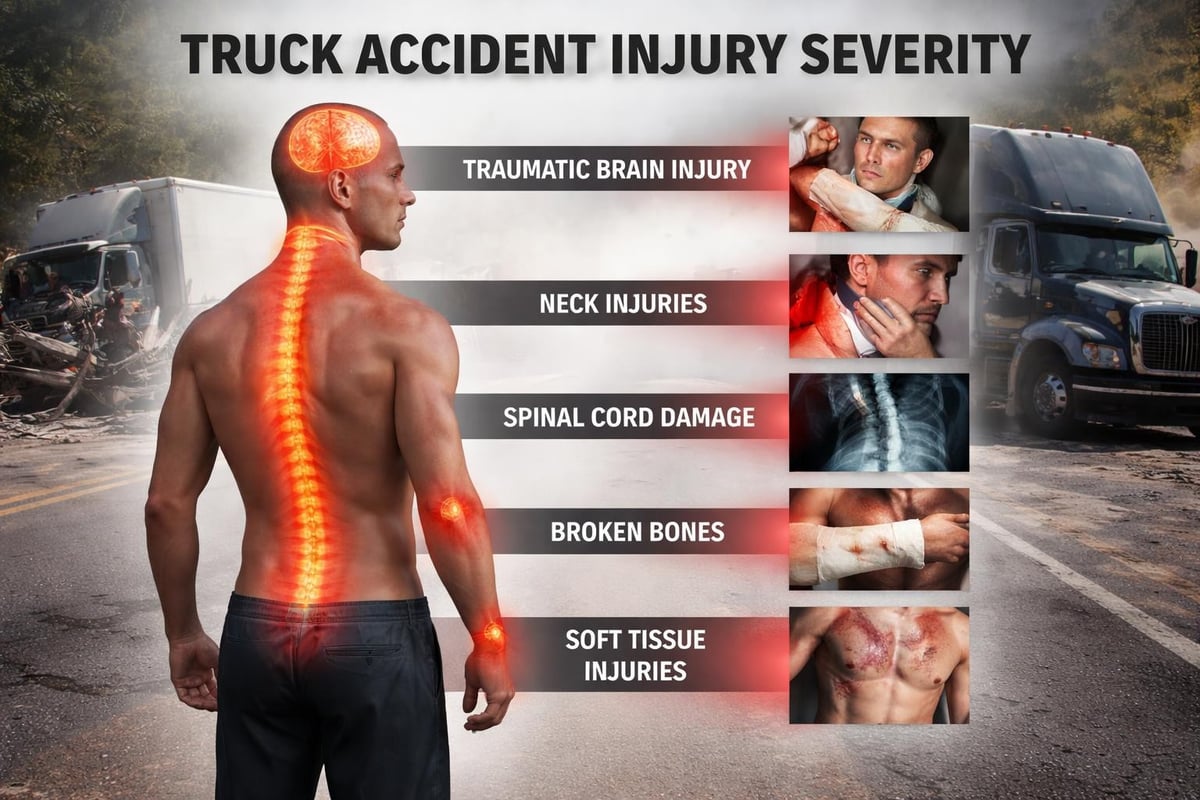
Most Common Types of Truck Accident Injuries
Victims of truck collisions typically sustain multiple injuries simultaneously. The violent nature of these crashes affects various body systems and organs.
Traumatic Brain Injuries (TBI) represent one of the most serious consequences. Even with airbag deployment, the force can cause the brain to impact the skull, resulting in concussions, contusions, or diffuse axonal injuries. Severe cases lead to permanent cognitive impairment, personality changes, and the need for lifelong medical care.
Spinal cord injuries frequently occur when the impact compresses or severs the spinal column. These injuries range from herniated discs to complete paralysis. The economic impact alone can exceed millions of dollars over a victim’s lifetime when factoring in medical treatment, adaptive equipment, and lost earning capacity.
Internal organ damage often goes undetected immediately after an accident. The blunt force trauma can cause bleeding in the liver, spleen, kidneys, or lungs. Delayed symptoms make immediate medical evaluation critical, even when victims initially feel fine.
| Injury Type | Recovery Timeline | Long-term Impact |
|---|---|---|
| Fractures | 6-12 weeks | Possible arthritis, limited mobility |
| Soft Tissue | 3-6 months | Chronic pain, reduced flexibility |
| Spinal Injuries | 6 months-lifetime | Paralysis, chronic pain management |
| TBI | 1 year-lifetime | Cognitive impairment, disability |
Burns and lacerations become severe when truck accidents involve fires or hazardous materials. Chemical burns from cargo spills or thermal burns from fuel fires require extensive treatment including skin grafts and reconstructive surgery.
Legal Liability in Truck Accident Cases
Determining fault in truck accident injury cases involves complex federal and state regulations. Unlike typical car accidents, multiple parties may share responsibility.
Potentially Liable Parties
The trucking company often bears primary responsibility. Federal Motor Carrier Safety Administration (FMSA) regulations require companies to maintain vehicles, monitor driver hours, and ensure proper training. When companies prioritize profits over safety by pressuring drivers to exceed hour-of-service limits or defer maintenance, they create dangerous conditions.
Truck drivers themselves may be liable for negligent actions including distracted driving, driving under the influence, or reckless operation. National truck accident statistics indicate that driver error contributes to the majority of crashes.
Cargo loading companies face liability when improper loading causes accidents. Unbalanced loads, unsecured cargo, or overweight trucks violate federal regulations and create serious hazards. When cargo shifts during transit or breaks loose, the results can be catastrophic.
Manufacturers and maintenance providers enter the liability chain when defective parts or inadequate repairs contribute to crashes. Brake failures, tire blowouts, and steering malfunctions stemming from manufacturing defects or improper maintenance create strong product liability claims.
California-Specific Regulations
California maintains strict regulations governing commercial trucks operating within state borders. Weight restrictions, route limitations in certain areas, and enhanced safety requirements provide additional avenues for establishing negligence. Violations of these state-specific rules strengthen injury claims significantly.
The state’s comparative negligence system allows victims to recover damages even when partially at fault. However, compensation reduces proportionally to the victim’s degree of responsibility. Understanding this legal framework proves essential when evaluating potential claim outcomes.
The Claims Process for Truck Accident Injuries
Navigating the legal process after sustaining a truck accident injury requires strategic planning and thorough documentation. Insurance companies representing trucking interests employ teams of adjusters and attorneys focused on minimizing payouts.
Immediate Steps After an Accident
Seek medical attention immediately, even for seemingly minor injuries. Medical records create the foundation for any injury claim. Delayed treatment allows insurance companies to argue that injuries weren’t serious or resulted from other causes.
Document everything possible at the accident scene. Photographs of vehicle damage, road conditions, skid marks, and visible injuries provide valuable evidence. Obtain contact information from witnesses who can corroborate your account of events.
Report the accident properly to law enforcement and ensure an official report gets filed. Police reports contain crucial details about the accident circumstances, preliminary fault determinations, and witness statements.
Preserve all physical evidence including damaged personal property, torn clothing, and medical devices. These items demonstrate the accident’s severity and support your injury claims during negotiations or trial.
Building a Strong Case
Successful truck accident injury claims require comprehensive evidence gathering. Obtaining the truck’s “black box” data provides objective information about speed, braking, and driver actions before impact. This electronic logging device data often contradicts driver statements and reveals violations of safety regulations.
Driver logs, maintenance records, and company policies reveal patterns of negligence. According to commercial truck accident data, many accidents involve systemic safety violations rather than isolated incidents.
Medical documentation must clearly connect injuries to the accident. Detailed medical records, diagnostic imaging, treatment plans, and expert medical opinions establish causation and justify claimed damages. Working with medical professionals who understand legal requirements ensures proper documentation.
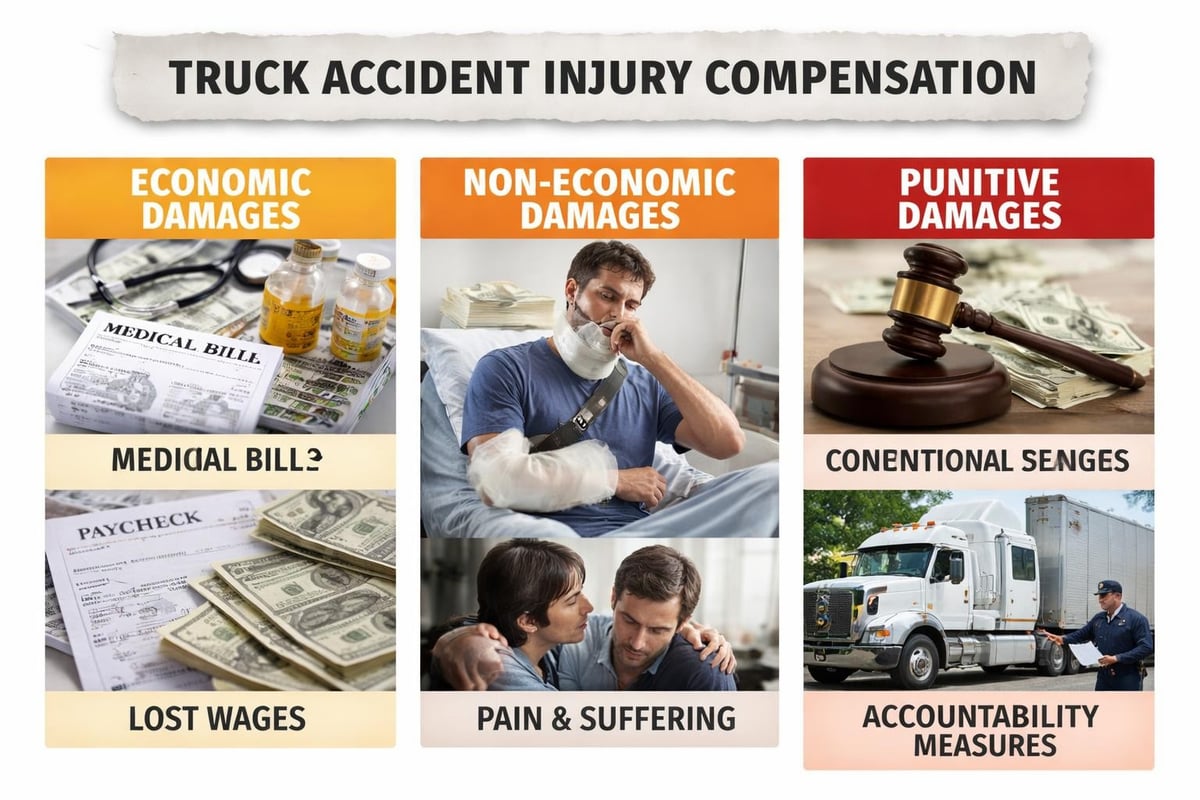
Types of Compensation Available
Truck accident injury victims can pursue multiple categories of damages. California law recognizes both economic and non-economic losses stemming from these traumatic events.
Economic Damages
Medical expenses form the most straightforward component. This includes emergency treatment, hospitalization, surgery, rehabilitation, prescription medications, and assistive devices. Future medical costs require careful calculation based on expert medical testimony about ongoing treatment needs.
Lost wages encompass income lost during recovery and diminished earning capacity when injuries prevent returning to previous employment. Documenting pre-accident income through tax returns and employer records establishes baseline earnings for comparison.
Property damage to your vehicle and personal belongings inside deserves compensation. While often minor compared to injury damages, complete reimbursement ensures you’re not financially disadvantaged by the accident.
Non-Economic Damages
Pain and suffering compensation acknowledges the physical discomfort and emotional distress caused by injuries. California doesn’t cap these damages in truck accident cases, allowing juries to award amounts proportional to injury severity and life impact.
Loss of consortium provides compensation for how injuries affect relationships with spouses and family members. When severe injuries prevent participating in family activities or maintaining intimate relationships, these losses warrant recognition and compensation.
Loss of enjoyment of life addresses the inability to engage in hobbies, recreational activities, and daily pleasures that made life meaningful. When a truck accident injury permanently changes your lifestyle, compensation should reflect these intangible but significant losses.
Punitive Damages
California courts may award punitive damages when trucking companies demonstrate gross negligence or intentional misconduct. These damages punish wrongdoers and deter similar conduct. Cases involving falsified maintenance records, forced violation of hour-of-service rules, or knowing operation of defective vehicles often warrant punitive awards.
Common Challenges in Truck Accident Claims
Insurance companies defending truck accident injury claims employ predictable tactics designed to minimize their financial exposure. Recognizing these strategies helps victims protect their rights and maximize recovery.
Dispute Over Fault
Trucking companies and their insurers frequently argue that the victim caused or contributed to the accident. They may claim the victim changed lanes unsafely, failed to maintain proper distance, or violated traffic laws. Thorough investigation and preservation of evidence counter these allegations effectively.
Downplaying Injury Severity
Insurance adjusters commonly suggest that injuries aren’t as serious as claimed or resulted from pre-existing conditions. They monitor social media for posts suggesting physical activities inconsistent with claimed limitations. Understanding these tactics allows victims to protect their privacy and avoid inadvertent harm to their cases.
Early settlement offers arrive before victims fully understand their injuries’ extent and long-term impact. These lowball offers exploit financial pressure and lack of legal knowledge. Accepting premature settlements forfeits the right to pursue additional compensation when complications arise later.
Complex Corporate Structures
Large trucking operations often involve multiple corporate entities designed to limit liability exposure. Identifying all responsible parties and their insurance coverage requires thorough investigation. Missing a liable party means leaving compensation on the table.
The Importance of Legal Representation
Handling a truck accident injury claim without experienced legal counsel puts victims at a significant disadvantage. The complexity of federal trucking regulations, the resources available to trucking companies, and the stakes involved make professional representation essential.
Investigation and Evidence Gathering
Attorneys specializing in truck accidents know which evidence to seek and how to obtain it before it disappears. Trucking companies must preserve certain records for limited periods. Prompt legal action ensures critical evidence doesn’t get destroyed legitimately under document retention policies.
Expert witnesses including accident reconstructionists, medical professionals, vocational rehabilitation specialists, and economists build comprehensive cases. These experts provide credible testimony supporting your claims and countering defense arguments. Finding and retaining qualified experts requires legal experience and professional networks that individual victims don’t possess.
The legal process for truck accident injury claims from initial consultation through investigation, negotiation, litigation if needed, and final resolution with approximate timeframes for each phase
Negotiation Skills and Trial Experience
Insurance companies respect attorneys with proven track records of taking cases to trial. This credibility strengthens negotiating positions and often leads to better settlement offers. Attorneys without trial experience receive less favorable offers because insurers know they’ll likely settle cheaply rather than proceed to court.
Understanding California personal injury law requires staying current with changing statutes, regulations, and case precedents. Experienced attorneys devote significant time to continuing education and professional development that individual victims cannot match while recovering from injuries.
Time Limitations for Filing Claims
California’s statute of limitations generally provides two years from the accident date to file a truck accident injury lawsuit. Missing this deadline typically bars recovery permanently, regardless of injury severity or case merit.
Exceptions to Standard Deadlines
Certain circumstances extend or shorten filing deadlines. Government entity involvement, delayed injury discovery, or minor victim status can alter applicable time limits. Understanding which exceptions apply requires legal analysis specific to your situation.
Starting the claims process early provides several advantages beyond avoiding deadline issues. Fresh evidence, available witnesses, and clear memories strengthen cases. Additionally, early legal involvement preserves critical evidence before it disappears naturally or through routine business practices.
Prevention and Safety Advocacy
While individual drivers have limited control over truck safety, understanding risk factors helps avoid dangerous situations. Recognizing truck blind spots, maintaining safe following distances, and avoiding driving alongside trucks in adjacent lanes reduces accident risk.
Industry-Wide Improvements Needed
Research on truck accident causes identifies consistent factors including inadequate driver training, pressure to meet unrealistic delivery schedules, and deferred maintenance to reduce costs. Advocacy for stronger regulations and enforcement protects all road users.
Technology improvements including automatic emergency braking, lane departure warnings, and electronic stability control demonstrate measurable safety benefits. Requiring these features on all commercial trucks would prevent thousands of injuries annually.
Maximizing Your Recovery
Successful truck accident injury claims require patience, persistence, and strategic decision-making. Rushing to resolve cases before understanding the full impact of injuries leads to inadequate compensation that doesn’t cover long-term needs.
Calculating Future Needs
Permanent injuries require lifetime care planning. Medical experts, life care planners, and economists collaborate to project future medical costs, assistive device needs, home modifications, and ongoing care requirements. These projections ensure settlement demands account for all reasonably anticipated expenses.
Structured settlements provide periodic payments rather than lump sums in certain cases. This approach ensures long-term financial security when large settlements might be mismanaged. Evaluating whether structured settlement provisions benefit your specific situation requires careful analysis of your circumstances and needs.
Consider tax implications of different settlement structures. While personal injury compensation generally isn’t taxable, certain components like punitive damages and interest may face taxation. Planning around these issues maximizes your net recovery.
Special Considerations for Catastrophic Injuries
Severe truck accident injuries resulting in permanent disability create unique legal and practical challenges. These cases demand maximum compensation because victims face lifetime consequences from momentary negligence.
Establishing Permanency
Medical experts must clearly establish that injuries are permanent and won’t improve with additional treatment. Premature settlement before reaching maximum medical improvement risks undervaluing claims significantly. Patience during the recovery and treatment process, though financially and emotionally difficult, protects your long-term interests.
Vocational rehabilitation experts assess whether injuries prevent returning to previous employment and what alternative work, if any, remains possible. These assessments support lost earning capacity claims that often represent the largest component of catastrophic injury settlements.
Quality of life assessments quantify how injuries affect daily living, independence, and dignity. Expert testimony describes necessary modifications to homes, vehicles, and lifestyles that allow maximum independence despite disabilities.
Truck accident injury cases demand comprehensive legal knowledge, thorough investigation, and aggressive advocacy to achieve fair compensation. The physical, emotional, and financial toll of these devastating crashes affects victims and their families for years or even lifetimes. If you’ve suffered injuries in a collision with a commercial truck, Steven M Sweat, Personal Injury Lawyers, APC provides the experienced representation needed to protect your rights and pursue maximum recovery. Our Los Angeles-based team understands California trucking regulations and has the resources to take on large trucking companies and their insurers. Contact us today for a free case evaluation to discuss your legal options.