 California Accident Attorneys Blog


After a serious accident, the bills pile up fast, medical costs, lost wages, vehicle repairs. Those losses carry clear dollar amounts. But what about the sleepless nights, the chronic pain that won’t let up, or the anxiety that hits every time you get behind the wheel? These are non-economic damages pain and suffering, and they often represent the largest portion of a personal injury claim, yet they’re also the hardest for injured people to understand.
Non-economic damages cover real harm that doesn’t come with a receipt. They’re not theoretical or exaggerated, they reflect genuine changes to your daily life, your relationships, and your mental health after someone else’s negligence causes you injury. Insurance companies know these damages carry significant value, which is exactly why adjusters work so hard to minimize them or dismiss them altogether.
At Steven M. Sweat, Personal Injury Lawyers, APC, we’ve spent over 25 years fighting for full compensation for injured Californians, including the losses that don’t show up on a billing statement. This article breaks down what non-economic damages actually cover, how pain and suffering is calculated, the caps that may apply, and what separates a strong claim from a weak one.
What counts as non-economic damages
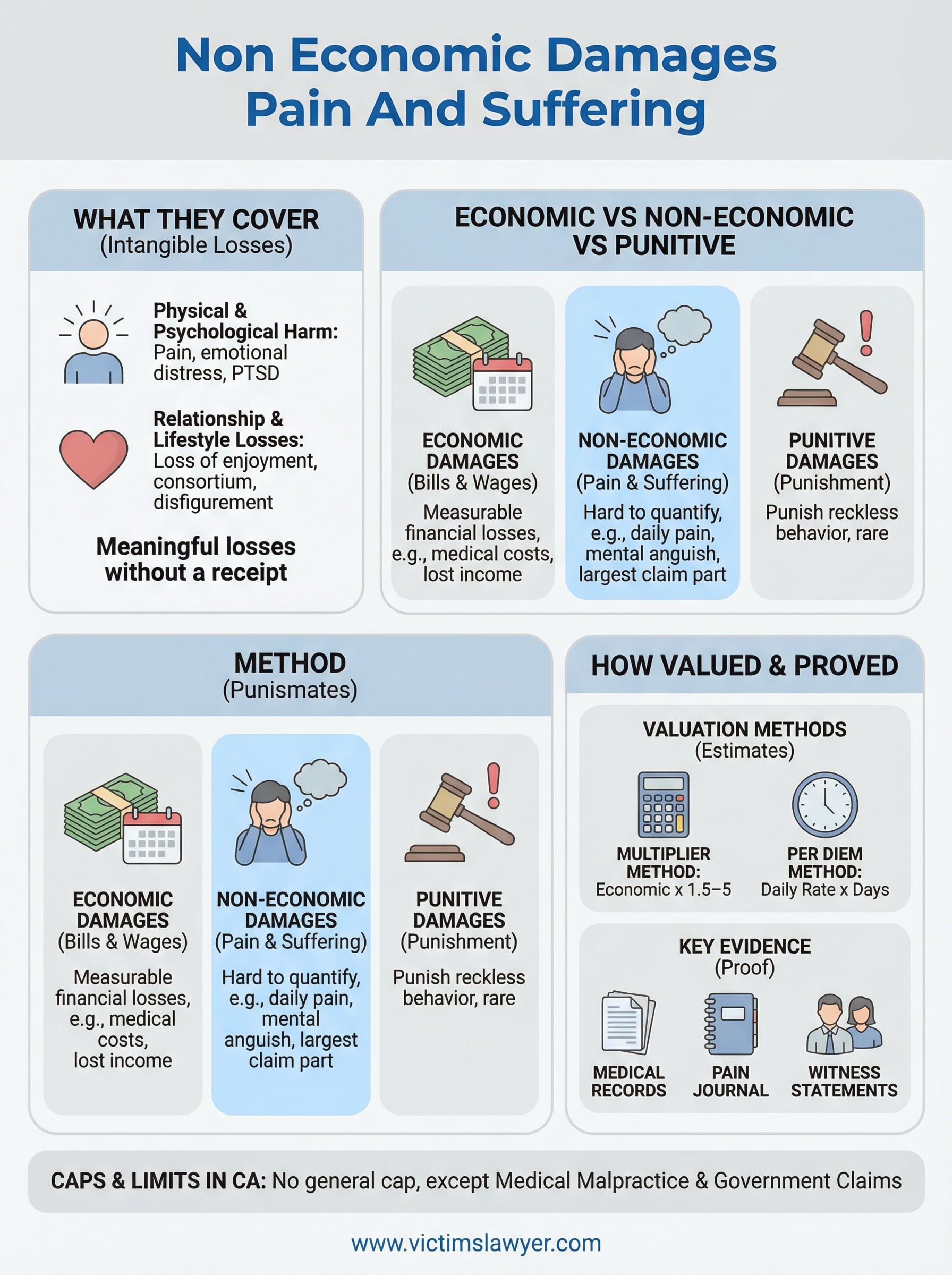
Non-economic damages cover every meaningful loss you suffer that can’t be measured by a receipt, a bill, or a paycheck stub. California law recognizes that serious injuries disrupt far more than your finances, and it allows injured people to seek compensation for those harder-to-quantify harms. The category is broad by design, because the real impact of an injury rarely fits neatly into a spreadsheet.
Physical and psychological harm
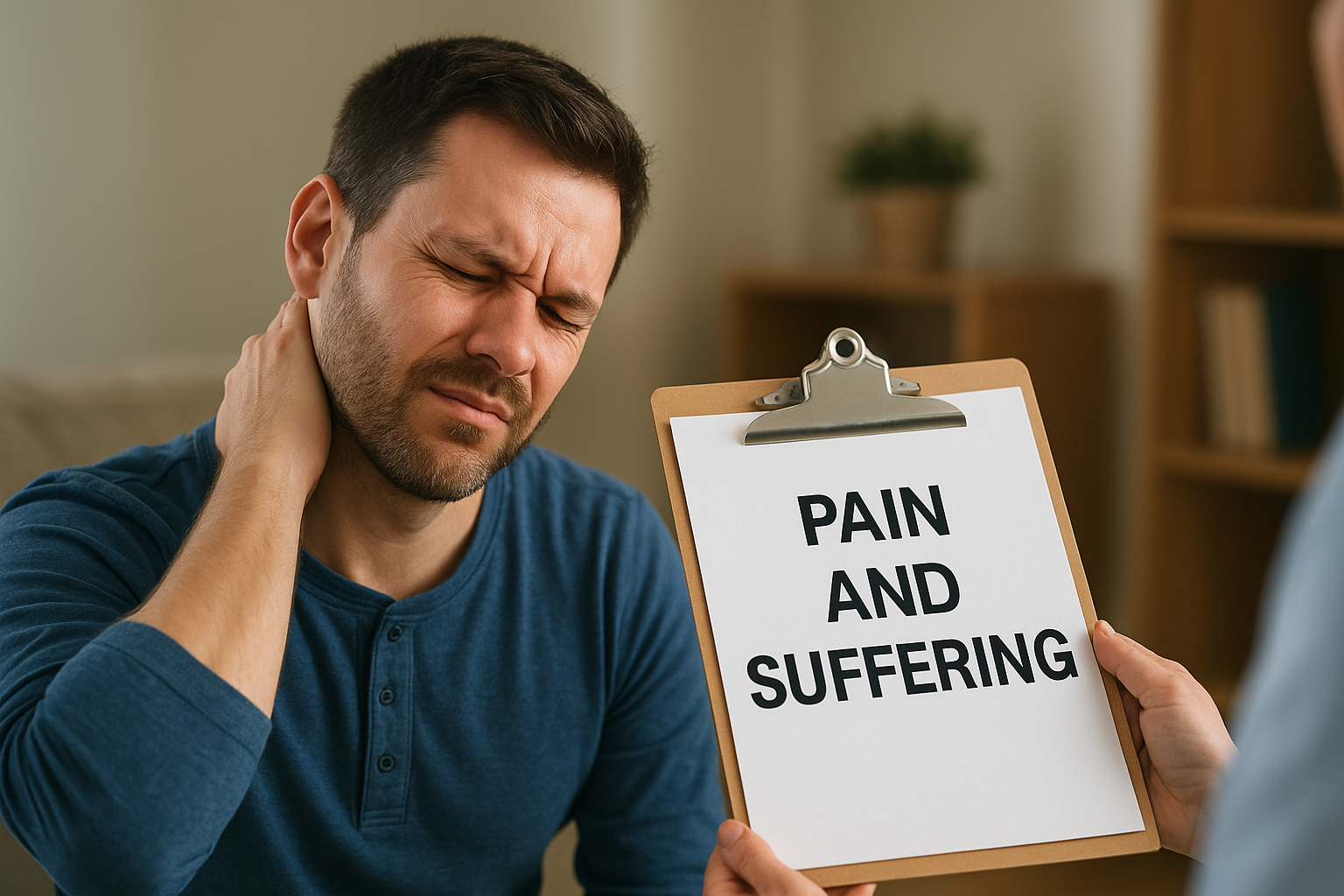
The most recognized form of non-economic damages pain and suffering is physical pain, both the immediate suffering after an accident and the ongoing discomfort that lingers for months or years. Courts and juries take into account how much pain you experience daily, how it interferes with sleep, and whether it’s expected to continue into the future. Beyond physical pain, emotional distress carries real legal weight in California. This includes anxiety, depression, post-traumatic stress disorder, and the fear that develops after a traumatic event.
Emotional suffering after an accident is not a weakness to downplay. It is a compensable loss under California law.
Your mental anguish can be just as disabling as a broken bone, and a strong claim documents both equally.
Relationship and lifestyle losses
Injuries can strip away things you never thought you’d have to live without. Loss of enjoyment of life refers to your inability to participate in activities that once gave your life meaning, such as playing with your children, exercising, or pursuing a hobby. If your injury has affected your relationship with a spouse or partner, including intimacy and companionship, that loss falls under a category called loss of consortium, which your family members may also be able to claim.
Disfigurement and permanent scarring are also compensable non-economic harms, particularly when they affect how you see yourself or how others interact with you.
Economic vs non-economic vs punitive damages
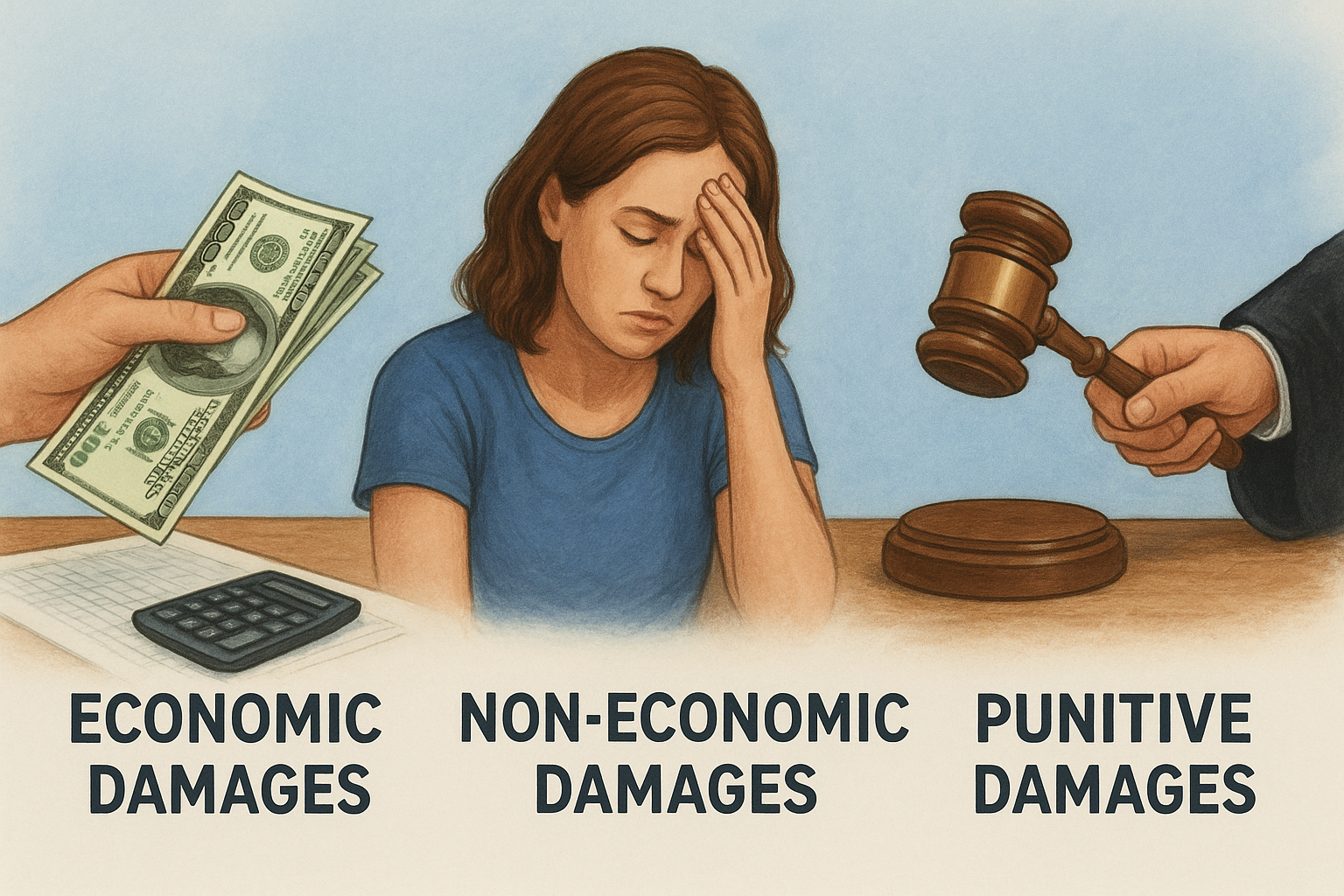
Understanding where non economic damages pain and suffering fit within the broader legal framework helps you see the full picture of what your claim can recover. California personal injury law divides compensation into three distinct categories, each serving a different legal purpose and requiring a different method of proof.
Economic damages
Economic damages, also called special damages, cover your measurable financial losses: medical bills, future treatment costs, lost wages, and property damage. These losses carry a clear dollar figure and are typically proven with receipts, pay stubs, and expert testimony from medical or economic professionals. They are the easiest category to document and the first thing an insurance adjuster will calculate.
Punitive damages
Punitive damages are separate from both economic and non-economic damages. Courts award them not to compensate you, but to punish a defendant whose conduct was especially reckless or malicious. They are rare in standard negligence cases and reserved for situations involving fraud, oppression, or conscious disregard for the safety of others.
Non-economic damages fill the space between what you lost financially and what you lost personally, and in serious injury cases, they are often the largest component of the total award.
Knowing which category applies to your losses allows your attorney to build a complete and accurate demand from the start.
How pain and suffering gets valued
There is no billing statement for pain, so courts and insurers use established methods to assign a dollar figure to your non economic damages pain and suffering. Two approaches dominate personal injury cases in California, and understanding both helps you recognize when an insurance offer falls short.
The multiplier method
The multiplier method takes your total economic damages and multiplies them by a number, typically between 1.5 and 5, depending on the severity of your injury, the length of your recovery, and how significantly your daily life has changed. A serious spinal injury with a long recovery timeline will justify a higher multiplier than a minor soft tissue strain that resolves in weeks.
The per diem method
The per diem approach assigns a daily dollar value to your suffering, then multiplies that figure by the number of days you have lived with the injury. Attorneys often anchor the daily rate to your actual earnings, which gives a jury a concrete and relatable reference point.
Neither method produces a guaranteed outcome. The strength of your documentation and the skill of your attorney both directly affect the final number.
Insurance adjusters apply these same methods, but they consistently use the lowest possible inputs to reduce what they offer you.
How to prove pain and suffering in California
Winning compensation for non economic damages pain and suffering requires more than telling a jury you hurt. California courts expect concrete, consistent evidence that connects your injury to your daily losses, and insurers will challenge anything you cannot back up with documentation.
Medical records and treatment history
Your medical records are the foundation of any pain and suffering claim. Consistent treatment, follow-up appointments, and physician notes describing your symptoms over time show that your suffering is real and ongoing.
The moment you stop seeking treatment, the defense will argue your pain has resolved.
Gaps in treatment work against you because insurance adjusters read them as proof the injury was minor. Staying current with your medical care is one of the most direct ways to protect the value of your claim.
Personal documentation
A daily pain journal is one of the most underused tools in personal injury cases. Writing down how your injury affects your sleep, mood, and daily tasks creates a record that is difficult to dispute. Supporting documentation can also include:
- Witness statements from family members, friends, or coworkers
- Photographs of visible injuries or physical limitations
- Therapy or counseling records that confirm emotional distress
Caps and limits that can reduce your recovery
California does not cap non economic damages pain and suffering in most personal injury cases. If a driver runs a red light and leaves you with a permanent disability, there is no statutory ceiling on what a jury can award for your pain, emotional distress, or loss of enjoyment of life. However, two specific situations create meaningful limits on your recovery, and knowing them before you file matters.
Medical malpractice claims
California’s Medical Injury Compensation Reform Act (MICRA) places a cap on non-economic damages in medical malpractice cases. Following updates under AB 35, which took effect in 2023, the cap sits at $350,000 for non-death cases and $500,000 for wrongful death cases, with scheduled annual increases over the next decade. If a surgeon’s negligence caused your injury, this cap directly limits your maximum recovery for pain and suffering.
The MICRA cap does not restrict economic damages, so your medical bills and lost wages remain fully recoverable in malpractice claims.
Claims against government entities
When a government agency or public employee caused your injury, the California Government Claims Act controls the process. You must file a formal administrative claim within six months of the incident, and missing that deadline can bar your case entirely, no matter how strong the underlying facts are.
Next steps if you think you have a claim
If you believe non economic damages pain and suffering make up a significant part of what you’ve lost, the most important move you can make right now is to speak with an experienced personal injury attorney before you accept any offer from an insurance company. Adjusters move quickly, and early settlements rarely reflect the full value of your intangible losses.
Start documenting everything today. Keep a pain journal, hold onto all medical records, and avoid posting on social media about your activities or recovery. These details shape the strength of your claim more than most people realize.
Your first step with our firm costs you nothing upfront. We work on a contingency basis, so you pay no legal fees unless we recover money for you. Contact our team for a free consultation and let us evaluate what your claim is actually worth.