 California Accident Attorneys Blog


Whether you’re filing a personal injury claim after a car accident or pursuing compensation for a workplace injury, evidence is what drives your case forward. One question we hear regularly from clients at Steven M. Sweat, Personal Injury Lawyers, APC is: can a witness statement be used in court? The short answer is yes, but the full answer depends on several factors, including how the statement was obtained, what it contains, and whether the witness is available to testify.
Witness statements can be powerful pieces of evidence. A written account from someone who saw your accident happen or observed the dangerous condition that caused your injury can corroborate your version of events and strengthen your credibility before a judge or jury. But California courts don’t automatically accept every statement at face value. Rules of evidence, particularly those governing hearsay, create specific conditions that determine whether a statement is admissible or gets thrown out entirely.
After more than 25 years of litigating personal injury cases across California, our trial attorneys understand exactly what it takes to get witness evidence in front of a jury, and what mistakes can keep it out. This article breaks down the admissibility rules for witness statements, explains when hearsay exceptions apply, and covers what happens when a witness can’t appear in court to testify in person.
What a witness statement is and is not
A witness statement is a written or recorded account of what a person observed, heard, or experienced in connection with an event that is relevant to a legal case. In personal injury litigation, these statements typically describe the circumstances of an accident, the conditions at a location, someone’s behavior before or after an incident, or the injuries someone observed. Courts treat them as a form of evidence, but not all statements carry the same weight or qualify under the same rules.
The difference between a statement and live testimony
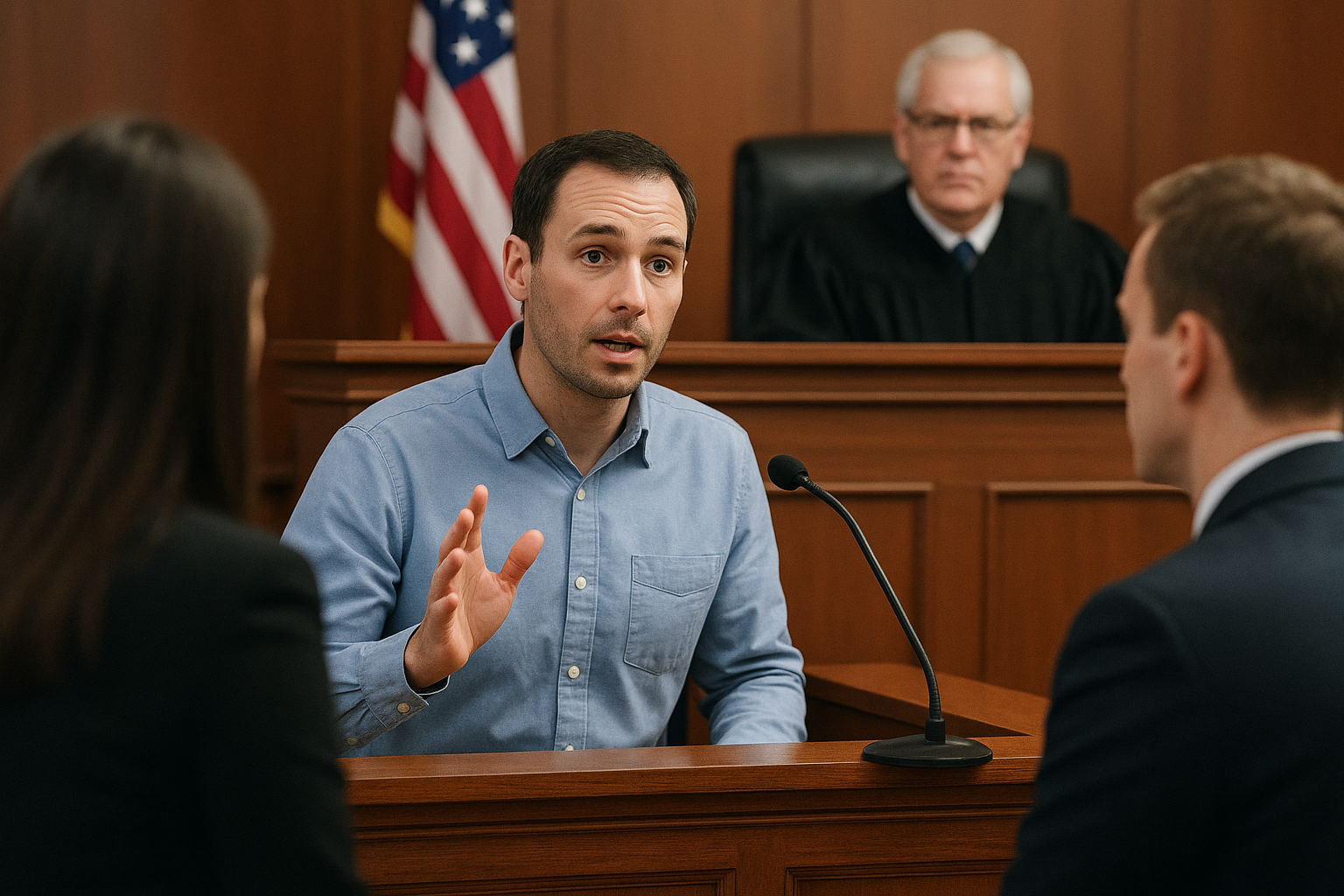
When you ask whether a witness statement can be used in court, most people assume it works the same way as having that witness sit in the stand and speak directly to a jury. That assumption is incorrect. Live testimony allows the opposing attorney to cross-examine the witness in real time, test their credibility, and challenge inconsistencies. A written or recorded statement, by contrast, was created outside the courtroom, often without legal oversight, and cannot be challenged in the same way at the moment it was made.
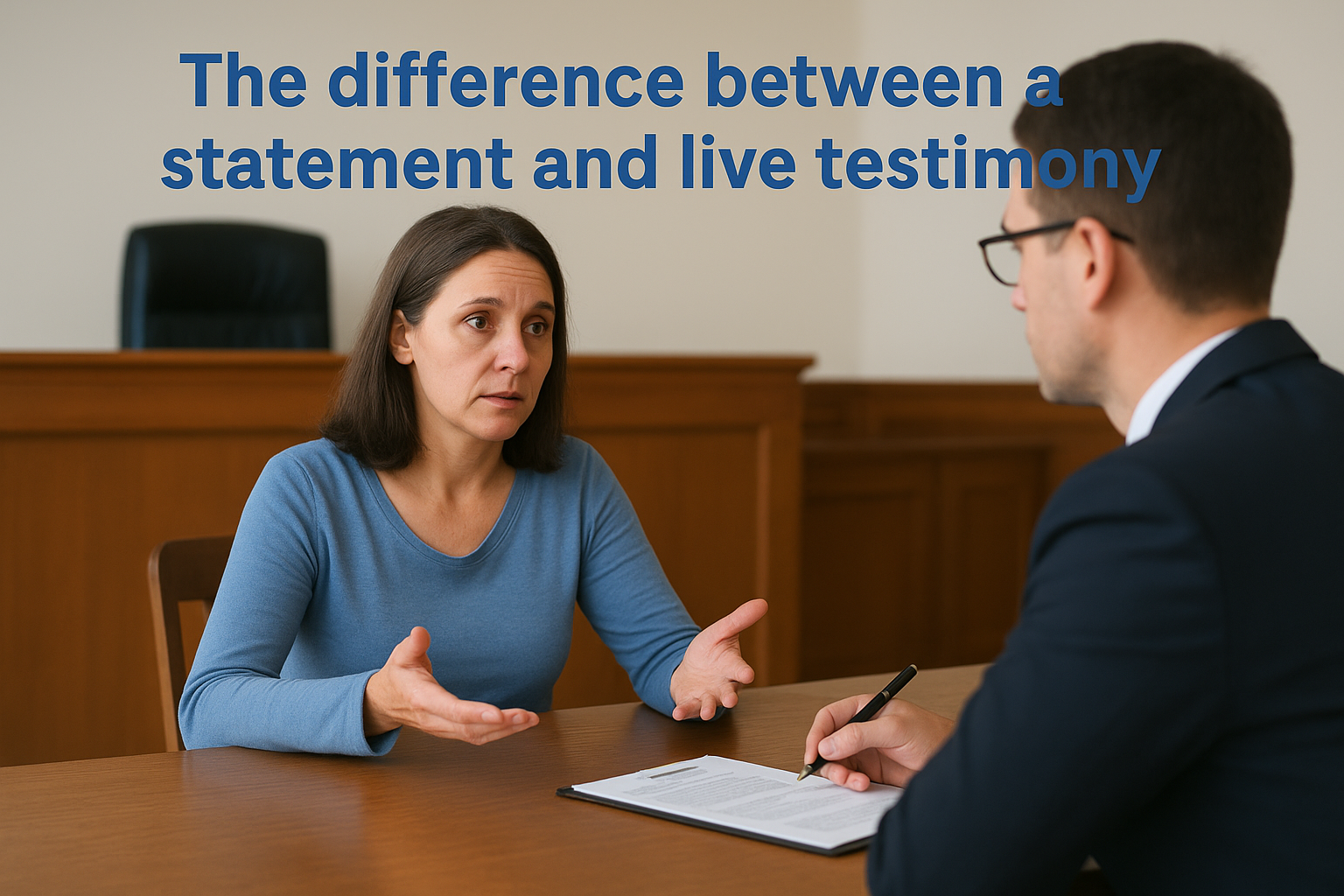
A witness statement is a starting point for evidence, not a substitute for a witness who can answer questions under oath.
That distinction matters significantly in civil cases. Insurance defense attorneys and opposing counsel routinely argue that out-of-court statements are hearsay and should be excluded. Understanding the difference between what a statement is and what live testimony provides helps you recognize why your attorney works to secure both whenever possible.
What counts as a witness statement
Not every account from a bystander qualifies as a formal witness statement. A formal witness statement is typically a signed, written document that identifies the witness, describes what they observed, and is often notarized or made under penalty of perjury. An informal account, such as something a neighbor told you verbally or a text message someone sent after an accident, may still be relevant but faces additional admissibility hurdles before a court will consider it.
The type of statement also affects how your attorney will use it:
- Sworn statements: Made under oath, often in a deposition or as a declaration filed with the court. These carry the most legal weight.
- Unsworn written statements: Signed accounts gathered by an attorney or investigator shortly after an incident. Useful but subject to hearsay challenges.
- Recorded statements: Audio or video recordings of a witness account. Insurance companies often seek these immediately after an accident, which is exactly why you should speak to an attorney before agreeing to provide one.
- Informal accounts: Texts, emails, or social media posts describing what someone saw. Potentially admissible but require additional legal work to place before a jury.
Your attorney will evaluate each type of statement differently, determine which ones to pursue, and figure out how to preserve them in a way that survives a challenge from the opposing side. Knowing what qualifies and what doesn’t gives you a clearer picture of why gathering evidence quickly and correctly after an injury matters so much to the outcome of your case.
Why admissibility rules matter in real cases
Admissibility rules determine what the jury actually sees and hears. If a witness statement is excluded, it doesn’t matter how accurate or detailed it is because the jury never considers it. In personal injury cases across California, which evidence survives a challenge can shift the outcome of both settlement negotiations and trial verdicts significantly.
How excluded evidence changes your claim’s value
When your attorney builds your case, they work only with evidence that holds up in court. A statement that gets excluded leaves a gap in your narrative, and insurance defense attorneys know exactly how to exploit those gaps. If the only witness to your accident provided a written account your attorney cannot get admitted, the opposing side will argue your claim lacks corroboration. That directly weakens your position during settlement talks and limits what your attorney can present to a jury.
Excluded statements also affect the dollar value of your claim. An independent witness account confirming how an accident happened supports higher compensation demands. Without it, the insurance company gains more room to dispute liability and the extent of your damages, which gives them leverage to push your settlement lower.
The strength of your case depends not just on what evidence exists, but on what evidence the court will allow in.
The hearsay problem in personal injury cases
This is where most people get surprised. When asking whether a witness statement can be used in court, many don’t realize that out-of-court statements offered to prove the truth of what they assert meet the legal definition of hearsay. Under California Evidence Code Section 1200, hearsay is generally inadmissible unless a recognized exception applies. A written statement gathered by an investigator two days after your accident could be challenged and excluded entirely if your attorney doesn’t handle it properly from the start.
Hearsay exceptions do exist, and experienced trial attorneys know how to use them. But those exceptions require specific legal conditions to be met, such as the statement being made under oath or the witness being unavailable to testify. Getting this right demands early action and careful documentation from the moment your injury occurs.
When courts admit written or recorded statements
Courts don’t automatically reject written or recorded accounts. So when asking can a witness statement be used in court, the real question is whether your statement fits within a recognized legal framework that permits it. California courts follow specific rules under the Evidence Code that define the circumstances where an out-of-court statement survives a hearsay challenge and reaches a jury.
Prior statements by witnesses
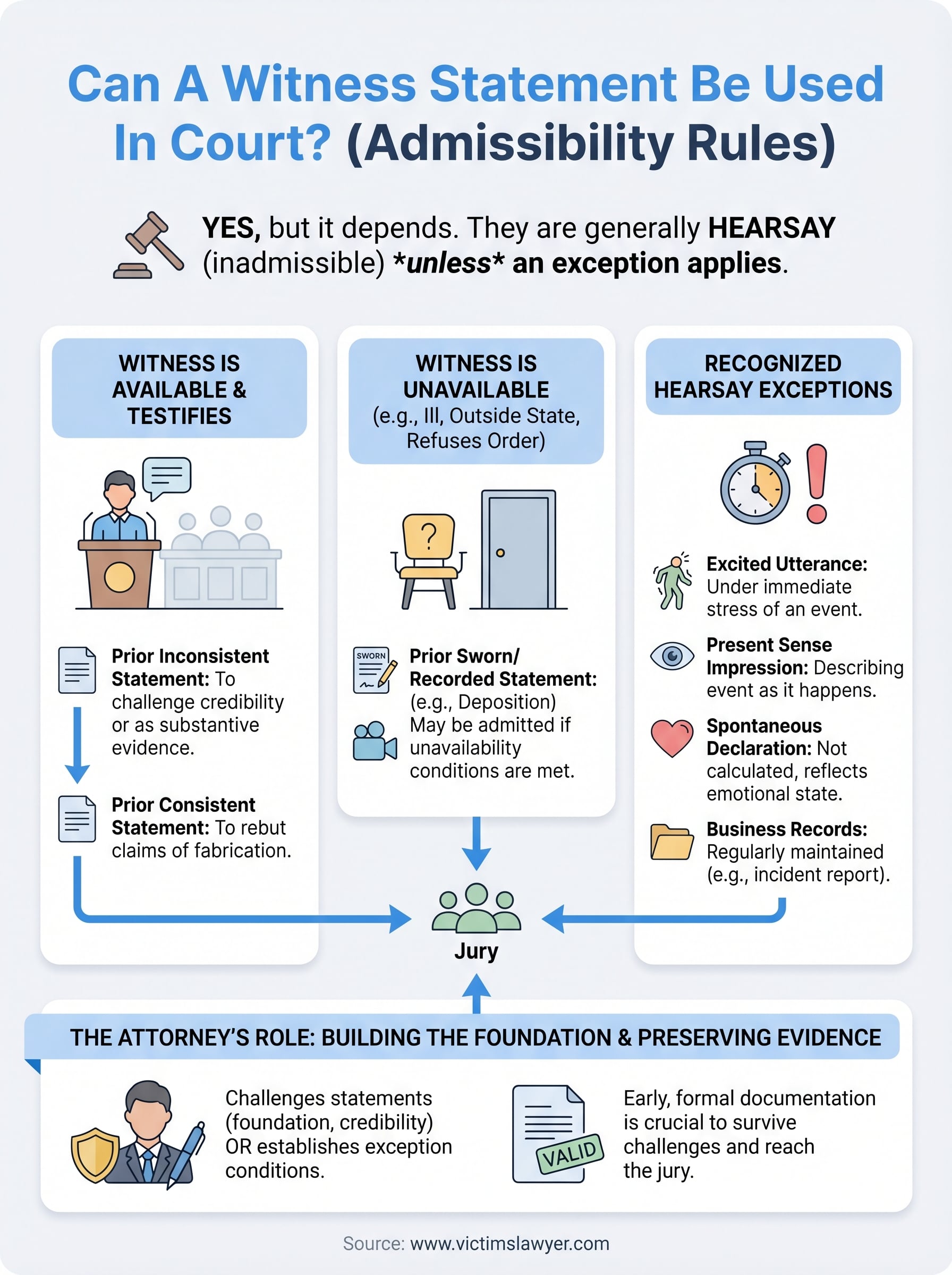
One of the most commonly used pathways for admitting a written statement is when the witness who made it also appears in court to testify. California Evidence Code Section 1235 allows a prior inconsistent statement to be admitted as substantive evidence, not just to attack the witness’s credibility. If a witness tells a different story at trial than they did in their original written account, your attorney can introduce the earlier statement to show the contradiction directly to the jury. A prior consistent statement can also come in under Section 1236 to rebut any claim that the witness recently invented their version of events.
Getting a witness statement documented quickly after an accident is one of the most protective steps your legal team can take.
Recognized hearsay exceptions
Several hearsay exceptions allow out-of-court statements to come into evidence even when the witness does not testify at all. The most relevant in personal injury cases include:
- Excited utterance: A statement made under the immediate stress of witnessing an event, such as someone saying “that car ran the red light” seconds after a crash.
- Present sense impression: A statement describing an event as it happens or immediately after, leaving no time for reflection or fabrication.
- Spontaneous declaration: Covered under California Evidence Code Section 1240, where the emotional or physical condition of the declarant confirms the statement was not calculated.
- Business records: Statements contained in regularly maintained records, such as an incident report filed by a property owner after someone is hurt on their premises.
Each exception requires your attorney to lay a proper legal foundation before the court admits the statement. That means presenting specific facts confirming the conditions of the exception are genuinely met, which is why careful preparation before trial determines whether your key evidence reaches the jury or gets excluded entirely.
What happens if the witness will not appear
A witness who refuses to testify or becomes unavailable before trial creates a real problem for your case. Whether someone moves out of state, becomes seriously ill, or simply refuses to cooperate, their absence doesn’t automatically eliminate their statement from consideration. California courts have specific rules addressing exactly this scenario, and whether that statement can still reach the jury depends on how well your attorney documented and preserved it before trial.
When unavailability opens the door to prior statements
California Evidence Code Section 1291 allows a prior recorded or sworn statement to be admitted when the witness is legally unavailable. Unavailability has a specific legal definition under California law: the witness is dead, physically or mentally ill, outside California and beyond subpoena reach, or refuses to testify despite a direct court order. When any of those conditions apply, your attorney can argue that the prior statement substitutes for live testimony under the appropriate hearsay exception, provided the statement meets other foundational requirements the court will scrutinize.
Early documentation of a witness statement, ideally under oath, is often what saves your case when that witness later becomes unavailable.
This is one of the clearest answers to the question of can a witness statement be used in court without the witness present: yes, under defined legal conditions. The more formally the original statement was captured, the stronger your attorney’s argument for admission becomes.
What happens when a witness refuses to cooperate
Some witnesses become uncooperative after providing an initial statement. They may feel pressured by the opposing party, want to avoid the inconvenience of appearing in court, or simply change their position entirely. Your attorney can subpoena a reluctant witness to compel their appearance, and a court can hold an uncooperative witness in contempt for defying that order. If the witness still refuses after receiving a court directive, that refusal itself creates the legal unavailability needed to introduce their prior statement under the rules described in the previous section.
Your legal team’s response to a missing or uncooperative witness depends largely on how the original statement was captured and preserved. A sworn deposition or signed declaration gives your attorney far more options than an informal account gathered without legal oversight, which is one of the strongest reasons to involve an attorney early in your case.
How lawyers challenge or support a statement
Both sides in a civil case pay close attention to witness statements from the moment they surface. Whether you are asking can a witness statement be used in court from your side of the case or the opposing side, the answer hinges on how well each attorney either defends or dismantles the statement in question. The tactics attorneys use to challenge or reinforce a statement often determine whether that evidence reaches a jury and how much weight it carries when it does.
How defense attorneys challenge a statement
Defense attorneys look for specific weaknesses in any statement your side intends to use. Their most common approach is arguing hearsay with no applicable exception, which asks the court to exclude the statement outright before the jury ever sees it. Beyond that threshold argument, they will examine the circumstances surrounding how the statement was gathered to identify additional pressure points.
Common challenges you can expect from opposing counsel include:
- Foundation attacks: Arguing that the attorney introducing the statement has not established the legal conditions required by the relevant hearsay exception.
- Credibility attacks: Pointing to prior inconsistent statements, bias toward you as the injured party, or a limited vantage point that reduces what the witness could actually observe.
- Chain of custody issues: Questioning whether a recorded statement was altered, edited, or improperly handled between the time it was created and the time it was produced in court.
The earlier and more formally a statement is captured, the fewer openings opposing counsel has to challenge it.
How your attorney supports and protects a statement
Your attorney’s job is to anticipate every challenge listed above and close those gaps before trial. Laying a proper legal foundation means presenting the court with specific facts confirming that the conditions of the applicable hearsay exception were genuinely met, whether that involves the witness’s emotional state at the time, the timing of the statement, or the witness’s direct observation of the relevant events.
Preserving credibility is equally important. Your legal team will document the witness’s background, confirm their line of sight or proximity to the incident, and where possible obtain the statement in sworn form so it carries the maximum legal protection going into trial.
What to do next
Whether a witness statement can be used in court depends on how it was captured, when it was obtained, and whether your attorney built a proper legal foundation around it. Every factor covered in this article, from hearsay exceptions to witness unavailability, points toward one core truth: early action protects your evidence. The longer you wait to involve legal counsel, the greater the risk that key statements become harder to admit or impossible to recover.
If you suffered an injury in California and witnesses observed what happened, you need an attorney working on those statements now, not after the opposing side has had time to challenge your evidence. The trial attorneys at Steven M. Sweat, Personal Injury Lawyers, APC have secured hundreds of millions of dollars for injured clients across California. Contact us today for a free consultation and find out exactly what your case is worth.